


For director and producer Peter Chan (
Ghost stories have become a recent trend in Asian filmmaking, to such a degree that it has even influenced Hollywood.
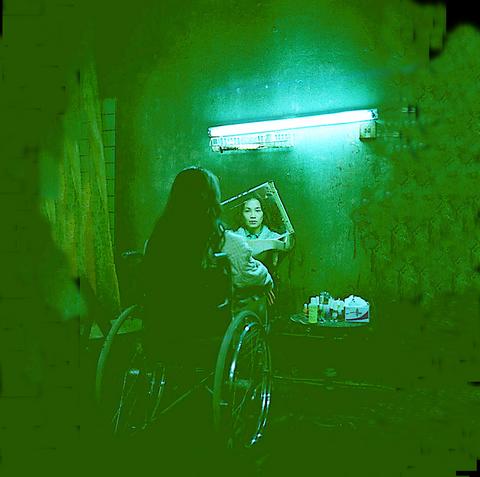
PHOTO COURTESY OF GROUP POWER
From the original Japanese Ring to the Hollywood version of The Ring have all proved box office winners. In Hong Kong, ghost movies from Visible Secrets (
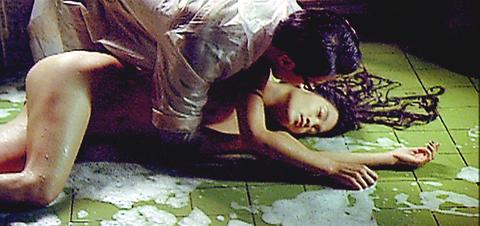
PHOTO COURTESY OF GROUP POWER
"Ghost stories are more able to open markets for Asian films, because no matter where and what culture you are from, people want to see ghost movie," said Chan.
Chan understands the niche that ghost movies serve. The Eye was a box office success in both Hong Kong and Taiwan, and won Sinjie Lee (
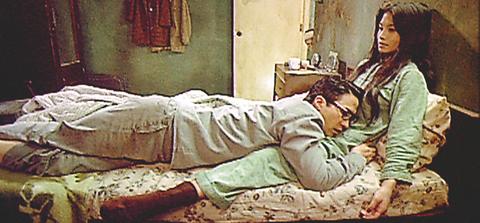
PHOTO COURTESY OF GROUP POWER
In ancient Korean folklore, the spirit of a dead person may hang around his or her dead body for seven days. Only then does it realize that it is truly dead and finally leaves the mundane world.
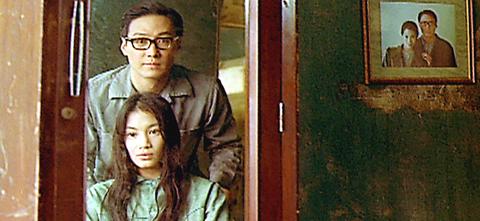
PHOTO COURTESY OF GROUP POWER
In Thai culture, there exists a similar concept. It's just that in Thailand the spirit chooses an object, rather than the dead body, to cling to. They say the spirit clings to an object that belonged to the deceased while waiting for re-incarnation. During this period of waiting, the object cannot be transferred to others, nor can it be discarded or damaged. If it is, vengeance and death follow.
In Chinese folk lore, life after death goes on even longer. It is believed by one school of Chinese medicine that the dead can be brought back to life through a treatment of Chinese herbs. Some of these ideas about life after death are incorporated into the stories told in Three.
Korean filmmaker Kim Jee-woon, director of box office hit Foul King, made a segment titled Memory about a wife wandering about the streets and trying to find her way home. When she enters the door she realizes that she is in fact dead, and there is shock all round when she encounters her husband.
Thai filmmaker Nonzee Nimibutr's The Wheel takes its lead from the atmospherics of Nang Nak, one of the first Thai commercial release films to get international attention. The story is about a spirit that haunts a puppet theater troupe. As members of the puppet troupe suffer from bizarre diseases and death, people begin to say that one of the puppets is cursed, or worse.
Peter Chan, who excels at telling love stories, mixes horror and romance in his segment Going Home. The longest running of the three segments, slightly over an hour in a 140 minute trilogy, tells the story of a Chinese doctor who never goes out and his house is always tightly shut up, although smoke and a strong smell of Chinese herbs emanate from it. This is because he has been bathing his dead wife in herbal mixtures for three years to resurrect her.
Three days before the day when resurrection will take place, his neighbor, a reckless cop, breaks into his house trying to find his son. The great task to resurrect his wife is not completed and the mystery of the closed up house is unveiled.
Going Home is probably the best of the three segments, with good pacing and an eerie atmosphere created by cinematographer Christopher Doyle. The film also won Loen Lai (

The breakwater stretches out to sea from the sprawling Kaohsiung port in southern Taiwan. Normally, it’s crowded with massive tankers ferrying liquefied natural gas from Qatar to be stored in the bulbous white tanks that dot the shoreline. These are not normal times, though, and not a single shipment from Qatar has docked at the Yongan terminal since early March after the Strait of Hormuz was shuttered. The suspension has provided a realistic preview of a potential Chinese blockade, a move that would throttle an economy anchored by the world’s most advanced and power-hungry semiconductor industry. It is a stark reminder of
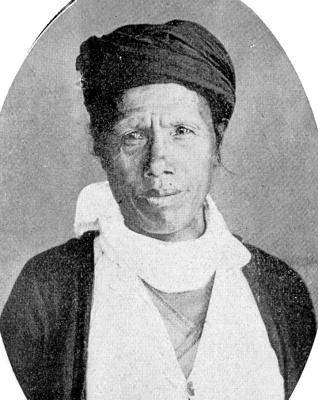
May 11 to May 17 Traversing the southern slopes of the Yushan Range in 1931, Japanese naturalist Tadao Kano knew he was approaching the last swath of Taiwan still beyond colonial control. The “vast, unknown territory,” protected by the “fierce” Bunun headman Dahu Ali, was “filled with an utterly endless jungle that choked the mountains and valleys,” Kano wrote. He noted how the group had “refused to submit to the measures of our authorities and entrenched themselves deep in these mountains … living a free existence spent chasing deer in the morning and seeking serow in the evening,” even describing them as
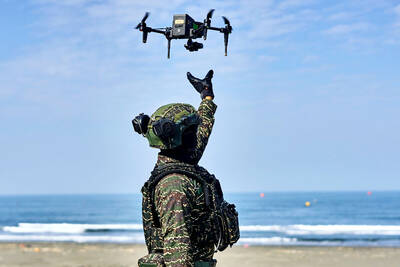
The last couple of weeks spectators in Taiwan and abroad have been treated to a remarkable display of infighting in the Chinese Nationalist Party (KMT) over the supplementary defense budget. The party has split into two camps, one supporting an NT$800 billion special defense budget and one supporting an NT$380 billion budget with additional funding contingent on receiving letters of acceptance (LOA) from the US. Recent media reports have said that the Taiwan People’s Party (TPP) is leaning toward the latter position. President William Lai (賴清德) has proposed NT$1.25 trillion for purchases of US arms and for development of domestic weapons

As a different column was being written, the big news dropped that Chinese Nationalist Party (KMT) caucus whip Fu Kun-chi (傅?萁) announced that negotiations within his caucus, with legislative speaker Han Kuo-yu (韓國瑜) of the KMT, party Chair Cheng Li-wun (鄭麗文), Taichung Mayor Lu Shiow-yen (盧秀燕) and Taiwan People’s Party (TPP) Chair Huang Kuo-chang (黃國昌) had produced a compromise special military budget proposal. On Thursday morning, prior to meeting with Cheng over a lunch of beef noodles, Lu reiterated her support for a budget of NT$800 or NT$900 billion — but refused to comment after the meeting. Right after Fu’s


 RSS
RSS