


It's hard to picture the clean-cut, soft-spoken and easygoing Australian author Bradley Trevor Greive toting the latest in NATO-issue hardware. After all, the contents of his series of bestselling heart-warming illustrated narratives -- The Blue Day Book, Dear Mum and Looking for Mr Right -- are relaxing, thought provoking and most un-war-like.
Until the early 1990s, however, the mild-mannered Greive was a heavy weapons specialist in command of a paratroop rifle platoon in the elite Australian airborne battalion, 3RAR. However odd it may sound, this military background was, according to the author, one of the main driving forces behind the concept that has seen him sell roughly two million copies of his books worldwide to date.
"You learn to survive in the paras with a sense of humor. It might be a bit of a masochistic type of humor, but you learn to deal with whatever is thrown at you through humor," Greive said. "Which, after all, is not that far removed from how we deal with life in general." After leaving the army Greive did a brief stint as a cartoonist with the Sydney Morning Herald. There he tamed his rather brash military humor and went on to enjoy success with a series of cartoons that depicted famous and infamous people at moments during their childhood.
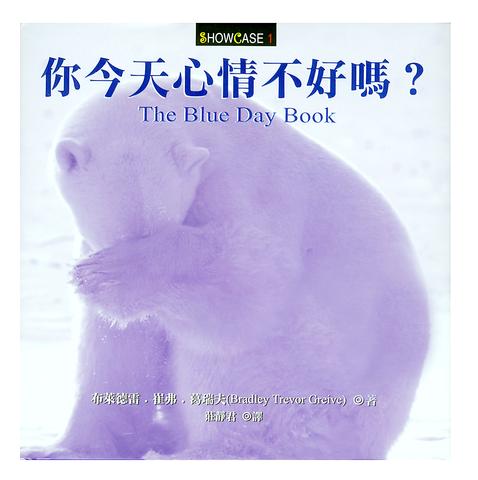
PHOTO COURTESY OF HUANG PUBLISHING
On leaving the newsroom to concentrate on his own projects and find a suitable publisher, Greive soon found that getting a book published was not quite the easy task he'd initially expected it to be.
"When I quit the newspaper business my life took a downturn. I'd had manuscripts rejected by about 30 Australian and 10 US publishers and was feeling pretty down about life in general," he continued. "The idea for the book came to me after I wrote a line of poetry in a cafe in Sydney while feeling blue."
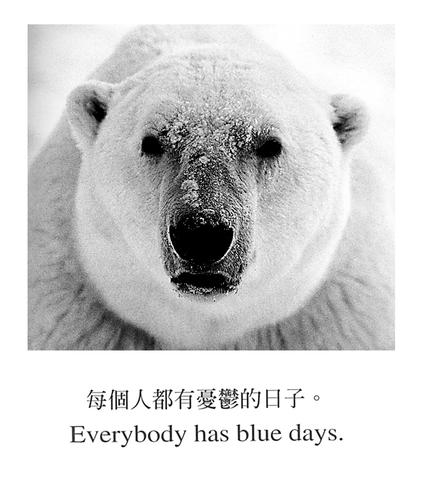
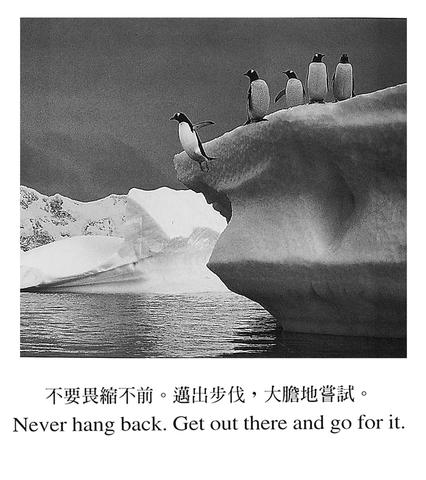
After penning the sentence "the world turns gray and I grow tired," adding a picture of a tortoise sleeping on its back and picturing a gray world, Greive suddenly realized that this monochrome way of looking at life was how dogs saw life and they never seemed miserable. And thus was born the concept behind The Blue Day Book, a book of less than 100 pages of photos and even few sentences. It would be another two years before Greive finally saw his concept in print.

The wait was worth it, however. Less than six months after The Blue Day Book was published, Greive's collection of photographs of animals with human characteristics found itself not only in the number one position on Australia's bestseller list, but had also made the number seven slot on The New York Times' bestseller list.
Since the phenomenal success of his first photo narrative, The Blue Day Book in 2000, the former paratrooper has moved as far away from satire as is possible. The most celebrated of all antipodean writers, both at home and overseas now concentrates on a more easily appreciated and mellow style of humor. His style is now far less reliant on satire and is instead aimed at everyday folk and their thoughts apropos to love and life regardless of gender or race.
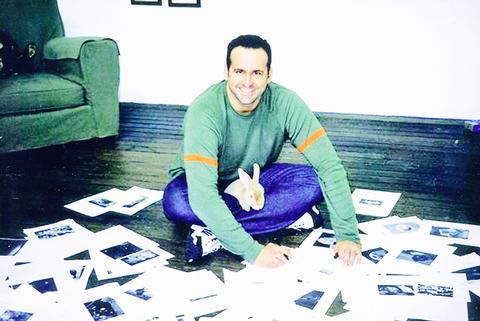
PHOTO COURTESY OF FNAC
"The books are fun. There's nothing special to them and they don't preach, which is one of the reasons I guess they've been so successful in so many parts of the world," he continued. "They put suggestions forward and people see themselves or their friends in the images."
Filled with heart-warming anecdotes and observations of life, the books that have made Greive a household name from Tokyo to Rio have now been translated into half a dozen languages.
While his books continue to make bestseller lists the world over; there have been a few hiccups. The most notable of which has been the omission of photo credits on the Taiwan and Brazilian publications of his works.
"This is a problem that has occurred in two places and one that will be put right when I've spoken with my publisher," Greive said. "On all other copies there are photo credits and it is explained where each photograph originally came from." Another problem that Greive has found himself with is the categorizing of his works. According to the author, he's discovered his books in self-help, children's, humor and even philosophy sections of bookstores. Not that the miss-labeling or missing photo-credits has Greive that worried, as he reckons the three reasons behind the global popularity of his books will continue to ensure their success regardless of category of credits.
"It's simply a case of simplicity, poetry and, of course, a good dose of humor."

By global standards, the traffic congestion that afflicts Taiwan’s urban areas isn’t horrific. But nor is it something the country can be proud of. According to TomTom, a Dutch developer of location and navigation technologies, last year Taiwan was the sixth most congested country in Asia. Of the 492 towns and cities included in its rankings last year, Taipei was the 74th most congested. Taoyuan ranked 105th, while Hsinchu County (121st), Taichung (142nd), Tainan (173rd), New Taipei City (227th), Kaohsiung (241st) and Keelung (302nd) also featured on the list. Four Japanese cities have slower traffic than Taipei. (Seoul, which has some

In our discussions of tourism in Taiwan we often criticize the government’s addiction to promoting food and shopping, while ignoring Taiwan’s underdeveloped trekking and adventure travel opportunities. This discussion, however, is decidedly land-focused. When was the last time a port entered into it? Last week I encountered journalist and travel writer Cameron Dueck, who had sailed to Taiwan in 2023-24, and was full of tales. Like everyone who visits, he and his partner Fiona Ching loved our island nation and had nothing but wonderful experiences on land. But he had little positive to say about the way Taiwan has organized its

Michael slides a sequin glove over the pop star’s tarnished legacy, shrouding Michael Jackson’s complications with a conventional biopic that, if you cover your ears, sounds great. Antoine Fuqua’s movie is sanctioned by Jackson’s estate and its producers include the estate’s executors. So it is, by its nature, a narrow, authorized perspective on Jackson. The film ends before the flood of allegations of sexual abuse of children, or Jackson’s own acknowledgment of sleeping alongside kids. Jackson and his estate have long maintained his innocence. In his only criminal trial, in 2005, Jackson was acquitted. Michael doesn’t even subtly nod to these facts.

Writing of the finds at the ancient iron-working site of Shihsanhang (十 三行) in New Taipei City’s Bali District (八里), archaeologist Tsang Cheng-hwa (臧振華) of the Academia Sinica’s Institute of History and Philology observes: “One bronze bowl gilded with gold, together with copper coins and fragments of Tang and Song ceramics, were also found. These provide evidence for early contact between Taiwan aborigines and Chinese.” The Shihsanhang Web site from the Ministry of Culture says of the finds: “They were evidence that the residents of the area had a close trading relation with Chinese civilians, as the coins can be


 RSS
RSS