


Xie Bingying (謝冰塋) is well-known in Taiwan. Born in 1906 in a small village in Hunan Province (so small that her daughter and son-in-law have been unable to locate it), she came here in 1948 and stayed until emigrating to the US in 1974. While in Taiwan, she continued her career as an author, and ended up publishing 60 books in 94 years of life. She died in San Francisco in 2000.
A Woman Soldier's Own Story combines two volumes of autobiography she published in China in 1936 and 1946. The whole work was re-issued in Taiwan, with cuts of some politically sensitive passages, in 1956, and filmed here in 1975. Now it has been translated into English by her daughter, Lily Chia Brissman, and her daughter's husband, Barry Brissman.
The book tells the story of Xie's life up to the age of 32. At every turn she rebels against tradition, and given the repressive nature of many traditions in China in the early 20th century, this quickly becomes a tale of heroic defiance. The daughter of a scholarly though impoverished father, she insists on going to school, even though the only school available is exclusively for boys. At the age of 12 she cuts the binding from her feet and burns them. She stage-manages a school protest against reading the Bible, and against colonial influences in general. At 20 she joins the army and takes part in the Northern Expedition of 1927 against predatory warlords.
After quitting military life, she lives as an unmarried mother in Beijing. She is in Nagasaki in September 1931 when the Japanese invasion of Manchuria is announced, and bravely helps organize a protest meeting of Chinese students in Tokyo. In January 1932 she is in Shanghai when Japan attacks the city.
All this should be marvelously stirring stuff, and in places it is. There's a wonderful encounter, for example, with an "Earth Emperor" high in the mountains of Fujian Province. This is a local leader universally venerated for his goodness and non-ideological, practical wisdom. The entire area is widely considered an earthly paradise in which everyone lives a simple, happy rural life under the wise rule of this enlightened man. It's in a utopian tradition that goes back millennia in imaginative writers, but Xie appears to have stumbled on it in real life.
Most of the book isn't like this, however. Xie is more characteristically impetuous and quick to judgment. There's nothing skeptical, let alone pensive, about her. She's quick to spot injustices, and equally quick in deciding how they should be remedied. This ready self-confidence will not be to everyone's taste.
The author's instant judgments sometimes combine with the inappropriately neutral tone of her translators' prose to near-disastrous effect. There's one scene in which three landlords are condemned to death by mob acclamation, and then executed on the spot. The author appears to have no qualms about this barbarity, and the translators are happy to just trot along in their usual bland and measured prose. This combination makes for distinctly unpleasant reading.
Xie's character even comes across in places as stubborn, self-advertising and brusque. Sometimes her attitudes are almost laughably superficial. After she's completed a novel, apparently of 200,000 characters, the friend on whom she's based her heroine reads it "in a single breath" (whatever that means), and then remarks "My actual experiences didn't seem to be so hard to bear, but after reading your story I feel totally heart-broken."
The comedy of the situation is translated without remark, if indeed it is even noticed. The effectiveness of her novel is what concerns the writer. This is typical of the breathless and sometimes self-centered nature of the book as a whole.
In addition, the prose, in this translation, is on occasion less than inspired. Consider the following as a specimen of what the reader at times has to endure: "When the spring arrived and windows were open, you could see the deep blue heavens, green mountains, beautiful flowers and plants, and little birds flitting to and fro in the sky. Truly, it was a village of green mountains and luxuriant water, a paradise to make one drunk on its beauty."
Lily and Barry Brissman may retort that this is a literal translation of the original, and unthinking sentimentality and cliche in the manner of this short passage may well characterize this prolific author. But in English this is prose to glaze any and every eye.
The truth of the matter would seem to be that Xie was a remarkable woman of action, who then recounted her doings in books like this one, rather than a writer anxious to achieve literary perfection for its own sake.
Frankness, honesty, openness and naturalness are the qualities she is quick to notice and to admire in others, and these are the things she strives to embody in her own life and prose style. The problem is that other people's feelings don't end up getting much space in her autobiography. For the most part it's a record of her own achievements and heroic successes against the odds.
This, in other words, is a brand of outspoken feminism and uncompromising, up-to-the moment radicalism that will be a tonic to some and slightly wearying to others. There's no doubt, though, that when Xie describes her sexual independence, notably her refusal to continue with an arranged marriage despite having gone along with the actual ceremonies, not a few hearts in modern Taiwan will reach out for her in sympathy and admiration.
Elsewhere, she is briefly imprisoned for buying books written by communist sympathizers when in the wrong part of the country, and takes up a teaching post for which she is not really qualified, instantly winning the hearts of her students by her openness, friendliness, and leadership in rallying them against oppression of any and every kind.
Despite its shortcomings as literature, this is a spirited record by a highly independent woman. There will be some women in Taiwan who consider themselves less independent even today than Xie Bingying managed to be in China more than half a century ago.
By Xie Bingying
281 pages
Columbia University Press

Taiwan’s overtaking of South Korea in GDP per capita is not a temporary anomaly, but the result of deeper structural problems in the South Korean economy says Chang Young-chul, the former CEO of Korea Asset Management Corp. Chang says that while it reflects Taiwan’s own gains, it also highlights weakening growth momentum in South Korea. As design and foundry capabilities become more important in the AI era, Seoul risks losing competitiveness if it relies too heavily on memory chips. IMF forecasts showing Taiwan widening its lead over South Korea have fueled debate in Seoul over memory chip dependence, industrial policy and

And so, in the wake of US President Donald Trump’s trip to the People’s Republic of China (PRC), all the experts on the Strait of Hormuz suddenly became experts on US-China-Taiwan relations. The Internet has certainly expanded human knowledge. Lots of these sudden experts made noise this week about Trump’s words after the meeting with PRC dictator Xi Jin-ping (習近平). Trump is going to sell out Taiwan! Longtime Taiwan commentator J. Michael Cole summed the situation up neatly in the Guardian: “We need to keep in mind that he has a tendency to say many things — sometimes contradicting himself within
There is considerable frustration and confusion among many, both in Taiwan and abroad — including in Washington — as to why the Chinese Nationalist Party (KMT) seems so dead set on using their legislative leverage to slash defense spending and disrupt the ability of the ruling Democratic Progressive Party (DPP) administration to function. Are they pawns of the Chinese Communist Party (CCP)? Are they traitors? In reality, there are multiple reasons. In the first column in this series on this subject, “Donovan’s Deep Dives: How and why the TPP and KMT help Beijing” (Sat May 16, page 12), we examined three
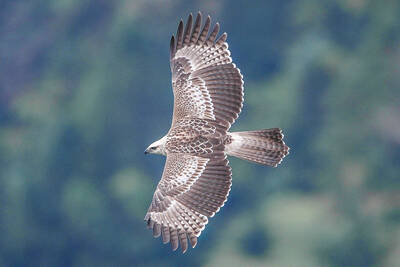
It took 12 years and months of standing in the same mountain location for director Liang Chieh-te (梁皆得) to capture a few seconds of footage: Taiwan’s largest resident raptor locking talons with its mate and spinning through the air in a courtship ritual. With only about 1,000 left in the wild and very short flight windows, the mountain hawk-eagle remains among Taiwan’s most elusive birds. The species generally produces only one offspring per year. Using forest cameras, the film crew and research teams document the arduous process the monogamous pairs go through for the chick to hatch and grow up, weathering


 RSS
RSS