


In 1998, a little known Canadian musician by the name of Matthew Lien arrived in Taiwan to record sounds of nature for an upcoming album.
Capturing the sound of rain as it poured into the streets of Hualien, the trickle of mountain streams and rivers ambling through scenic east-coast woodland areas and the wind as it lashed the cliff-tops of Penghu were all on the new-age artist's recording agenda.
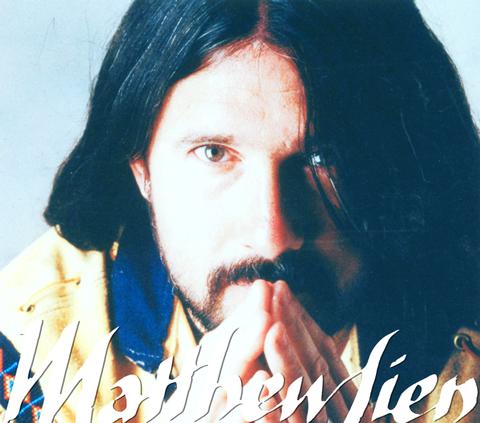
GRAPHIC COURTESY OF PARIS INTERNATIONAL
After a week of wading through rivers and hanging precariously from cliffs, Lien returned to his native Whitehorse, the capital city of the Yukon, and began the lengthy process of editing the sounds and blending them with his piano-driven new-age/world music harmonies.
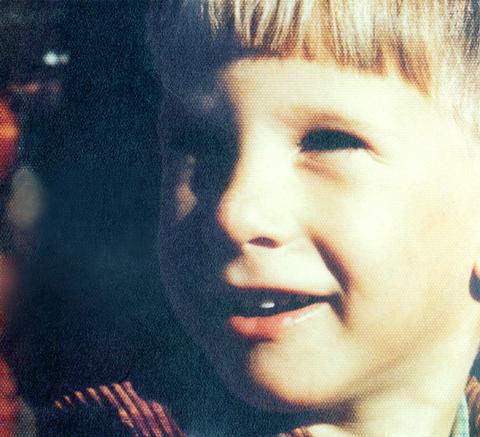
The result was an album titled Voyage to Paradise. Released in mid-1999, the album not only occupied the Taiwan international charts for over a dozen weeks, it also became the first time an album by a foreign recording artist was nominated for Best Album of the Year at the annual Golden Melody Awards.
The huge success of Voyage to Paradise shot Lien to almost superstar status in Taiwan.
"It's gotten to a point now that when people ask me how many times I've been to Taiwan I feel good that I don't know. I've simply lost count," Lien said in an interview with Taipei Times. "When I come here now and the whole superstar thing is happening I feel a lot more comfortable with it. A couple of years ago I'd have trouble hopping on a train to Ilan. I'd feel awkward that so many people would recognize me, and no one, including myself would know what to say."
While the phenomenal success enjoyed by Lien's Voyage to Paradise album appeared hard to beat, his 2000 album, Touching the Earth, was greeted with equal gusto by Lien's ever-increasing local fan base.
Within two days of hitting record stores the album had topped the international charts, entering ahead of new releases by David Bowie, Sting, Celine Dion and even Eric Clapton.
The album remained in the Taiwan International Top 20 for over 11 weeks following its release and continues to be one of the new-age musician's best-selling records in Taiwan.
"I think that because I'm not a pop artist, the material I produce isn't reliant on fashions and fads," continues Lien. "The material I produce has a depth beyond pop music, so the people who are buying it are doing it for deeper reasons. Which means that people continue to listen to my music regardless of passing trends."
Lien's success in Taiwan is not limited solely to record sales, however. His concerts have become legendary. Regardless of whenever or wherever the bearded new-age artist appears his concerts are guaranteed sell-outs.
When he returned to Taiwan shortly after the devastating 921 Earthquake, his one-off "Rebuilding Formosa" concert attracted over 30,000 and helped raise well over NT$600,000 in earthquake relief funds.
Last year Lien once again found himself performing to massive crowds in Taiwan. Upwards of 20,000 braved torrential rain and thousands more tuned into to a live TV broadcast to catch Lien headlining the 2000 Earth Day celebrations with a 25-piece ensemble in the plaza of Taipei's Chiang Kai-shek Memorial Hall.
For his up-coming performances, however, Lien is taking his show indoors to some of the nation's major concert halls.
"There is something appealing to me about performing outdoors to a huge mass of people under the sky with the wind in your hair," Lien said. "But performing indoors allows you to be more intimate with your audience ... all eyes are focused on you and what you are doing rather than the surroundings. And of course, there's no need to crank the sound up so the actual sound is much sharper and clearer when performing indoors."
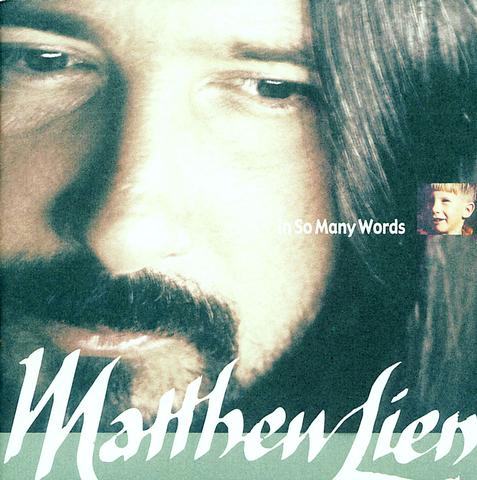
Lien's latest studio offering, In So Many Words, was released in Taiwan earlier this week and has already eked its way into the local charts. Unlike his previous albums that saw Lien using a profusion of world music to create a hypnotic and atmospheric sound, In So Many Words blends piano with more mainstream styles, such as blues, folk and even a splash of ska.
"The new album really stands apart from my previous releases. Whereas before I'd rely on world music for inspiration I've looked at myself and the type of music I grew up with to create a very different sound," he explains. "It's more me rather than the world you could say."
While coinciding with the local release of his latest album, Lien's upcoming performances are set to include not only new material but popular tunes from his previous albums.
"I'm not a great believer in performing music from new releases, since it comes across as if I'm simply out top promote the album rather than entertain," Lien said. "We'll be performing many of the older numbers, especially those tunes popular in Taiwan. But then we'll also be throwing in some surprises as we've adapted several of my older works to suit the smaller, eight-piece band I've brought with me this time."
What: Matthew Lien Live in Concert
When & Where: Tonight, Taichung's Chungshan Hall (台中市中山堂).
Tomorrow, Taipei's Sun Yat Sen Memorial Hall (台北市國父紀念館).
Sunday, Kaoshiung's Chih-te Hall (高雄市至德堂). All shows begin at 7:30pm.
Tickets: Tickets for Taichung and Kaoshiung performances cost between NT$300 and NT$1,500. Tickets for the Taipei performance cost between NT$300 and NT$2,000. Tickets for all shows are available at the door or in advance through ERA ticketing outlets.

Taiwan’s English education system is being pulled apart by three opposing forces. Bilingual Nation 2030 pulls students toward English and global communication. Artificial Intelligence (AI) readiness pulls them toward digital judgment, verification and AI-mediated work. But Taiwan’s old exam culture pulls them back toward memorization, grammar drills, timed reading and correct answers. If the education system keeps using old exams to define success, it risks producing graduates who are neither genuinely bilingual nor genuinely AI-ready, but trained for tasks machines can already perform. The first force is Bilingual Nation 2030. Launched in 2018, the policy aimed to “help Taiwan’s workforce connect
It seems every few days one bumps into one of those “real man” comments in which Taiwan is urged to “face reality” or similar, and “make a deal,” with the speaker implying that soon it will be too late. “Deal” advocates always present themselves as having a superior grip on reality, and the manly ability to make the “hard choice.” Their testosterone-laden language often echoes that of Taiwan sellout advocates. Note that such commentary always specifies a process (“make a deal, work with, make progress”), never the end state of what occupation by a violent authoritarian colonialist state will entail. In
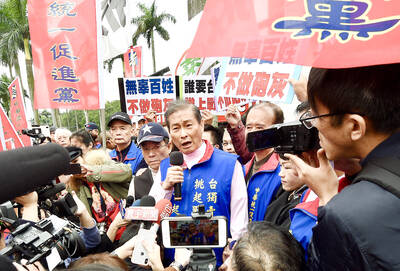
There are shadowy cabals plotting to sell out Taiwan to be annexed by China, by invasion if necessary. Fortunately, they are buffoons. In 2019, former Bamboo Union gangster and founder of the China Unification Promotion Party (CUPP), Chang An-le (張安樂, colorfully known as “White Wolf”), led a protest at the Legislative Yuan against comments made by then-premier Su Tseng-chang (蘇貞昌) that in the event of an attack by China, he would never surrender, but would protect the nation by fighting to the end, even if he only had a broom. Chang had party members bring a wooden casket that they
June 1 to June 7 "If all Taiwanese were as afraid of dying as you, then what would happen?” Physician Shih Chiang-nan (施江南) reportedly said this to his wife Chen Chiao-tung (陳焦桐) after she urged him to stop intervening on behalf of Taiwanese soldiers stranded overseas after serving in the Japanese Army during World War II. Shih had clashed with high-ranking officials over the issue, engaged in several heated arguments with Taiwan governor-general Chen Yi (陳儀) and allegedly shouted at general Ko Yuan-fen (柯遠芬), chief of staff of the Taiwan Garrison Command, over


 RSS
RSS