


The Mid-Autumn Festival takes place each year on the 15th day of the 8th lunar month. It is one of the most popular Chinese holidays, and this year it falls on Oct. 1.
According to legend, the moon is always at its roundest and brightest on this night and is symbolized in the holiday's main food specialty, the mooncake. Mooncakes are a delicacy associated with this festival and are given as gifts in the lead-up to the holiday. The cakes symbolize family unity and perfection. Most mooncakes look quite similar, being round in shape and glazed. The full moon is often further symbolized by whole egg yolks in the cake's filling.
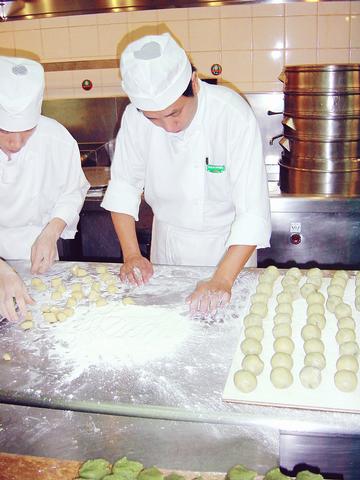
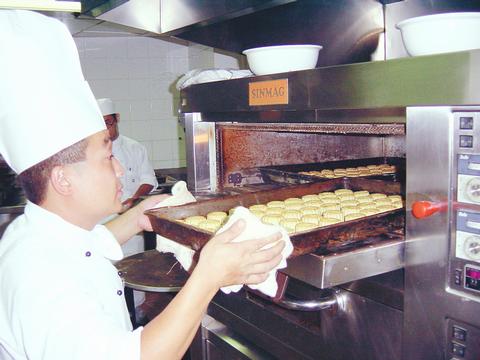
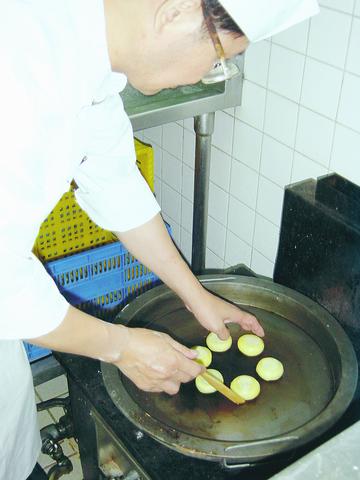
The cakes are typically filled with a variety of bean pastes and the exterior is often embossed with the trademark of the baker. This is done with a wooden mold the design of which goes back centuries for some companies. The making of mooncakes is complex and time-consuming, so most people now buy the cakes from bakeries or hotels.
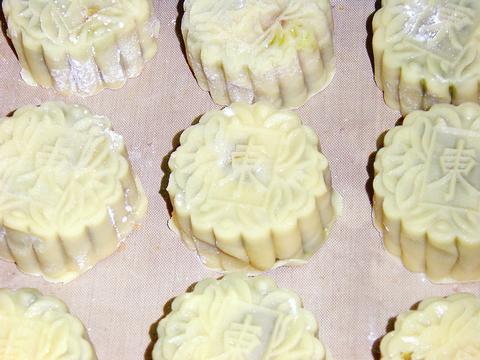
Mooncakes come in a number of styles, the most popular of which are Cantonese mooncakes (
Traditional Cantonese mooncakes are characterized by their thin shell, but in Taiwan, a hybrid variety has emerged that, while using the same basic ingredients, has a much thicker crust. Ho Chien-pin (何建彬), a dessert chef at the Howard Plaza Hotel, said the reason for the thick crust is due to the poverty Taiwanese people faced in the early days of settlement here, which forced them to make a thicker shell and include less of the rich filling in their mooncakes. The use of the thick crust continues even today.
According to Yen Kuo-ming (嚴國銘), the main dessert chef at Taipei's Far Eastern Plaza Hotel, lotus seed paste is the favored filling for Cantonese mooncakes in Hong Kong. He uses a special lotus called hsianglien (湘蓮) from Hunan Province in China. Having studied at one of the most popular traditional bakeries in Hong Kong, the authenticity of his cakes is beyond doubt.
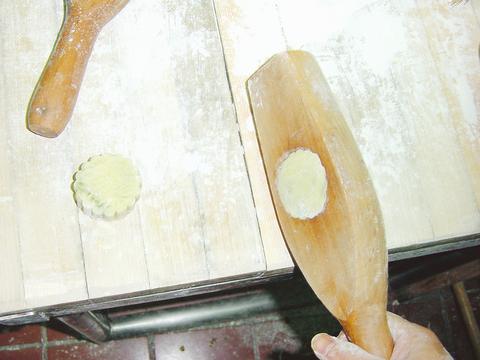
Another popular filling is the five-nut filling made of almonds, Jacob's tears, pine nuts, sesame and walnuts. Ham, other cured meats and Chinese sausage may also be added by some bakeries.
Taiwanese mooncakes generally have a thin, flaky crust and the most common filling is green bean paste. These cakes are, in fact, quite similar to green bean cakes, another popular local pastry. For the festival, Cantonese-style cakes have become most popular, and few bakeries continue to make traditional Taiwanese-style mooncakes.
Another popular variety of mooncake is the Soochow-style mooncake, originally from the Shanghai, Jiangsu and Zhejiang region in eastern China. What differentiates these cakes from Cantonese and Taiwanese mooncakes is its preparation using a method called dry-frying, which allows the cakes to be preserved longer than either Cantonese or Taiwanese varieties. This preparation is a carry over from the days before refrigeration. "The Cantonese-style and Taiwanese-style mooncakes go bad easily because they preserve so much moisture," Ho said.
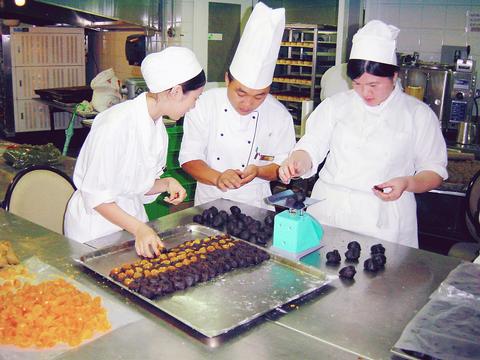
Original mooncake recipes are developed each year to appeal to people looking for something new. Ho said a Soochow-style mooncake with Chinese yam and lotus seed paste is this year's new product. "We mix the paste of purple yam, which is sweet, and the chips of white yam and mushroom, which are salty, to get a special balance of flavors," Ho said.
Such innovations are not always successful, as last year's smoked plums with orange didn't catch on with the public. He hopes that this year's offering will do better.
This year, aside from the popular lotus seed paste with egg yolk and red bean paste with egg yolk, Yen this year will be making magnolia paste and osmanthus paste mooncakes. "Magnolia is a kind of edible plant in the orchid family from Malaysia and is typically used in desserts. I tasted it [in Malaysia] and decided to use this unique flavor in our mooncakes," he said.
Before biting into mooncakes, first consider the calories they contain. A Taiwanese-style mooncake commonly has 250 calories and the most popular egg yolk and bean paste cakes pack over 500 calories. A date paste cake with walnuts has about 737 calories.
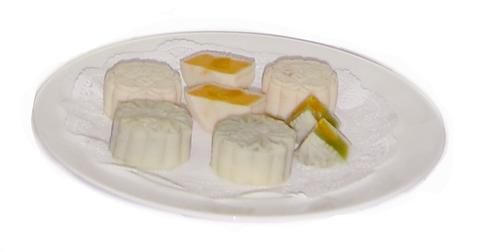
For the health-conscious, many bakeries and hotels offer low-fat mooncakes that are also delicious. These options include ice cream mooncakes, frozen yogurt mooncakes and jelly mooncakes, and in these fat-free days, the lighter cakes often form the main thrust of a bakery's advertising.


Taiwan’s English education system is being pulled apart by three opposing forces. Bilingual Nation 2030 pulls students toward English and global communication. Artificial Intelligence (AI) readiness pulls them toward digital judgment, verification and AI-mediated work. But Taiwan’s old exam culture pulls them back toward memorization, grammar drills, timed reading and correct answers. If the education system keeps using old exams to define success, it risks producing graduates who are neither genuinely bilingual nor genuinely AI-ready, but trained for tasks machines can already perform. The first force is Bilingual Nation 2030. Launched in 2018, the policy aimed to “help Taiwan’s workforce connect

“Taiwan’s Opposition Leader Comes to US With a Message Straight Out of Beijing” read a May 31 headline in the Wall Street Journal. Top US administration officials and members of Congress almost certainly read the WSJ, and if there was a bullet point takeaway that people in Washington should absorb ahead of Chinese Nationalist Party (KMT) Chair Cheng Li-wun’s (鄭麗文) arrival in DC on June 9, that headline is it. The last few columns have discussed this very topic, and the timing is not coincidental. While those top officials likely do not read the Taipei Times, judging by the number
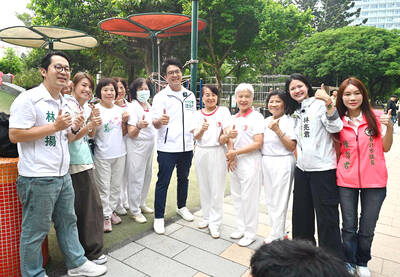
With weighty, anxiety-inducing geopolitical topics dominating the headlines, checking in on the wild and weird state of local politics can take some of the edge off. This November’s elections will determine who will be in charge of fixing potholes in your neighborhood, not the potholes in Taiwan’s complicated geopolitical space. Recently, after an online interview with a Taipei-based journalist, I commented that Taipei journalists never go further than the MRT can take them. He laughed and agreed. Naturally, the Taipei mayoral race is eating up much of the press attention. TAIPEI CITY Democratic Progressive Party (DPP) candidate Puma Shen (沈伯洋) has
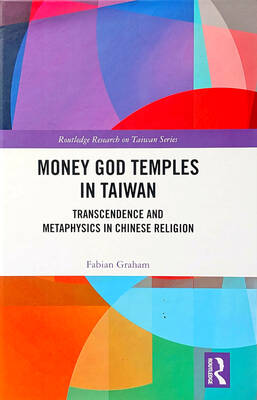
As someone who normally steers clear of books with “transcendence” or “metaphysics” in their subtitles, this reviewer — a casual observer of local belief systems since the 1990s — found Fabian Graham’s Money God Temples in Taiwan a challenging read. Those who’ve only dipped their toes into temple culture will likely need to parse several sections with special care if they’re to keep up with the author, a British ethnographic researcher whose previous books have investigated religious practices among ethnic Chinese in Southeast Asia. This scholarly volume examines a facet of Taiwan’s religious landscape that didn’t exist a century ago, and


 RSS
RSS