


He was not of an age, but for all time!" said English Jacobean playwright, Ben Jonson, of Shakespeare in his 1623 biography entitled To the Memory of My Beloved, the author, Mr William Shakespeare.
Of course, when Jonson penned the accolade to his play-writing nemesis he would have had no idea as to how true these words would prove to be. And he certainly would never have imagined that one day Shakespeare's plays would be staged in a place as distant from England as Taiwan, albeit in such adapted forms that he may not even recognize the works.
With the exception of university students, very few local theaters dare to stage a verbatim production of Shakespeare, having learned long ago that such shows do not fill theater seats in Taiwan.
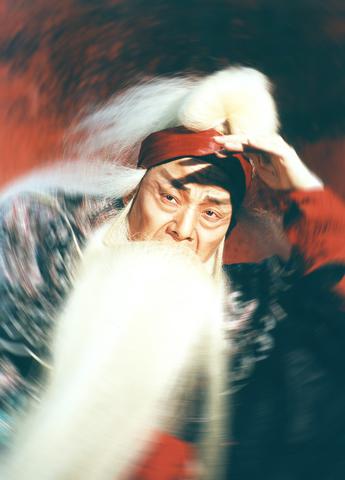
PHOTO: TSAI TE-MAO
Even renowned Shakespeare troupes like the Royal Shakespeare Company, which played to packed houses in Hong Kong last year, found itself performing The Taming of The Shrew at Taipei's National Concert Hall to a half-empty auditorium.
Thespians in Taiwan mostly agree that Shakespeare was, and remains, the most notable Western playwright but his plays simply don't travel well.
"It's great theater, but it just looks stupid in Asia. Ok, the story lines and plots are timeless, but when you see Oriental people on stage pretending to be Caesar, a king of England or an Italian nobleman it just doesn't work," said Wesley L. Ko (
"Then there's the question of language. Even if the production uses one of the three major [Chinese] translations of Shakespeare as a base, the story remains intact, but you loose a lot of the humor and subtleties. The shows are perfect in terms of plot, but audiences just can't relate to them because of the lack of explanation in the translations."
There are three widely accepted authoritative translations of Shakespeare's works in Taiwan, two of which, by Liang Shih-chiu (
The challenge for local troupes has been to spruce up the material, usually by updating either the setting or language, or both. Two successful adaptations of Shakespeare works have been Roan Ching-yue's (
The CLT chose a different tack in putting on Shakespeare. The troupe, which is the brainchild of Chinese opera aficionado Wu Hsing-kuo (
Since the group's founding in 1984, localized adaptations of Western classics and several re-workings of classical Chinese Opera have earned the group a dedicated following among Chinese opera buffs and fans of Western theater alike.
In 1985, Wu's version of Macbeth, renamed The Kingdom of Desire and set in China during the Warring States period rather than in bonnie Scotland, played to packed-houses in Taiwan and received critical acclaim when it traveled to Hong Kong, France, Germany and Tokyo.
The troupe followed up this success in 1990 with a re-working of Hamlet, titled War and Eternity, again set in Ancient China. When the show premiered at the National Concert Hall it was lauded by critics as one of the most exciting performances to be brought to the stage of the prestigious venue that year. The group then went on to stage Euripides's Medea in 1993 and Aeschylus's Oresteia in 1995.
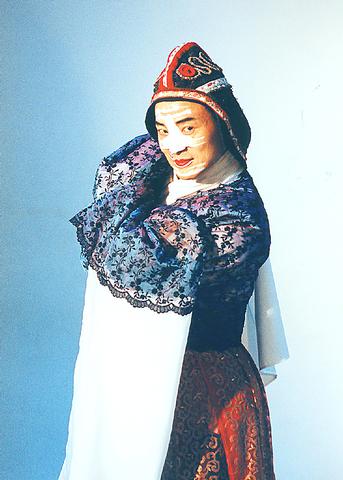
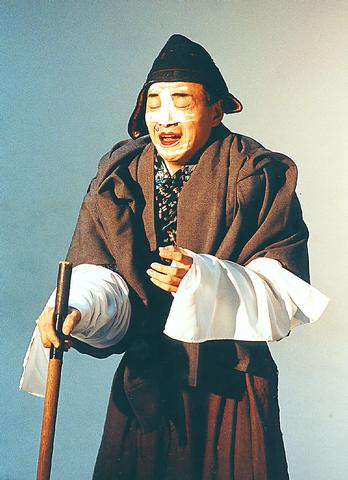
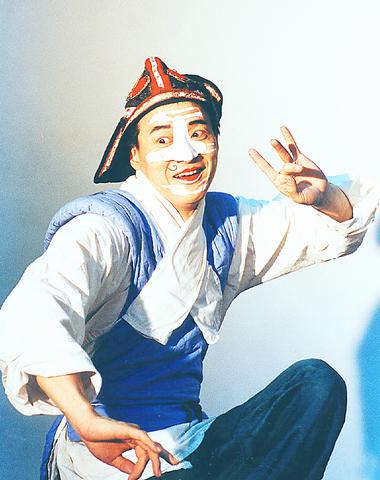
For the troupe's latest adaptation of a Shakespeare classic, Wu has taken an extraordinary step. It may have taken Japanese film director, Akira Kurosawa and a cast of thousands to transmute King Lear to feudal Japan, but the CLT will use a cast of one to bring the tale of treachery and sibling rivalry to the stage in Taipei. Wu will play 10 of the play's leading characters.
He will be taking the guises of King Lear and Goneril, Regan and Cordelia -- the king's three daughters -- as well as the Earls of Gloucester and Kent, Edmund and Edgar the sons of Gloucester, and King Lear's Fool and the Blind Man.
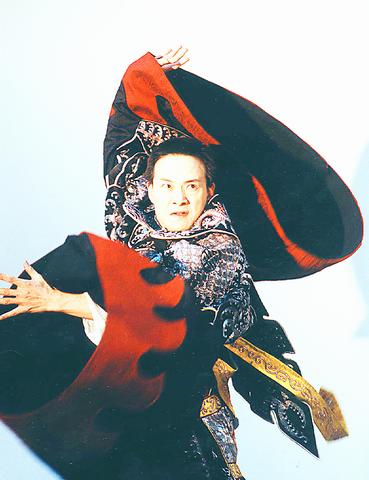
The CLT stands out for its wild costumes, far removed from anything Shakespeare could ever have imagined and King Lear will prove no exception in this regard.
To help transform Wu into so many characters, the operatic maestro has called upon an award-winning costume designer, Hong Kong's Tim Yip (
Performance Notes:
What: Wu Hsing-kuo's King Lear (吳興國 - 李爾在此).
When: Today at 7:30pm, tomorrow at 2:20pm and 7:30pm and Sunday at 2:30pm.
Where: Novel Hall, 3-1 Sungshou Rd.; Taipei (台北市松壽路3-1號).
Tickets: NT$300, NT$500, NT$800, NT$1,000 and NT$1,500. Available through ERA Tickets.
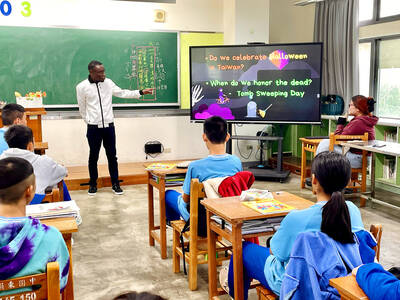
For many people, Bilingual Nation 2030 begins and ends in the classroom. Since the policy was launched in 2018, the debate has centered on students, teachers and the pressure placed on schools. Yet the policy was never solely about English education. The government’s official plan also calls for bilingualization in Taiwan’s government services, laws and regulations, and living environment. The goal is to make Taiwan more inclusive and accessible to international enterprises and talent and better prepared for global economic and trade conditions. After eight years, that grand vision is due for a pulse check. RULES THAT CAN BE READ For Harper Chen (陳虹宇), an adviser
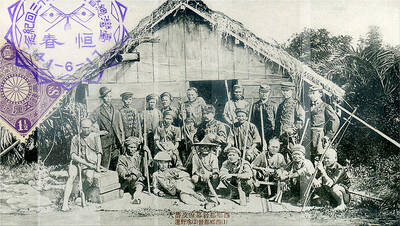
Traditionally, indigenous people in Taiwan’s mountains practice swidden cultivation, or “slash and burn” agriculture, a practice common in human history. According to a 2016 research article in the International Journal of Environmental Sustainability, among the Atayal people, this began with a search for suitable forested slopeland. The trees are burnt for fertilizer and the land cleared of stones. The stones and wood are then piled up to make fences, while both dead and standing trees are retained on the plot. The fences are used to grow climbing crops like squash and beans. The plot itself supports farming for three years.
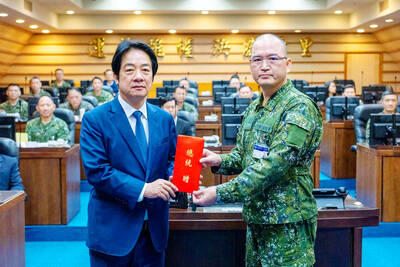
President William Lai (賴清德) on Nov. 25 last year announced in a Washington Post op-ed that “my government will introduce a historic US$40 billion supplementary defense budget, an investment that underscores our commitment to defending Taiwan’s democracy.” Lai promised “significant new arms acquisitions from the United States” and to “invest in cutting-edge technologies and expand Taiwan’s defense industrial base,” to “bolster deterrence by inserting greater costs and uncertainties into Beijing’s decision-making on the use of force.” Announcing it in the Washington Post was a strategic gamble, both geopolitically and domestically, with Taiwan’s international credibility at stake. But Lai’s message was exactly
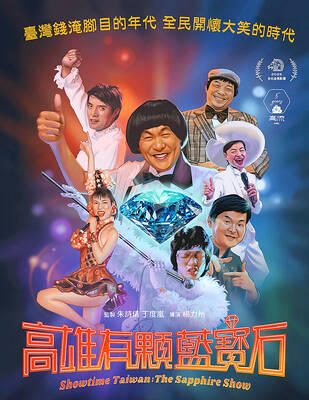
May 4 to May 10 It was once said that if you hadn’t performed at the Sapphire Grand Cabaret (藍寶石大歌廳), you couldn’t truly be considered a star. Taking the stage at the legendary Kaohsiung club was more than just a concert. Performers were expected to entertain in every sense, wearing outlandish or revealing costumes and staying quick on their feet as sharp-tongued, over-the-top hosts asked questions and delivered jokes that would be seen as vulgar, even offensive, by today’s standards. Opening in May 1967 during a period of strict political and social control, Sapphire offered a rare outlet for audiences in


 RSS
RSS