


Last June, tickets for a performance by the Alban Berg Quartett were
sold out long before violinists Gunter Pichler and Gerhard Schlulz,
violist Thomas Kakuska and violoncellist Valentine Erben had stepped of
the airplane at Chiang Kai-shek International Airport.
Tickets for the show were in so much demand, in fact, seats couldn't
even be found to accommodate the then recently elected President Chen
Shui-bian (陳水扁), According to Chen-Chieh Cheng (張正傑), professor of music
at Suchow University and one time student of Erben, Chen was so sorry to
have missed the performance that the president made time to hold a
private audience with the quartet a couple of days after the concert.
The hugely popular Vienna-based quartet make a welcome return to Taiwan
this weekend, when they perform at the National Concert Hall (國家音樂廳) in
Taipei and the CKS Cultural Center (中正文化中心) in Kaoshiung as part of the
ensemble's Anniversary World Tour.
Formed 30 year's ago, the quartet has become one of the most prolific
and in-demand tetrads in the world since its debut in 1971 at the Vienna
Konzerthaus in Austria.
Along the way, the foursome have found enough studio-time record over 50
pieces on the EMI Classics label; an achievement that makes The Alban
Berg Quartett one of the most prolific string quartets in the world.
Dubbed "one of great ensembles of our time" by the Washington Post
the group has astounded audiences and critics alike whenever and
wherever they have performed.
This is high acclaim indeed, and praise to which Chang, accompanying
cellist for the quartet's two appearances in Taiwan, whole-heartedly
agrees.
"It's safe to say that they are the best quartet in the world. They are
perfect and have a musical direction that is unmatched, perfect in fact.
And after you've heard them you don't want to hear anybody else perform
quartets, be they by Beethoven, Hayden Revel or Debussy."
In recent years the ensemble has veered away from straight classical
interpretations and taken to extending its repertoire to include
avant-garde recordings of well known classical works.
Not that there's anything avant-garde about the four gentlemen's latest
release for EMI Classics. A collection of string quartets composed by
Dvorak titled Dvorak: String Quartets Op51 & 105 was released in
early March. And, as with many of the quartet's previous releases, the
album has made inroads into classic music charts in Europe and North
America.
Audiences in Taipei and Koashiuhng will be treated to performances of
Beethoven's String Quartet Opus 132 and Schubert's Quintet Opus
163, for which the Alban Berg Quartett will be joined on stage by
Chang.
Performance Notes:
What:The Alban Berg Quartett
When and Where: Tomorrow at the Taipei National Concert Hall (國家音樂廳) and Sunday at the Kaohsiung CKS Cultural Center (中正文化中心); performances begin at 7:30pm.
Tickets: For Taipei shows:NT$1,500 or NT$2,000. For Kaohsiung shows: NT$800, NT$1,000, NT$1,500, NT$2,000. Tickets are available through ERA Ticketing.

Taiwan’s English education system is being pulled apart by three opposing forces. Bilingual Nation 2030 pulls students toward English and global communication. Artificial Intelligence (AI) readiness pulls them toward digital judgment, verification and AI-mediated work. But Taiwan’s old exam culture pulls them back toward memorization, grammar drills, timed reading and correct answers. If the education system keeps using old exams to define success, it risks producing graduates who are neither genuinely bilingual nor genuinely AI-ready, but trained for tasks machines can already perform. The first force is Bilingual Nation 2030. Launched in 2018, the policy aimed to “help Taiwan’s workforce connect
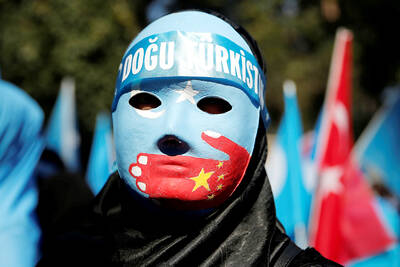
It seems every few days one bumps into one of those “real man” comments in which Taiwan is urged to “face reality” or similar, and “make a deal,” with the speaker implying that soon it will be too late. “Deal” advocates always present themselves as having a superior grip on reality, and the manly ability to make the “hard choice.” Their testosterone-laden language often echoes that of Taiwan sellout advocates. Note that such commentary always specifies a process (“make a deal, work with, make progress”), never the end state of what occupation by a violent authoritarian colonialist state will entail. In

There are shadowy cabals plotting to sell out Taiwan to be annexed by China, by invasion if necessary. Fortunately, they are buffoons. In 2019, former Bamboo Union gangster and founder of the China Unification Promotion Party (CUPP), Chang An-le (張安樂, colorfully known as “White Wolf”), led a protest at the Legislative Yuan against comments made by then-premier Su Tseng-chang (蘇貞昌) that in the event of an attack by China, he would never surrender, but would protect the nation by fighting to the end, even if he only had a broom. Chang had party members bring a wooden casket that they
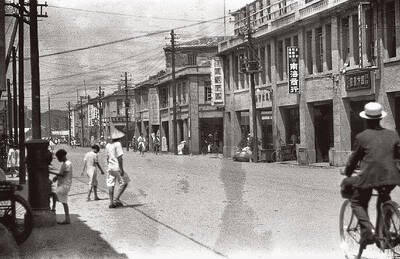
June 1 to June 7 "If all Taiwanese were as afraid of dying as you, then what would happen?” Physician Shih Chiang-nan (施江南) reportedly said this to his wife Chen Chiao-tung (陳焦桐) after she urged him to stop intervening on behalf of Taiwanese soldiers stranded overseas after serving in the Japanese Army during World War II. Shih had clashed with high-ranking officials over the issue, engaged in several heated arguments with Taiwan governor-general Chen Yi (陳儀) and allegedly shouted at general Ko Yuan-fen (柯遠芬), chief of staff of the Taiwan Garrison Command, over


 RSS
RSS