


Taiwan had reason to smile yesterday as director Ang Lee (
Though the movie did not receive the coveted awards for best director and best picture, its awards for best foreign-language film, best cinematography, best original score and best art direction put Taiwan in the record books with the strongest showing by any Asian film at the Oscars. Crouching Tiger lost in the best picture category to the Roman Empire epic Gladiator, while Lee was bested by Steven Soderbergh for best director honors.
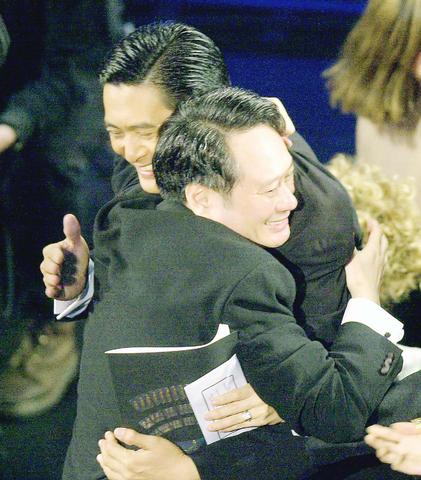
PHOTO: AP.
Yesterday was Lee's third chance at an Oscar, having been nominated in 1994 for his film The Wedding Banquet and again in 1995 for Eat Drink Man Woman.
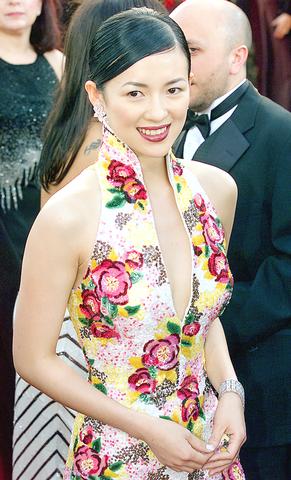
PHOTO: REUTERS
"I am very happy and pleased with this result. This was achieved little by little through the efforts and devotion of Chinese filmmakers all around the world. I have no regrets. Like I said, winning the best foreign-language film award has been a big step for us."
Indeed, any disappointment over the best director award being given to Soderbergh for his work on Traffic and the best picture award going to to Gladiator should be diluted by the resounding success of Crouching Tiger at the box office around the world. Lee also won the best director honors at this year's Golden Globe Awards, Director's Guild of America awards and the Independent Spirit Awards.
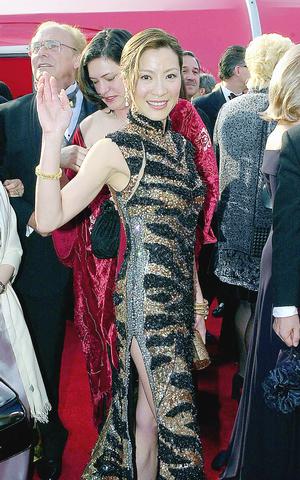
REUTERS: AFP
Lee's next project will be a Universal Studio re-make of The Incredible Hulk, after which he plans to film a prequel of Crouching Tiger.
Of the Crouching Tiger winners, Peter Pau (
"The most exciting part of getting this award is that I beat Gladiator!" Pau said after the ceremony.
"This is a great recognition to my work. I'd like to thank Ang Lee for giving me a chance to shoot something that I've never tried before. This award proves that the way American audiences see films has changed," he said.
Pau's work on Crouching Tiger also points to another trend in Hollywood in which foreign professionals and international cooperative projects are increasingly common.
"Hollywood is very open to foreign professionals in filmmaking. Cinematographers from Italy and Japan have been taking many of the big projects recently, for example," Pau said.
Tim Yip (
In Crouching Tiger, Yip said he had tried to instill a sense of realism in the fantastical martial arts world, creating an unadorned, yet spiritual appearance for its characters. Yip is currently working on two projects, one titled Double Vision (
"I am very proud to take the award. This result is better than I expected," Yip said. "In an industry such as Hollywood's with so many strong design and technical professionals, in the end it gave me and Peter [Pau] the awards. It shows that this time the Hollywood is not biased."
Rounding out the achievement for Crouching Tiger was the Best Original Score award accepted by Tan Dun (
"As a classical music composer I'm thrilled to be here. Crouching Tiger blends East and West, romance and action, high and low cultures."
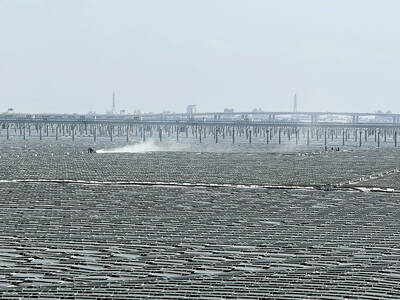
The arithmetic is straightforward and uncomfortable. By the end of 2025, Taiwan had committed itself to a 50-30-20 electricity mix — half natural gas, 30 per cent coal, 20 per cent renewables. The Ministry of Economic Affairs’s (MOEA) own monthly energy reports tell a different story. Natural gas reached 47.8 per cent of generation last year. Coal stood at 35.4 per cent, comfortably above its target ceiling. Renewables came in at 13.1 per cent, well short of the 20 per cent Taipei had pledged a decade earlier. Installed renewable capacity reached roughly half of the 12 gigawatts (GW) the government
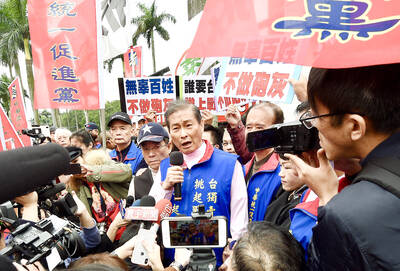
There are shadowy cabals plotting to sell out Taiwan to be annexed by China, by invasion if necessary. Fortunately, they are buffoons. In 2019, former Bamboo Union gangster and founder of the China Unification Promotion Party (CUPP), Chang An-le (張安樂, colorfully known as “White Wolf”), led a protest at the Legislative Yuan against comments made by then-premier Su Tseng-chang (蘇貞昌) that in the event of an attack by China, he would never surrender, but would protect the nation by fighting to the end, even if he only had a broom. Chang had party members bring a wooden casket that they
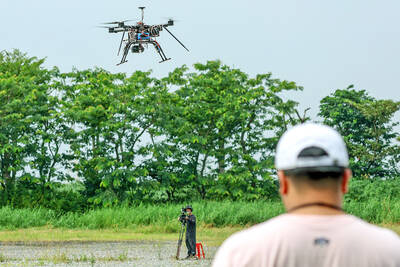
Taiwan’s drone exports are taking off, fuelled by the war in Ukraine, as Taiwanese companies seek a stake in the fast-growing global market for unmanned aerial vehicles (UAV). Low-cost drones used for reconnaissance and strikes are in high demand as governments around the world boost defense spending in the face of intensifying conflicts. A relative new player in the increasingly competitive industry, Taiwan’s pitch is to be an “Asian hub” for the production of UAVs and components free of Chinese materials, or “non-red.” That means its UAVs can be up to three times more expensive than their Chinese competitors, like the world’s biggest
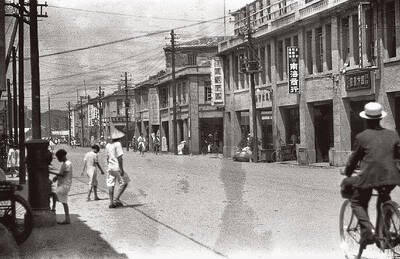
June 1 to June 7 "If all Taiwanese were as afraid of dying as you, then what would happen?” Physician Shih Chiang-nan (施江南) reportedly said this to his wife Chen Chiao-tung (陳焦桐) after she urged him to stop intervening on behalf of Taiwanese soldiers stranded overseas after serving in the Japanese Army during World War II. Shih had clashed with high-ranking officials over the issue, engaged in several heated arguments with Taiwan governor-general Chen Yi (陳儀) and allegedly shouted at general Ko Yuan-fen (柯遠芬), chief of staff of the Taiwan Garrison Command, over


 RSS
RSS