


Chinese New Year is an opportunity to step back into the past. On the first day of the lunar year hoards of people head to temples to give thanks for the arrival of the New Year and pray for twelve months of good fortune.
Smoke from incense and firecrackers floats across temple forecourts; fragrance from traditional foods fills the air; stalls lure passersby to play games of chance; and healers perform "miracles" and sell remedies.
With the festive atmosphere spilling out of temples and into the surrounding streets, the event conjures up ancient temple fairs on holy days and provides a wonderful occasion to lose yourself in the past. And because most religious events are free, the Chinese New Year could be one of the cheapest, and possibly most enlightening, holidays you will spend.
Hsingtien Temple (行天宮) perched on Baiji Mountain (白雞) outside Sanhsia (三峽) is particularly worth a visit. Not only does the temple offer religious activities, the steps leading to the temple are packed with stalls.
Ancient rites
The lunar calendar and new year festivities date from ancient times. Early calendrical calculations allowed humans to harmonize their activities with the seasons and liberate themselves from nature's whims. In imperial times, the Chinese emperor performed ritual plowing of the first furrow at the new year.
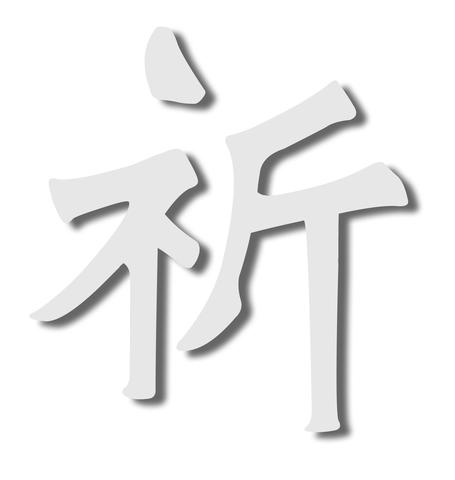
A legend surrounding the new year tells of a monster called "nian" (年, which is the character for "year") that appeared on the last day of the year to gorge on humans. People lit firecrackers to scare it away and emerged on New Year's Day to congratulate those neighbors who had survived.
A vestige of this is incorporated into current religious activities. Taipei's Lungshan Temple, for example, is welcoming the new year with 30 minutes of drumming and gongs beginning at midnight.
For Confucius 2,500 years ago, important deities still represented the natural forces of streams and hills, while personal ceremonies involved ancestor worship.
The Buddha Yet to Come (彌勒佛) and the Taoist Celestial Venerable of the Primordial Beginning (元始天) share a birthday on New Year's Day, though these deities are not necessarily the main objects of people's offerings and prayers. Parents-to-be pray to the Chusheng Niang Niang, the Recorder of Births (註生娘娘); police and soldiers pray to Kuanti, God of War (關帝); and students to Wen Chang Di (文昌帝).
New Year's Day is also celebrated as the day on which Siddhartha Gautama, the historical Buddha, subdued the evil spirits.
Modern Festivities
Near Taipei is Chiwei Tianhou Temple (
On the second day of the new year (today), Taiwanese visit their maternal in-laws. The God of Wealth (財神) is also worshiped, although this is done in the privacy of the home.
Religious activities start about a week before the new year on the 24th day of the 12th month, when offerings are made to the Kitchen God (灶神) before he ascends to report on the household's behavior to the Jade Emperor (玉皇大帝). Cakes and candy are placed on an altar in the home in the hope that his words will be sweet. Many deities ascend to heaven on this date. Sending off the Lord of the Year (太歲) ceremonies are held in many temples on the 24th as well. The 60 deities honored in this ceremony can be seen at Tzu-you Temple (慈祐宮) on Bate Road (八德路), opposite Taipei's Songshan Railway Station (松山火車站).
The main family feast is held on New Year's Eve. At this most important family gathering, an empty place is set for deceased ancestors and absent relatives. Sacrificial offerings are made to ancestors on the fifth day of the year (Jan. 28).
For those still eager for religious experience, on the sixth day of the year (Jan. 29), Qingshuiyan (清水岩) celebrates his birthday. Born in the Song dynasty (960-1279), this monk meditated in a cave for 19 years. His blackened face is the result of a tussle with a demon, which set his cave on fire. Good places to catch his birthday celebrations include the Chingshui Temples (清水祖師廟) in Wanhua and Danshui (淡水)
The ninth day of the year (Feb. 1) is the Jade Emperor's birthday. As the most important of all Taoist gods, he rules the celestial world. It is to him that other deities reported over the last few days.
The fifteenth day of the year (Feb. 7) is the first full moon of the year and the magnificent Lantern Festival announces the formal end of the New Year festivities. To join in the festivities head to the Chiang Kai-shek Memorial Hall in Taipei, where the Taipei City Government will be putting on its largest event of the year.
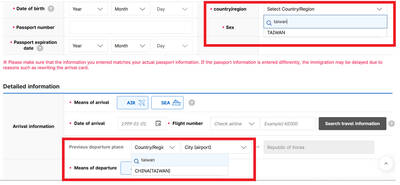
Jason Han says that the e-arrival card spat between South Korea and Taiwan shows that Seoul is signaling adherence to its “one-China” policy, while Taiwan’s response reflects a reciprocal approach. “Attempts to alter the diplomatic status quo often lead to tit-for-tat responses,” the analyst on international affairs tells the Taipei Times, adding that Taiwan may become more cautious in its dealings with South Korea going forward. Taipei has called on Seoul to correct its electronic entry system, which currently lists Taiwan as “China (Taiwan),” warning that reciprocal measures may follow if the wording is not changed before March 31. As of yesterday,
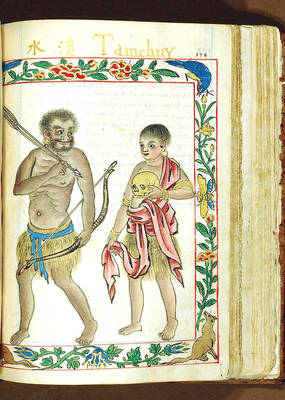
The Portuguese never established a presence on Taiwan, but they must have traded with the indigenous people because later traders reported that the locals referred to parts of deer using Portuguese words. What goods might the Portuguese have offered their indigenous trade partners? Among them must have been slaves, for the Portuguese dealt slaves across Asia. Though we often speak of “Portuguese” ships, imagining them as picturesque vessels manned by pointy-bearded Iberians, in Asia Portuguese shipping between local destinations was crewed by Asian seamen, with a handful of white or Eurasian officers. “Even the great carracks of 1,000-2,000 tons which plied
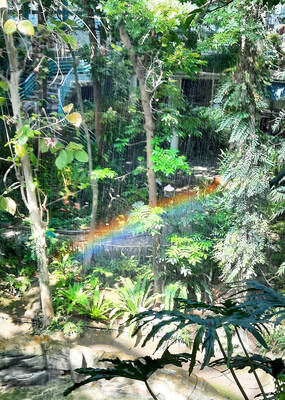
It’s only half the size of its more famous counterpart in Taipei, but the Botanical Garden of the National Museum of Nature Science (NMNS, 國立自然科學博物館植物園) is surely one of urban Taiwan’s most inviting green spaces. Covering 4.5 hectares immediately northeast of the government-run museum in Taichung’s North District (北區), the garden features more than 700 plant species, many of which are labeled in Chinese but not in English. Since its establishment in 1999, the site’s managers have done their best to replicate a number of native ecosystems, dividing the site into eight areas. The name of the Coral Atoll Zone might
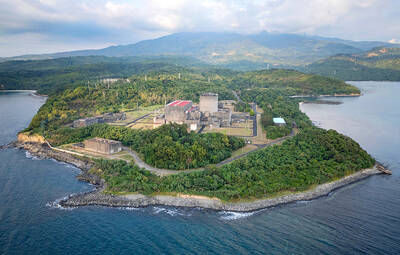
Nuclear power is getting a second look in Southeast Asia as countries prepare to meet surging energy demand as they vie for artificial intelligence-focused data centers. Several Southeast Asian nations are reviving mothballed nuclear plans and setting ambitious targets and nearly half of the region could, if they pursue those goals, have nuclear energy in the 2030s. Even countries without current plans have signaled their interest. Southeast Asia has never produced a single watt of nuclear energy, despite long-held atomic ambitions. But that may soon change as pressure mounts to reduce emissions that contribute to climate change, while meeting growing power needs. The


 RSS
RSS