


The Chinese Nationalist Party (KMT) said on Monday that it would be announcing its mayoral nominees for New Taipei City, Yilan County and Chiayi City on March 11, after which it would begin talks with the Taiwan People’s Party (TPP) to field joint opposition candidates.
The KMT would likely support Deputy Taipei Mayor Lee Shu-chuan (李四川) as its candidate for New Taipei City. The TPP is fielding its chairman, Huang Kuo-chang (黃國昌), for New Taipei City mayor, after Huang had officially announced his candidacy in December last year.
Speaking in a radio program, Huang was asked whether he would join Lee’s team if the latter was chosen as candidate for both parties. Huang responded with: “Of course.”
Some commentators criticized Huang for what appears to be bare-faced transactionalism to further his own career ends. It might be that this is slightly unfair. It might also be that the term “career ends” could turn out to be prophetic. The story involves the TPP’s founding principle, the fate of “third force” parties in Taiwan, Huang’s persona and history of electability, sensible strategy and the importance of protecting the identity of a political party if it is to survive. The TPP owes its initial momentum to former Taipei mayor Ko Wen-je (柯文哲), who founded it in 2019 on the promise of breaking out of the established ideological dichotomy of the KMT and the Democratic Progressive Party (DPP), and whose charisma attracted a considerable number of younger, disillusioned voters. The year 2024 started well for Ko and the TPP, with eight legislative seats that effectively gave them kingmaker status, balancing the two larger parties. Ko had been gifted the chance to make good on his promise, but this was cut short when he was arrested in late August of that year on corruption allegations.
He stepped down in January last year, appointing Huang as acting chairman; in the following month, he was elected party chairman in a landslide. However, Huang is not Ko, and he has steered the party too close to the KMT, unable to get past his strong enmity for the DPP.
In Taiwan, “third force” parties have traditionally performed well in their initial burst, only to flicker and recede within a matter of years. This fate befell the TPP’s predecessors due to their lack of defined vision to differentiate themselves from the KMT and the DPP. Ko had successfully set out his political stall, selling change to a receptive electorate; Huang has wed himself to the KMT, even conceding subsuming his own mayoral candidacy to the KMT’s preferred choice. Clinging to the stronger party might seem savvy; cleaving to KMT Chairwoman Cheng Li-wun’s (鄭麗文) brand of pro-China, US-skeptic rhetoric, which proved so fateful for former president Ma Ying-jeou (馬英九) in the faltering tail-end of his second term, runs the risk of turning more voters away from Huang than it attracts. He could rely on his individual charisma, but that might not get him very far.
Huang’s political career began when he ran as a New Power Party candidate in 2016 in New Taipei City’s 12th constituency, only winning because the DPP did not field a candidate, leaving a clear path for Huang’s victory. The next year, he was subject to a recall motion that only failed because the turnout fell short of the required threshold: More votes had been cast in favor of recall than against. The legislative seat he won in 2024 was not directly voted for: He won it due to his place on the legislator-at-large list. The chairmanship he won in a landslide, but only of votes from within the party. He has not fared well in votes in the larger constituency. His political positioning and actions in the legislature over the past two years might not recommend him to the number of voters he needs. His shot at New Taipei City mayor might not be a personal power play for his own career ends; it is sensible strategy for the good of the party to win a major locality. The irony is that Huang’s unlikeability, penchant for policy flip-flopping, lack of charisma and blinding resentment of the DPP has made it impossible for him to differentiate himself from the KMT with a defined political vision. This might harm his party’s chances and put its very long-term survival at risk.
KMT Chairwoman Cheng Li-wun’s (鄭麗文) recent visit to Beijing and her upcoming visit to Washington will serve as a high-level test of her diplomatic mettle. In Beijing, Cheng was received with symbolic gestures, a warm reception, and high-level access. In Washington, she will receive far less pomp and far sharper questions about the KMT’s vision for the future of Taiwan. Her challenge will be to persuade Washington that the KMT’s engagement with China can coexist with strong deterrence. Cheng’s April 7-12 visit to mainland China coincided with an intense period of conflict in Iran. Despite the strategic significance of Cheng’s trip,
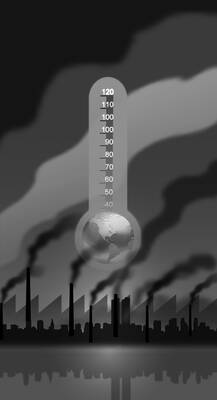
The closure of the Strait of Hormuz has sent the vast Asian chemicals industry into a tailspin. Deprived of the likes of Qatari natural gas and Saudi Arabian oil, the region’s fertilizer and plastics plants are slowing production or even shutting down. Everywhere except China, that is. In petrochemicals, China is unique. As well as a traditional industry that uses oil and gas as feedstock, it has parallel output that relies on its abundant domestic coal. Unsurprisingly, India and other regional powers want to copy and paste the Chinese method. This would not be easy — or climate friendly. The
Indonesian President Prabowo Subianto says he knows how to fix the problems facing Indonesia. Yet his economic mismanagement and authoritarian tendencies are steering the nation toward a familiar mix of currency instability and political chaos. The world’s fourth-most populous nation risks reversing the hard-won democratic and business reforms that came after the Asian Financial Crisis in 1997. At that time, the rupiah collapsed and the political upheaval that followed forced former president Haji Mohamed Suharto from power. Prabowo’s administration is ignoring similar warning signs. That disconnect was apparent in a national address on Wednesday, when Prabowo projected the swagger that has
“Of course you can choose not to be Taiwanese, just do not stay here,” chairwoman of Taipei 101 operator Taipei Financial Center Corp Janet Chia (賈永婕) said in an online interview with local entertainer Tai Chih-yuan (邰智源), triggering intense discussion on social media, with politicians across party lines weighing in. In the interview, which was aired on May 14, Chia and Tai’s discussion over a meal in Taipei 101 covered Chia’s career change from entertainer to chairwoman and US climber Alex Honnold’s free solo climb up the Taipei 101 building. During the interview, Chia said, “Being on this land, we


 RSS
RSS