


During the Lunar New Year holiday, United Microelectronics Corp founder Robert Tsao (曹興誠), referring to himself as “a citizen of Taiwan,” issued an open letter addressed to Chinese President Xi Jinping (習近平) on social media. He reminded Xi that Qin Shi Huang (秦始皇) annihilated the six warring states and successfully unified China, becoming its first emperor. The result, was that the Qin (秦) state, whose lineage had endured for about 700 years, was completely destroyed only 15 years later. Everyone, whether members of the Qin royal family or powerful ministers, such as Qin Dynasty prime minister Li Si (李斯) and official Zhao Gao (趙高), met exceedingly tragic ends. After the founding of the People’s Republic of China, most of its founding leaders likewise were subjected to brutal persecution.
As Tsao wrote in his letter, these historical lessons tell the world that “forced unification cannot bring about national rejuvenation. On the contrary, it would bring catastrophic disaster upon one’s own country and people.” If Xi truly wishes to fulfill his historical mission as China’s leader, invading Taiwan is a dead end. Returning power to the people is the only path, he wrote.
Tsao’s father came to Taiwan in 1947 to work as a teacher, while his pregnant mother remained in Beijing. When Tsao was just over one year old, he accompanied his mother to Taiwan as part of the Chinese Nationalist Party’s (KMT) retreat to Taiwan. Today, he calls himself a “citizen of Taiwan.”
Tsao’s earnest admonition as a citizen was not just a message directed at Xi, but also a warning to all Taiwanese. When Qin conquered the six warring states, the Qi (齊) state surrendered with almost no resistance. However, it did not gain peace in return. Instead, it endured tyrannical Qin rule, later plunging into the turmoil of its collapse and the subsequent Chu-Han contention (楚漢之爭).
Likewise, in the final stage of the Chinese Civil War, many KMT troops surrendered — but they did not secure peace. They were reorganized into the Chinese People’s Liberation Army and sent to fight in the Korean War, suffered famine during China’s ill-fated “Great Leap Forward” and were later persecuted amid the struggles of the Cultural Revolution.
This generation of Taiwanese stands at a historical crossroads. We must not shrink from our historical mission or allow ourselves to be burdened with historical anxieties. Instead, we should feel proud and fortunate to be the generation that would determine Taiwan’s future, and face this grave responsibility head on.
Many young Taiwanese did not live through the Martial Law period. Rather, they were born into an environment of democracy and freedom, and might find it difficult to imagine the dark authoritarian past that accompanied former president Chiang Kai-shek’s (蔣介石) exile to Taiwan. As a result, some might underestimate the extent of China’s authoritarian rule. However, once this generation fully recognizes the dangers of authoritarianism and totalitarianism, it would surely step forward to shoulder the historical mission of defending freedom and democracy.
China’s only viable path to survival and development is to abandon military aggression and return power to the people. However, when Chinese leaders insist on moving backward, Taiwanese must face their own “Washington moment.” Former US president George Washington had originally respected and admired Britain, but when he learned that King George III had proclaimed the use of force to suppress the colonies, he vowed to sever ties with an unjust and unrighteous regime. The US later established independence, and has become the world’s greatest superpower.
At the time of the US Revolutionary War, there were only 13 colonies concentrated on the US’ east coast, and their total population was smaller than that of today’s Taichung. That being the case, can Taiwan aspire to global leadership? Indeed, it can.Taiwan holds a commanding global position in semiconductor manufacturing and numerous other “hidden champion” fields.
Taiwanese must not allow themselves to be bullied — self-reliance is the proper path. The historic mission of today’s Taiwanese is to establish a normal nation and lay a solid, unshakable foundation for the coming generations that would compete on the global stage, now and in the future.
Tommy Lin is chairman of the Formosa Republican Association and director of the Taiwan United Nations Alliance.
Translated by Kyra Gustavsen
KMT Chairwoman Cheng Li-wun’s (鄭麗文) recent visit to Beijing and her upcoming visit to Washington will serve as a high-level test of her diplomatic mettle. In Beijing, Cheng was received with symbolic gestures, a warm reception, and high-level access. In Washington, she will receive far less pomp and far sharper questions about the KMT’s vision for the future of Taiwan. Her challenge will be to persuade Washington that the KMT’s engagement with China can coexist with strong deterrence. Cheng’s April 7-12 visit to mainland China coincided with an intense period of conflict in Iran. Despite the strategic significance of Cheng’s trip,
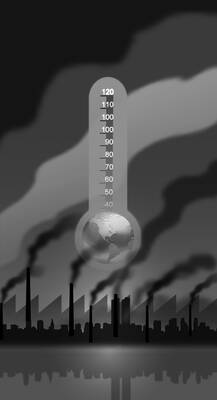
The closure of the Strait of Hormuz has sent the vast Asian chemicals industry into a tailspin. Deprived of the likes of Qatari natural gas and Saudi Arabian oil, the region’s fertilizer and plastics plants are slowing production or even shutting down. Everywhere except China, that is. In petrochemicals, China is unique. As well as a traditional industry that uses oil and gas as feedstock, it has parallel output that relies on its abundant domestic coal. Unsurprisingly, India and other regional powers want to copy and paste the Chinese method. This would not be easy — or climate friendly. The
Indonesian President Prabowo Subianto says he knows how to fix the problems facing Indonesia. Yet his economic mismanagement and authoritarian tendencies are steering the nation toward a familiar mix of currency instability and political chaos. The world’s fourth-most populous nation risks reversing the hard-won democratic and business reforms that came after the Asian Financial Crisis in 1997. At that time, the rupiah collapsed and the political upheaval that followed forced former president Haji Mohamed Suharto from power. Prabowo’s administration is ignoring similar warning signs. That disconnect was apparent in a national address on Wednesday, when Prabowo projected the swagger that has
“Of course you can choose not to be Taiwanese, just do not stay here,” chairwoman of Taipei 101 operator Taipei Financial Center Corp Janet Chia (賈永婕) said in an online interview with local entertainer Tai Chih-yuan (邰智源), triggering intense discussion on social media, with politicians across party lines weighing in. In the interview, which was aired on May 14, Chia and Tai’s discussion over a meal in Taipei 101 covered Chia’s career change from entertainer to chairwoman and US climber Alex Honnold’s free solo climb up the Taipei 101 building. During the interview, Chia said, “Being on this land, we


 RSS
RSS