


The New Taipei City mayoral race should have been a matter of local politics. Instead, due to political coordination between the Chinese Nationalist Party (KMT) and the Taiwan People’s Party (TPP), along with maneuvering by TPP Chairman Huang Kuo-chang (黃國昌), it has devolved into an absurd spectacle centered around one individual’s political survival.
Huang has publicly stated that, although the TPP ostensibly maintains the principle of forming the strongest possible team with the KMT, he personally does not rule out throwing in his lot with the campaign of Deputy Taipei Mayor Lee Shu-chuan (李四川), who has already submitted his resignation to prepare for a mayoral run. Such an absurd declaration is more than just strategic maneuvering — it exposes the loosening of party boundaries. Party identity, individual political survival and voter expectations have all become entangled in an unsolvable triangle.
The KMT-TPP political coordination is not merely a strategic arrangement, but a transactional operation conducted under the guise of democracy. In a reality where he has been largely rejected by the public, what Huang seems to care about is how to sustain his personal game of survival within the political arena. Ideals, sincerity and party loyalty have been all but stripped away, leaving only the convertibility of political capital.
What is even more absurd is that, as TPP chairman, Huang’s role should be to uphold the party’s boundaries and ideas, yet the party’s boundaries have become a strategic cushion for Huang and its symbols serve as endorsements of individual maneuvering. Under Huang’s calculations, voters’ ideals, expectations and political loyalty are reduced to mere byproducts — he delivers strategy when you expect sincerity and flexibility when you expect clear boundaries. This kind of manipulation reminds us that democracy can often become decoupled from political substance.
This election highlights a core dilemma in the nation’s local politics — the subtle, intertwined relationship between party boundaries, individual strategy and voters’ expectations. Cooperation between political parties might appear sincere, but it is, in reality, transactional. Individual statements might seem transparent and democratic, but they are merely extensions of a personal game of survival.
Voters do not just cast their ballots, they also become witnesses to and bearers of the flow of political capital. Only by understanding this can one avoid being misled by appearances.
Liu Che-ting is a writer.
Translated by Kyra Gustavsen
KMT Chairwoman Cheng Li-wun’s (鄭麗文) recent visit to Beijing and her upcoming visit to Washington will serve as a high-level test of her diplomatic mettle. In Beijing, Cheng was received with symbolic gestures, a warm reception, and high-level access. In Washington, she will receive far less pomp and far sharper questions about the KMT’s vision for the future of Taiwan. Her challenge will be to persuade Washington that the KMT’s engagement with China can coexist with strong deterrence. Cheng’s April 7-12 visit to mainland China coincided with an intense period of conflict in Iran. Despite the strategic significance of Cheng’s trip,
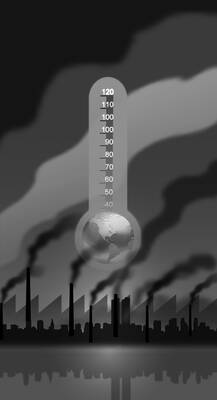
The closure of the Strait of Hormuz has sent the vast Asian chemicals industry into a tailspin. Deprived of the likes of Qatari natural gas and Saudi Arabian oil, the region’s fertilizer and plastics plants are slowing production or even shutting down. Everywhere except China, that is. In petrochemicals, China is unique. As well as a traditional industry that uses oil and gas as feedstock, it has parallel output that relies on its abundant domestic coal. Unsurprisingly, India and other regional powers want to copy and paste the Chinese method. This would not be easy — or climate friendly. The
Indonesian President Prabowo Subianto says he knows how to fix the problems facing Indonesia. Yet his economic mismanagement and authoritarian tendencies are steering the nation toward a familiar mix of currency instability and political chaos. The world’s fourth-most populous nation risks reversing the hard-won democratic and business reforms that came after the Asian Financial Crisis in 1997. At that time, the rupiah collapsed and the political upheaval that followed forced former president Haji Mohamed Suharto from power. Prabowo’s administration is ignoring similar warning signs. That disconnect was apparent in a national address on Wednesday, when Prabowo projected the swagger that has
“Of course you can choose not to be Taiwanese, just do not stay here,” chairwoman of Taipei 101 operator Taipei Financial Center Corp Janet Chia (賈永婕) said in an online interview with local entertainer Tai Chih-yuan (邰智源), triggering intense discussion on social media, with politicians across party lines weighing in. In the interview, which was aired on May 14, Chia and Tai’s discussion over a meal in Taipei 101 covered Chia’s career change from entertainer to chairwoman and US climber Alex Honnold’s free solo climb up the Taipei 101 building. During the interview, Chia said, “Being on this land, we


 RSS
RSS