


Immediately after the Chinese People’s Liberation Army’s (PLA) “Justice Mission” exercise at the end of last year, a question was posed to Indian Ministry of External Affairs spokesperson Randhir Jaiswal regarding recent developments involving the exercises around Taiwan, and how he viewed their impact on regional peace and stability. His answer was somewhat perplexing to me as a curious student of Taiwanese affairs.
“India closely follows developments across the Indo-Pacific region,” he said, adding: “We have an abiding interest in peace and stability in the region, in view of our significant trade, economic, people-to-people, and maritime interests. We urge all concerned parties to exercise restraint, eschew unilateral actions, and resolve all issues through peaceful means without the threat or use of force.”
He did not name the countries involved; instead, he used the phrase “all concerned parties.”
The response was very cautious. Clearly, he was treading a fine line between the two entities. India recognizes the People’s Republic of China (PRC) as a country, not the Republic of China (ROC) on Taiwan. You could ask any ordinary Indian about the ROC, and their answer would most likely describe a country with its capital in Beijing, governed by the Chinese Communist Party, with its leader being Chinese President Xi Jinping (習近平). An ordinary Indian would seldom differentiate between the ROC and the PRC, often assuming that prefixes such as “Republic of” or “People’s Republic of” are merely unnecessary jargon used by elites to make these names sound more formal or grandiose.
I was not aware of these distinctions before I started closely following developments surrounding Taiwan-China relations, either. My interest in this part of the world increased, especially after I visited Taiwan for the first time last year. The Ministry of Foreign Affairs conducted a sponsored tour to Taipei on the occasion of the Double-Ten National Day celebrations, and a group of about 25 media personnel from as many countries was invited to participate. From India, I was included in the media delegation.
My understanding of Taiwan continued to evolve. Before I arrived, Taiwan, for me — like for many other Indians — was a thriving economy with a monopoly over the manufacturing of some of the world’s most advanced semiconductors. Taiwan was also one of those courageous countries that dared to stand up to China, which has an army second in size only to India’s. After my first experience, I realized that size does not matter, and that even a small country can be equally, if not more, powerful by leveraging the most advanced technologies at its disposal, like a teenager holding a pistol to a wrestler.
Moreover, Taiwan, with its commendable democracy and high press freedom index, attracts far greater respect, support and allegiance than China, which openly threatens to use its mighty force to usurp a territory it claims as its own.
My second visit to Taipei gave me a broader and much deeper perspective on cross-strait relations. I had to dig deeper, as my research topic — comparing the democratic resilience of India and Taiwan in the context of the geopolitical situation — demanded. As I interacted with a cross-section of academia in Taipei, I repeatedly heard discussions about advocacy for the independence of the ROC and voices against it.
Independence? From who? The country I arrived in was fully independent. I got my visa from the government of Taiwan, which runs a de facto embassy in Delhi under the banner of the Taipei Economic and Cultural Center. I was cleared to enter Taiwan from Taiwan Taoyuan International Airport by Taiwan’s customs authorities.
I noticed full freedom in the air, more than I can breathe in my own country. I felt maximum governance, but least government on the ground. I could barely see any policemen managing the self-behaved crowds. The people there were so disciplined that I had never seen anything like it in any of the 25 countries I had visited, including China, Russia, the UK, Spain and Australia. Everyone was enjoying full freedom. So, from who were Taiwan’s intellectuals or opinion makers yearning for independence?
Was it a psychological burden they wanted to rid themselves of? Or was it a baggage of history they were trying to escape? Or maybe both?
I also frequently heard conflicting views between nationalists and others who seemed to follow a policy closer to China’s. As I delved deeper, I realized that things were not as simple as I had perceived while in India. The issue requires more understanding to truly know what identity Taiwanese are seeking and what the meaning of independence is for them. The question of whether the name “ROC” was necessary is also a matter for deeper study, especially for those of us who are unfamiliar with the complex history of the PRC and the ROC, and the external and internal forces influencing cross-strait relations.
One thing has become abundantly clear: Taiwan’s identity and its quest for independence, if it can be called that, are far more nuanced than I had initially thought. It is not just about politics or international relations, but also about the people’s psyche, their historical context and the unique relationship they share with their larger neighbor.
Understanding Taiwan’s position requires not just a look at its diplomatic and political struggles, but also an appreciation for the cultural and emotional factors that shape its ongoing dialogue with the world. In the end, Taiwan’s situation is a vivid reminder that the questions of national identity, sovereignty and independence are deeply personal, and they must be understood with both compassion and careful analysis.
Mukesh Kaushik is deputy editor at Dainik Bhasker, the largest published daily in India. He is currently a researcher at National Chengchi University on the Ministry of Foreign Affairs Taiwan Fellowship.
KMT Chairwoman Cheng Li-wun’s (鄭麗文) recent visit to Beijing and her upcoming visit to Washington will serve as a high-level test of her diplomatic mettle. In Beijing, Cheng was received with symbolic gestures, a warm reception, and high-level access. In Washington, she will receive far less pomp and far sharper questions about the KMT’s vision for the future of Taiwan. Her challenge will be to persuade Washington that the KMT’s engagement with China can coexist with strong deterrence. Cheng’s April 7-12 visit to mainland China coincided with an intense period of conflict in Iran. Despite the strategic significance of Cheng’s trip,
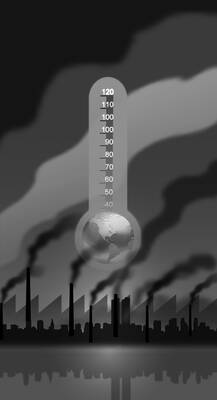
The closure of the Strait of Hormuz has sent the vast Asian chemicals industry into a tailspin. Deprived of the likes of Qatari natural gas and Saudi Arabian oil, the region’s fertilizer and plastics plants are slowing production or even shutting down. Everywhere except China, that is. In petrochemicals, China is unique. As well as a traditional industry that uses oil and gas as feedstock, it has parallel output that relies on its abundant domestic coal. Unsurprisingly, India and other regional powers want to copy and paste the Chinese method. This would not be easy — or climate friendly. The
Indonesian President Prabowo Subianto says he knows how to fix the problems facing Indonesia. Yet his economic mismanagement and authoritarian tendencies are steering the nation toward a familiar mix of currency instability and political chaos. The world’s fourth-most populous nation risks reversing the hard-won democratic and business reforms that came after the Asian Financial Crisis in 1997. At that time, the rupiah collapsed and the political upheaval that followed forced former president Haji Mohamed Suharto from power. Prabowo’s administration is ignoring similar warning signs. That disconnect was apparent in a national address on Wednesday, when Prabowo projected the swagger that has
“Of course you can choose not to be Taiwanese, just do not stay here,” chairwoman of Taipei 101 operator Taipei Financial Center Corp Janet Chia (賈永婕) said in an online interview with local entertainer Tai Chih-yuan (邰智源), triggering intense discussion on social media, with politicians across party lines weighing in. In the interview, which was aired on May 14, Chia and Tai’s discussion over a meal in Taipei 101 covered Chia’s career change from entertainer to chairwoman and US climber Alex Honnold’s free solo climb up the Taipei 101 building. During the interview, Chia said, “Being on this land, we


 RSS
RSS