


Taipei and Tokyo must deepen cooperation on the economy and regional security, Japan’s representative to Taiwan said in an interview on Saturday.
Taiwan’s strength lies in semiconductor production, accounting for 70 percent of global output and 90 percent of the world’s most advanced chips, while Japan excels in materials and manufacturing equipment, Japan-Taiwan Exchange Association Representative Kazuyuki Katayama said.
“From the perspective of economic security, it is vital to build supply chains and cooperate in cultivating talent from both sides, as well as from third countries,” he said.
Taiwan and Japan could work together on artificial intelligence (AI), disaster prevention and relief, environmental energy, public health, drones and the security of undersea cables — all areas of concern to both countries.
Japan-Taiwan relations are widely regarded as having reached a modern high point during the administration of late Japanese prime minister Shinzo Abe, especially during his second term (from 2012 to 2020), when he said that “a Taiwan contingency is a Japan contingency.”
Japanese Prime Minister Sanae Takaichi has reiterated that sentiment, saying in November last year that a conflict between Taiwan and China could become an “existential crisis for Japan,” potentially leading to the deployment of the Japan Self-Defense Forces.
Beijing demanded that Takaichi retract the remarks, which she did not, suggesting that Tokyo’s strong support for Taiwan could act as a deterrent against a Chinese People’s Liberation Army (PLA) invasion.
Any Japanese involvement in a potential Taiwan-China conflict would likely result in PLA attacks on Japanese territory, and according to the 1960 US-Japan Security Treaty, Washington is obligated to respond if Japan is under attack.
Deepened Taiwan-Japan economic cooperation — including Japanese direct investment in Taiwan’s tech sector or the deployment of Japanese engineers to Taiwanese facilities — would make Taiwan’s defense an even greater strategic concern for Tokyo, increasing the likelihood of Japanese, and subsequently US, involvement in a conflict in the Strait.
Strengthening collaboration on the defense of undersea communications cables would also reduce the risk of an Internet blackout in Taiwan caused by severed marine cables — a tactic China has already demonstrated it could employ in the lead-up to a conflict. If Tokyo partially or fully invests in these cables, any sabotage could be interpreted as an attack on Japan itself, further enhancing deterrence.
Creating such deterrents is especially urgent as Taiwan’s main opposition party, the Chinese Nationalist Party (KMT), has stalled efforts by the ruling Democratic Progressive Party (DPP) to increase defense spending. Public concerns have also arisen over meetings in Beijing this week between Chinese Communist Party officials and a delegation led by KMT Vice Chairman Hsiao Hsu-tsen (蕭旭岑), given the lack of transparency regarding what is being discussed.
While the DPP has limited legislative recourse — as the KMT and the Taiwan People’s Party combined have majority of legislative seats — it can engage directly with Tokyo. Meetings with Takaichi and members of the Liberal Democratic Party could clarify the scope of possible economic and military cooperation according to existing laws and budgets, and explore avenues for Japanese investment in Taiwan’s technology sector.
President William Lai (賴清德) has made it a priority to increase government investment in AI, while Japan is also promoting growth in the AI and semiconductor sectors. As Katayama said, the strengths of Taiwan and Japan are complementary: Japan excels in materials and equipment, while Taiwan leads in advanced chip manufacturing. Both countries are comparatively weak in AI software and models, presenting a strong opportunity for collaboration. Linking their industries could facilitate the development of a robust “non-red” supply chain.
Building a non-red supply chain would also align with US trade policy, allowing better integration among the three partners. Speaking at a news conference on Tuesday, Lai said that Taiwan possesses world-class manufacturing capabilities, while the US offers a robust ecosystem of innovation, access to core technologies and global market connections, making a partnership between Taiwan and the US highly strategic.
The US would remain a vital economic partner for Taiwan, but Japan is also an industrial leader and a neighbor who shares Taiwan’s concerns about a belligerent China. Taiwan should seek to integrate its high-tech sectors with those of Japan and the US. As Katayama suggested, these partners thrive best when their relationship is complementary rather than competitive.
KMT Chairwoman Cheng Li-wun’s (鄭麗文) recent visit to Beijing and her upcoming visit to Washington will serve as a high-level test of her diplomatic mettle. In Beijing, Cheng was received with symbolic gestures, a warm reception, and high-level access. In Washington, she will receive far less pomp and far sharper questions about the KMT’s vision for the future of Taiwan. Her challenge will be to persuade Washington that the KMT’s engagement with China can coexist with strong deterrence. Cheng’s April 7-12 visit to mainland China coincided with an intense period of conflict in Iran. Despite the strategic significance of Cheng’s trip,
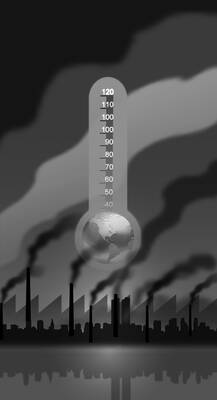
The closure of the Strait of Hormuz has sent the vast Asian chemicals industry into a tailspin. Deprived of the likes of Qatari natural gas and Saudi Arabian oil, the region’s fertilizer and plastics plants are slowing production or even shutting down. Everywhere except China, that is. In petrochemicals, China is unique. As well as a traditional industry that uses oil and gas as feedstock, it has parallel output that relies on its abundant domestic coal. Unsurprisingly, India and other regional powers want to copy and paste the Chinese method. This would not be easy — or climate friendly. The
Indonesian President Prabowo Subianto says he knows how to fix the problems facing Indonesia. Yet his economic mismanagement and authoritarian tendencies are steering the nation toward a familiar mix of currency instability and political chaos. The world’s fourth-most populous nation risks reversing the hard-won democratic and business reforms that came after the Asian Financial Crisis in 1997. At that time, the rupiah collapsed and the political upheaval that followed forced former president Haji Mohamed Suharto from power. Prabowo’s administration is ignoring similar warning signs. That disconnect was apparent in a national address on Wednesday, when Prabowo projected the swagger that has
“Of course you can choose not to be Taiwanese, just do not stay here,” chairwoman of Taipei 101 operator Taipei Financial Center Corp Janet Chia (賈永婕) said in an online interview with local entertainer Tai Chih-yuan (邰智源), triggering intense discussion on social media, with politicians across party lines weighing in. In the interview, which was aired on May 14, Chia and Tai’s discussion over a meal in Taipei 101 covered Chia’s career change from entertainer to chairwoman and US climber Alex Honnold’s free solo climb up the Taipei 101 building. During the interview, Chia said, “Being on this land, we


 RSS
RSS