


After staging military exercises around Taiwan last week, the Chinese Communist Party (CCP) once again launched a ruthless repression campaign against Democratic Progressive Party Legislator Puma Shen (沈伯洋). From threatening to pursue a global arrest warrant to disseminating satellite photographs of Shen’s workplace and residence in Taipei, the threats are now aimed directly at Taiwan.
This is not merely personal intimidation, it is a direct challenge to Taiwan’s sovereignty and democratic system. Shen has long strived to dismantle the CCP’s information warfare and advocated for whole-of-society defense — it is precisely because he hits the nail on the head that he has become a target that the CCP is determined to eliminate.
RESISTANCE
Shen’s role — combining that of a legislator, a researcher of open-source intelligence and cognitive warfare, and a civil advocate — symbolizes the conscious resistance of Taiwan’s younger generation and the intellectual community to the CCP’s authoritarianism.
This is precisely what gives the CCP’s goal of issuing an Interpol “red notice” and formally pursuing Shen such strong political symbolism. For Taiwan, the so-called “Puma Shen phenomenon” is not merely a matter of a single legislator being threatened — it epitomizes how a democratic nation confronts infiltration and transnational repression by an authoritarian regime.
However, this incident has also laid bare the internal conflict in Taiwan between choosing engagement and confrontation. On one hand, civil society has rallied around the slogan “We are all Puma Shen,” demonstrating both clarity and resistance. On the other hand, some politicians and members of the public have opted for self-censorship out of fear of causing “misunderstandings” with the CCP, thereby allowing the battle to defend Taiwan to devolve into one of internal friction.
UNITY
The true crisis has never been limited to external threats, but whether society can maintain internal unity.
Even more perverse is that, when Shen was threatened, Legislative Speaker Han Kuo-yu (韓國瑜) and other Chinese Nationalist Party (KMT) legislators not only failed to condemn the CCP, but instead mocked Shen — with some even suggesting that he travel to China to “clear up the misunderstanding.”
At a time when the CCP had already listed Shen as wanted and trampled on Taiwan’s judicial sovereignty, proposing to send a colleague into enemy territory is not just naive, but demonstrates complete apathy to sovereignty and national security. For the CCP, there has never been any “misunderstanding” — there is only surrender or resistance.
WARNING
The true significance of the “Puma Shen phenomenon” lies in the warning it offers Taiwan — when politicians, motivated by short-term interests, indulge in “united front” tactics and attack those on the frontline defending the nation, they are effectively paving the way for the CCP.
“We are all Puma Shen” is more than just a slogan, but a democratic society reinforcing its own identity in the face of authoritarian oppression.
Only by eliminating all pro-unification forces at home, building whole-of-society defense and demonstrating collective resolve can Taiwan show the world that a mature democracy would never bow down to intimidation.
Chu Meng-hsiang is former deputy secretary-general of the Lee Teng-hui Foundation.
Translated by Kyra Gustavsen
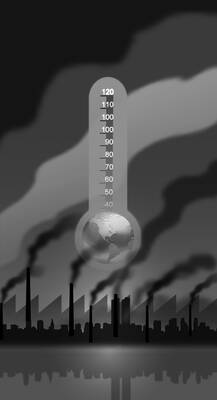
The closure of the Strait of Hormuz has sent the vast Asian chemicals industry into a tailspin. Deprived of the likes of Qatari natural gas and Saudi Arabian oil, the region’s fertilizer and plastics plants are slowing production or even shutting down. Everywhere except China, that is. In petrochemicals, China is unique. As well as a traditional industry that uses oil and gas as feedstock, it has parallel output that relies on its abundant domestic coal. Unsurprisingly, India and other regional powers want to copy and paste the Chinese method. This would not be easy — or climate friendly. The
KMT Chairwoman Cheng Li-wun’s (鄭麗文) recent visit to Beijing and her upcoming visit to Washington will serve as a high-level test of her diplomatic mettle. In Beijing, Cheng was received with symbolic gestures, a warm reception, and high-level access. In Washington, she will receive far less pomp and far sharper questions about the KMT’s vision for the future of Taiwan. Her challenge will be to persuade Washington that the KMT’s engagement with China can coexist with strong deterrence. Cheng’s April 7-12 visit to mainland China coincided with an intense period of conflict in Iran. Despite the strategic significance of Cheng’s trip,
History might remember 2026, not 2022, as the year artificial intelligence (AI) truly changed everything. ChatGPT’s launch was a product moment. What is happening now is an anthropological moment: AI is no longer merely answering questions. It is now taking initiative and learning from others to get things done, behaving less like software and more like a colleague. The economic consequence is the rise of the one-person company — a structure anticipated in the 2024 book The Choices Amid Great Changes, which I coauthored. The real target of AI is not labor. It is hierarchy. When AI sharply reduces the cost
US President Donald Trump recently repeated his claim that “Taiwan stole America’s chip industry,” reigniting public debate on the issue. As a former Taiwanese minister of economic affairs and an entrepreneur deeply involved in semiconductor supply chain development, I feel a responsibility to clarify this misunderstanding. From the perspective of global industrial evolution and the economic principle of comparative advantage, such a statement appears overly simplistic and risks obscuring the essence of the issue. The rise of Taiwan’s semiconductor industry was not built on “replacing America,” but rather emerged as a result of countries pursuing different development paths within the


 RSS
RSS