


For many, the escalation in intensity of military exercises around Taiwan has ceased to be shocking and is now a familiar, yet hard-to-ignore background noise. They have seeped into everyday life in the form of breaking news notifications during the early morning commute, military alerts that pop up between tasks at work and occasional forwarded discussions in family group chats. The seemingly muted response from members of the public is a result of adaptation under long-standing pressures.
For frontline workers, the drills have a tangible impact on the rhythms of daily life. Teachers must face questions from students and offer calm explanations of the situation; industry workers must consider impacts on shipping, logistics, and market fluctuations for how their supply chains and clientele might be affected. By and large, people’s concerns are simple and pragmatic. They center on whether or not their jobs would be affected and what adjustments they might need to make in their day, rather than on grand political considerations.
Exposure to prolonged military pressures can give rise to self-contradictions in mass social psychology. Although the public is highly sensitive to national security issues and no stranger to airspace disturbances, military exercises, or geopolitical disruptions, the sheer frequency of the drills can blunt reactions and reduce the sense of immediacy of a potential crisis. Risks are normalized, and society is caught between states of alert and fatigue — not completely numb to the dangers, but struggling to maintain high levels of mobilization as time drags on. This is a kind of psychological strain unique to the collective experience of Taiwanese society.
Politically, military exercises have been adopted and interpreted under competing narrative frameworks, each provoking different emotional responses. For some people, the drills stand as concrete proof of external threats, highlighting the need for stronger support for national security and defense policies. For others, the spotlight on military tensions only deepens anxieties and breeds mistrust. The intense politicization of security issues leads to the fragmentation of public sentiment, turning rational debate to factional polarization. From a long-term governance perspective, the key issue is not whether the public is sufficiently worried, but whether society has the capacity to steadily handle and absorb the risks.
Military drills are unlikely to disappear in the near future. For the government, enabling the public to understand the risks they represent without becoming controlled by those risks would be a test of its ability to
communicate and institutional credibility. Clear and nonsensationalized messaging could help the public form reasonable expectations, avoid real risks being overlooked and prevent overreaction at critical moments. In this way, effective risk communication is an integral part of defense resilience.
Taiwan is undergoing a silent process of adjustment to its new normal. People are not indifferent; they are seeking continuity in their lives amid uncertainty. They are not without views, but are trying to preserve space for independent judgement beyond political narratives. How Taiwan maintains normal social functioning while deepening a rational consensus on security issues would determine whether it can, under pressure, maintain its form as a mature and stable democratic society.
Chen Ling-yao is an operations director.
Translated by Gilda Knox Streader
KMT Chairwoman Cheng Li-wun’s (鄭麗文) recent visit to Beijing and her upcoming visit to Washington will serve as a high-level test of her diplomatic mettle. In Beijing, Cheng was received with symbolic gestures, a warm reception, and high-level access. In Washington, she will receive far less pomp and far sharper questions about the KMT’s vision for the future of Taiwan. Her challenge will be to persuade Washington that the KMT’s engagement with China can coexist with strong deterrence. Cheng’s April 7-12 visit to mainland China coincided with an intense period of conflict in Iran. Despite the strategic significance of Cheng’s trip,
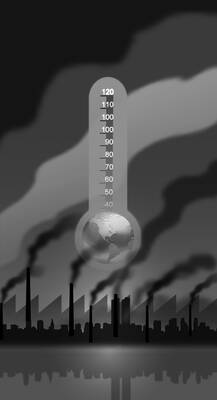
The closure of the Strait of Hormuz has sent the vast Asian chemicals industry into a tailspin. Deprived of the likes of Qatari natural gas and Saudi Arabian oil, the region’s fertilizer and plastics plants are slowing production or even shutting down. Everywhere except China, that is. In petrochemicals, China is unique. As well as a traditional industry that uses oil and gas as feedstock, it has parallel output that relies on its abundant domestic coal. Unsurprisingly, India and other regional powers want to copy and paste the Chinese method. This would not be easy — or climate friendly. The
US President Donald Trump recently repeated his claim that “Taiwan stole America’s chip industry,” reigniting public debate on the issue. As a former Taiwanese minister of economic affairs and an entrepreneur deeply involved in semiconductor supply chain development, I feel a responsibility to clarify this misunderstanding. From the perspective of global industrial evolution and the economic principle of comparative advantage, such a statement appears overly simplistic and risks obscuring the essence of the issue. The rise of Taiwan’s semiconductor industry was not built on “replacing America,” but rather emerged as a result of countries pursuing different development paths within the
The Presidential Office on Saturday reiterated that Taiwan is a sovereign, independent nation after US President Donald Trump said that Taiwan should not “go independent.” “We’re not looking to have somebody say: ‘Let’s go independence because the United States is backing us,’” Trump said in an interview with Fox News aired on Friday. President William Lai (賴清德) on Monday said that the Republic of China (ROC) — Taiwan’s official name — and the People’s Republic of China (PRC) are not subordinate to each other. Speaking at an event marking the 40th anniversary of the establishment of the Democratic Progressive Party (DPP), Lai said


 RSS
RSS