


EDITORIAL CARTOON
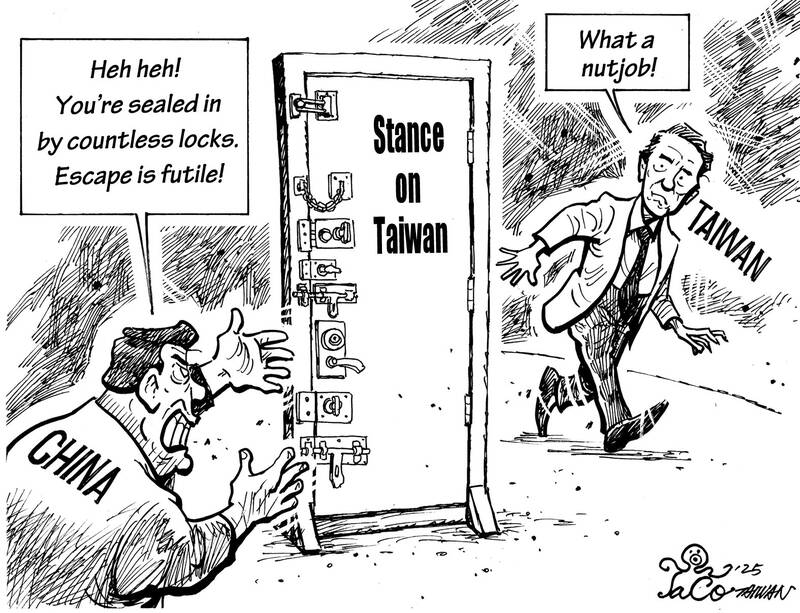
The image was oddly quiet. No speeches, no flags, no dramatic announcements — just a Chinese cargo ship cutting through arctic ice and arriving in Britain in October. The Istanbul Bridge completed a journey that once existed only in theory, shaving weeks off traditional shipping routes. On paper, it was a story about efficiency. In strategic terms, it was about timing. Much like politics, arriving early matters. Especially when the route, the rules and the traffic are still undefined. For years, global politics has trained us to watch the loud moments: warships in the Taiwan Strait, sanctions announced at news conferences, leaders trading
Eighty-seven percent of Taiwan’s energy supply this year came from burning fossil fuels, with more than 47 percent of that from gas-fired power generation. The figures attracted international attention since they were in October published in a Reuters report, which highlighted the fragility and structural challenges of Taiwan’s energy sector, accumulated through long-standing policy choices. The nation’s overreliance on natural gas is proving unstable and inadequate. The rising use of natural gas does not project an image of a Taiwan committed to a green energy transition; rather, it seems that Taiwan is attempting to patch up structural gaps in lieu of
The Executive Yuan and the Presidential Office on Monday announced that they would not countersign or promulgate the amendments to the Act Governing the Allocation of Government Revenues and Expenditures (財政收支劃分法) passed by the Legislative Yuan — a first in the nation’s history and the ultimate measure the central government could take to counter what it called an unconstitutional legislation. Since taking office last year, the legislature — dominated by the opposition alliance of the Chinese Nationalist Party (KMT) and Taiwan People’s Party — has passed or proposed a slew of legislation that has stirred controversy and debate, such as extending
Chinese Nationalist Party (KMT) legislators have twice blocked President William Lai’s (賴清德) special defense budget bill in the Procedure Committee, preventing it from entering discussion or review. Meanwhile, KMT Legislator Chen Yu-jen (陳玉珍) proposed amendments that would enable lawmakers to use budgets for their assistants at their own discretion — with no requirement for receipts, staff registers, upper or lower headcount limits, or usage restrictions — prompting protest from legislative assistants. After the new legislature convened in February, the KMT joined forces with the Taiwan People’s Party (TPP) and, leveraging their slim majority, introduced bills that undermine the Constitution, disrupt constitutional


 RSS
RSS