


The Taiwan Affairs Office of the Chinese Communist Party (CCP) has been enthusiastically promoting a song titled We Sing One Song Together (我們同唱一首歌) since its release early this year and first broadcast on China Central Television (CCTV), a mouthpiece of the CCP.
Sung by Taiwanese and Chinese singers, the song is meant to advocate the idea that both sides of the Taiwan Strait are one family, serving as a united front.
Starting by evoking the emotions of homesickness and nostalgia, the lyrics go on to appeal to the common culture on both sides of the Strait, and the sentiment that blood is thicker than water. The song concludes with the reunion of family members, a metaphor for political unity. The form and narrative of the lyrics are integrated, but the song is unsure who exactly the target audience is.
To move people, good lyrics must create a vision and emotion that the audience empathizes with. The homesickness and nostalgia the song conjures in the beginning is a feeling of loss and regret over something or some sort of life that has been lost, but can never be returned to.
This is the emotion that drove the armed forces veterans, who came to Taiwan from China during Chinese Civil War that ended in 1949, to return home for family reunions when Taipei lifted restrictions on traveling to China in the 1980s.
Now that cross-strait exchanges are so frequent, who has such nostalgia? Most people in Taiwan were born and raised here, so how can they feel nostalgic over a place they have never lost?
The visual symbols in the lyrics, such as making tea, seeing banyan trees, playing chess and speaking Hoklo (commonly known as Taiwanese), are all symbols of Taiwan as imagined by the people in China. Those who feel the nostalgia from this song would be Taiwanese living in China. Is the purpose of this song to encourage them to return to Taiwan as soon as possible?
The song contains emotional settings and symbolism, but the images and marketing are misplaced.
From a political point of view, the “united front” messaging in the song smuggles the private family union setting into the public national unity sphere. However, the imagination and ideology of “one race, one country” has gradually lost its appeal in Taiwan during the course of its democratization.
China remains stuck in the imagination of a nation-state based on blood, and the idea that both sides of the Taiwan Strait are one family is only a disguise. Taiwan is now a modern state that emphasizes freedom and democracy. Taiwanese are more aware of the differences between Taiwan and China in lifestyle and values, and that politics is a choice of system.
After all, sharing similar racial, cultural and historical traditions and languages does not mean that politically they must belong to one country. If blood is the basis for national unity, what will be the grounds for the CCP preventing the independence of Xinjiang and Tibet?
The CCP does not allow the independence of Xinjiang and Tibet to be advocated. Not only that, it even seeks to restore the Sinocentric “golden days” in East Asia.
Moreover, through nationalist wolf-warrior diplomacy, which vows to punish “rebels” even if they are in other nations, the CCP is portraying itself as the motherland that Chinese all over the world can turn to. It is trying to make Beijing the emotional Chinese equivalent of Jerusalem, and the political equivalent of Washington DC to Chinese abroad, hoping that they might follow the CCP as it were an orthodox regime.
However, the outdated nationalist discourse — and a system that lacks the values of freedom, democracy and rule of law — make all of these goals no more than wishful thinking.
Shih Chia-liang is an adjunct assistant professor at National Chengchi University’s Department of Public Administration.
Translated by Lin Lee-kai
A gap appears to be emerging between Washington’s foreign policy elites and the broader American public on how the United States should respond to China’s rise. From my vantage working at a think tank in Washington, DC, and through regular travel around the United States, I increasingly experience two distinct discussions. This divergence — between America’s elite hawkishness and public caution — may become one of the least appreciated and most consequential external factors influencing Taiwan’s security environment in the years ahead. Within the American policy community, the dominant view of China has grown unmistakably tough. Many members of Congress, as
The shifting geopolitical tectonic plates of this year have placed Beijing in a profound strategic dilemma. As Chinese President Xi Jinping (習近平) prepares for a high-stakes summit with US President Donald Trump, the traditional power dynamics of the China-Japan-US triangle have been destabilized by the diplomatic success of Japanese Prime Minister Sanae Takaichi in Washington. For the Chinese leadership, the anxiety is two-fold: There is a visceral fear of being encircled by a hardened security alliance, and a secondary risk of being left in a vulnerable position by a transactional deal between Washington and Tokyo that might inadvertently empower Japan
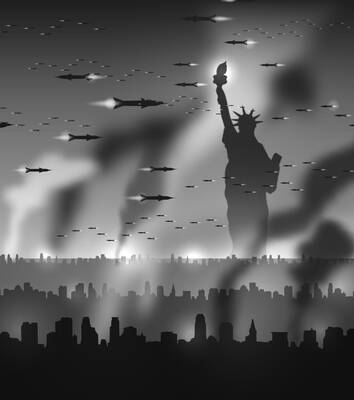
After declaring Iran’s military “gone,” US President Donald Trump appealed to the UK, France, Japan and South Korea — as well as China, Iran’s strategic partner — to send minesweepers and naval forces to reopen the Strait of Hormuz. When allies balked, the request turned into a warning: NATO would face “a very bad” future if it refused. The prevailing wisdom is that Trump faces a credibility problem: having spent years insulting allies, he finds they would not rally when he needs them. That is true, but superficial, as though a structural collapse could be caused by wounded feelings. Something
Former Taipei mayor and Taiwan People’s Party (TPP) founding chairman Ko Wen-je (柯文哲) was sentenced to 17 years in prison on Thursday, making headlines across major media. However, another case linked to the TPP — the indictment of Chinese immigrant Xu Chunying (徐春鶯) for alleged violations of the Anti-Infiltration Act (反滲透法) on Tuesday — has also stirred up heated discussions. Born in Shanghai, Xu became a resident of Taiwan through marriage in 1993. Currently the director of the Taiwan New Immigrant Development Association, she was elected to serve as legislator-at-large for the TPP in 2023, but was later charged with involvement


 RSS
RSS