


Singaporean Prime Minister Lee Hsien Loong’s (李顯龍) decision to step down after 19 years and hand power to his deputy, Lawrence Wong (黃循財), on May 15 was expected — though, perhaps, not so soon. Most political analysts had been eyeing an end-of-year handover, to ensure more time for Wong to study and shadow the role, ahead of general elections that must be called by November next year.
Wong — who is currently both deputy prime minister and minister of finance — would need a combination of fresh ideas, wisdom and experience as he writes the nation’s next chapter. The world that confronts it is far more precarious than at any other time in its history, except for the upheaval caused by Singapore’s decision to break away from Malaysia in 1965.
The global landscape was then, as it is today, dangerous and uncertain. The Cold War between the US and the Soviet Union was at its peak. A nuclear missile crisis was just barely averted and much of what we call the Global South today had just emerged from the ugly grip of colonialism. Singapore, a tiny dot at the bottom of the Malay Peninsula, with no natural resources and a largely illiterate and unskilled workforce, was about to find out what it meant to strike out alone as an independent nation, without the benefit of a vast hinterland.
The first prime minister and founding father, Lee Kuan Yew (李光耀), famously cried on national television when he announced the island’s separation from its neighbor, because of the difficult path he knew lay ahead. Such tears are unlikely this time around, but the small nation is entering uncharted waters yet again and Wong’s ability to navigate would be a key gauge of his leadership.
The new prime minister would have to deal with an increasingly acrimonious relationship between the US and China. Singapore has consistently said it wants to be friends with all and enemies of none, and this has helped the city-state go from a developing economy to Asia’s richest country. It has benefited from decades of globalization, a world where borders were erased and goods and services flowed freely, lifting incomes and stock market valuations.
As Beijing has cracked down on pro-democracy activists in Hong Kong and imposed harsh security laws, foreign companies and talent have sought haven in Singapore. The city-state would need to manage relations between Washington and Beijing delicately, even as it seeks to calm tensions and soothe nerves on both sides.
That might not be easy. The handover comes at a time when the US’ legitimacy has taken a hit in the Global South by US President Joe Biden’s administration’s handling of the Israel-Hamas conflict. It has become a key focal point, not just for Asia’s Muslims in places like Indonesia and Malaysia, where the majority of citizens follow Islam, but also for citizens in Singapore who sympathize with Palestinians and have condemned the human suffering. A recent survey conducted by the ASEAN Studies Centre at ISEAS - Yusof Ishak Institute in Singapore, showed that more than half of the Southeast Asians asked would now prefer to align with China over the US if forced to choose between the rivals, reversing last year’s trends.
So as Wong steps up to the seat of power, it is best he gets all the help he can. Singapore’s leadership succession is a carefully telegraphed event that has been years in the making. Even though the 51-year-old is known to be sincere and hardworking, that might not be enough to get him out of tricky diplomatic tussles.
A clear political vision is missing, said Ian Chong (莊嘉穎), non-resident academic at Carnegie China and a political scientist at the National University of Singapore.
“We know the hobbies of the new prime minister, but we don’t know what he has planned for the country,” he said. “It’s a bit strange that the person taking over, and has had ample time to lay out a path, has yet to do so. Perhaps what that tells is you that no one in the government knows yet.”
Wong’s guitar skills have made him a favorite on social media, but are unlikely to come in that handy as he takes on the top job.
It is not clear yet whether Lee, like his father before him, would serve as a minister mentor in Wong’s Cabinet. It would certainly be useful to have his knowledge and expertise, as well as the relationships he has built as a global statesman of more than two decades. However, the new prime minister should also be ready to listen to fresh ideas, not just from his own overwhelmingly dominant People’s Action Party, but also from the opposition, including leaders like lawyer and author Pritam Singh, who have proposed novel ways to address pressing domestic issues like the income gap, as well as gender disparities in the workplace.
These are not insurmountable challenges, but they require a deftness in managing both foreign policy and the domestic agenda. Singapore has always managed to stand out as the little country that could. The new leader has big shoes to fill.
Karishma Vaswani is a Bloomberg Opinion columnist covering Asia politics with a special focus on China. Previously, she was the BBC’s lead Asia presenter and worked for the BBC across Asia for two decades. This column does not necessarily reflect the opinion of the editorial board or Bloomberg LP and its owners.
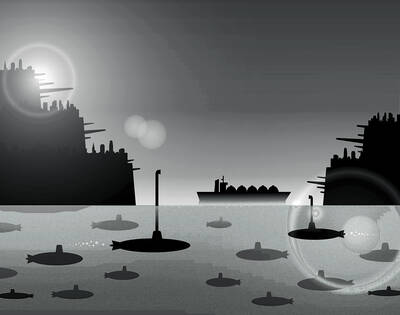
In the event of a war with China, Taiwan has some surprisingly tough defenses that could make it as difficult to tackle as a porcupine: A shoreline dotted with swamps, rocks and concrete barriers; conscription for all adult men; highways and airports that are built to double as hardened combat facilities. This porcupine has a soft underbelly, though, and the war in Iran is exposing it: energy. About 39,000 ships dock at Taiwan’s ports each year, more than the 30,000 that transit the Strait of Hormuz. About one-fifth of their inbound tonnage is coal, oil, refined fuels and liquefied natural gas (LNG),
To counter the CCP’s escalating threats, Taiwan must build a national consensus and demonstrate the capability and the will to fight. The Chinese Communist Party (CCP) often leans on a seductive mantra to soften its threats, such as “Chinese do not kill Chinese.” The slogan is designed to frame territorial conquest (annexation) as a domestic family matter. A look at the historical ledger reveals a different truth. For the CCP, being labeled “family” has never been a guarantee of safety; it has been the primary prerequisite for state-sanctioned slaughter. From the forced starvation of 150,000 civilians at the Siege of Changchun
The two major opposition parties, the Chinese Nationalist Party (KMT) and the Taiwan People’s Party (TPP), jointly announced on Tuesday last week that former TPP lawmaker Chang Chi-kai (張啟楷) would be their joint candidate for Chiayi mayor, following polling conducted earlier this month. It is the first case of blue-white (KMT-TPP) cooperation in selecting a joint candidate under an agreement signed by their chairpersons last month. KMT and TPP supporters have blamed their 2024 presidential election loss on failing to decide on a joint candidate, which ended in a dramatic breakdown with participants pointing fingers, calling polls unfair, sobbing and walking
In recent weeks, Taiwan has witnessed a surge of public anxiety over the possible introduction of Indian migrant workers. What began as a policy signal from the Ministry of Labor quickly escalated into a broader controversy. Petitions gathered thousands of signatures within days, political figures issued strong warnings, and social media became saturated with concerns about public safety and social stability. At first glance, this appears to be a straightforward policy question: Should Taiwan introduce Indian migrant workers or not? However, this framing is misleading. The current debate is not fundamentally about India. It is about Taiwan’s labor system, its


 RSS
RSS