


Since the Russian invasion of Ukraine in February 2022, people have been asking if Taiwan is the next Ukraine. At a G7 meeting of national leaders in January, Japanese Prime Minister Fumio Kishida warned that Taiwan “could be the next Ukraine” if Chinese aggression is not checked.
NATO Secretary-General Jens Stoltenberg has said that if Russia is not defeated, then “today, it’s Ukraine, tomorrow it can be Taiwan.”
China does not like this rhetoric. Its diplomats ask people to stop saying “Ukraine today, Taiwan tomorrow.”
However, the rhetoric and stated ambition of Chinese President Xi Jinping (習近平) on Taiwan shows strong parallels with Russian President Vladimir Putin on Ukraine, desires that Taiwanese and the international community should be aware of.
Putin and Xi have made it clear that they do not like or accept the international status of their smaller neighbors, which they regard as an affront to their nation’s pride that must be rectified. For Putin, Ukraine’s independence is a reminder of Russia’s weakness as the Soviet Union collapsed. Putin sees Ukraine’s “return” to Russia as being necessary to make amends for that humiliation.
For Xi, Taiwan’s independence is a reminder of Chinese weakness and “humiliation” at the hands of imperial powers. The “return” of Taiwan must be completed so China can achieve its “great rejuvenation.”
Putin and Xi wield a distorted version of history and identity to justify their territorial claims. Putin says that the “territory” of Ukraine has always been Russian. China says Taiwan “has belonged to China since ancient times.” Both are perfect examples of bad history. Not the objective study of events, but the instrumentalization of their own history to serve strategic goals.
Both have a worrying disregard for the rights of people to decide their future. Putin disregards the reality that Ukrainians are a separate people from Russians. Xi says that Taiwanese are Chinese. Both regard independent Ukrainian and Taiwanese identities as being the creation of hostile forces in the West to weaken their respective nations.
Terrifyingly, Putin used the “protection” of ethnic Russians who he said had been undergoing “forced assimilation” as a pretext for his 2014 and 2022 invasions. The Chinese Communist Party’s characterization of Taiwanese identity as being the result of “desinicization” programs and moves toward independence are therefore worrying.
The logic of Putin and Xi is the logic of empires, territorial conquest and revanchist nationalism. At its heart is a fundamental rejection of post-World War II norms that found expression in the creation of the UN and the EU, signifying that nationalist wars of conquest are a thing of the past and the rights of states should not override the rights of people to choose their future.
Yale historian Timothy Snyder has said that “Ukraine is a place that helps us to understand other places... It’s not just a place which gets defined by Russia... Ukraine has been at the center of all of these 20th century and 21st century trends that are essential to understand.”
Indeed, Ukraine helps us to understand Taiwan, and Taiwan helps us to understand Ukraine. They are ground zero for understanding today’s major geopolitical challenges. Xi wants to conquer Taiwan as Putin does Ukraine, goals that pose a fundamental challenge to the core principles of the post-war order. Putin losing in Ukraine is about more than Ukraine. It is about defending the liberal international order and teaching authoritarian revanchist powers that the democratic world is not going to let them force a return to a 19th-century world where might makes right.
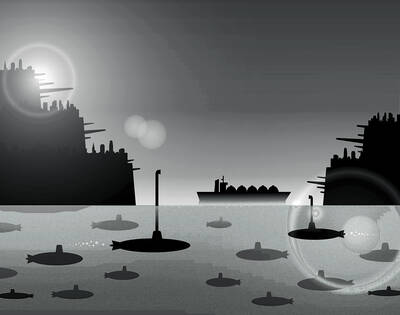
In the event of a war with China, Taiwan has some surprisingly tough defenses that could make it as difficult to tackle as a porcupine: A shoreline dotted with swamps, rocks and concrete barriers; conscription for all adult men; highways and airports that are built to double as hardened combat facilities. This porcupine has a soft underbelly, though, and the war in Iran is exposing it: energy. About 39,000 ships dock at Taiwan’s ports each year, more than the 30,000 that transit the Strait of Hormuz. About one-fifth of their inbound tonnage is coal, oil, refined fuels and liquefied natural gas (LNG),
To counter the CCP’s escalating threats, Taiwan must build a national consensus and demonstrate the capability and the will to fight. The Chinese Communist Party (CCP) often leans on a seductive mantra to soften its threats, such as “Chinese do not kill Chinese.” The slogan is designed to frame territorial conquest (annexation) as a domestic family matter. A look at the historical ledger reveals a different truth. For the CCP, being labeled “family” has never been a guarantee of safety; it has been the primary prerequisite for state-sanctioned slaughter. From the forced starvation of 150,000 civilians at the Siege of Changchun
The two major opposition parties, the Chinese Nationalist Party (KMT) and the Taiwan People’s Party (TPP), jointly announced on Tuesday last week that former TPP lawmaker Chang Chi-kai (張啟楷) would be their joint candidate for Chiayi mayor, following polling conducted earlier this month. It is the first case of blue-white (KMT-TPP) cooperation in selecting a joint candidate under an agreement signed by their chairpersons last month. KMT and TPP supporters have blamed their 2024 presidential election loss on failing to decide on a joint candidate, which ended in a dramatic breakdown with participants pointing fingers, calling polls unfair, sobbing and walking
In recent weeks, Taiwan has witnessed a surge of public anxiety over the possible introduction of Indian migrant workers. What began as a policy signal from the Ministry of Labor quickly escalated into a broader controversy. Petitions gathered thousands of signatures within days, political figures issued strong warnings, and social media became saturated with concerns about public safety and social stability. At first glance, this appears to be a straightforward policy question: Should Taiwan introduce Indian migrant workers or not? However, this framing is misleading. The current debate is not fundamentally about India. It is about Taiwan’s labor system, its


 RSS
RSS