


Despite uncertainty last year due to the COVID-19 pandemic, Taiwan bid farewell to 2021 with GDP growth at an 11-year high, local equities at an all-time high and GDP per capita above US$30,000 for the first time. The Directorate-General of Budget, Accounting and Statistics (DGBAS) and domestic research institutes hold a generally optimistic outlook for the economy this year, forecasting GDP growth of more than 4 percent, while the IMF has predicted that Taiwan will once again be one of the world’s top 20 economies.
While faced with continued uncertainty in the global economy, Taiwan has not missed out on two opportunities presented by the pandemic:
Taiwan doubled down on its industrial advantages in semiconductors and information and communications technology, as the pandemic triggered an evolution in the contactless economy and sparked the development of more innovative 5G and artificial intelligence applications.
The nation also took advantage of its key role in the global supply chain to participate in its realignment and benefit from businesses becoming more aware of the importance of supply-chain resilience. To attract Taiwanese businesses to return home and invest, the government has extended the “Invest in Taiwan” initiative until 2024, which is expected to attract NT$900 billion (US$3.5 billion) in investment and create 40,000 jobs.
As most countries are promoting broader vaccination coverage and gradually learning to live with the coronavirus, people generally believe that life this year will be better than the past two years. As a result, exports and private investment in Taiwan are expected to continue to rise, while private consumption is likely to recover steadily.
While stable economic growth can be expected, the risk of an inflationary “black swan” should not be ignored. According to the DGBAS, there were six months in the first 11 months of last year when the consumer price index exceeded the government’s 2 percent target, with rising prices for vegetables, fruit, meat, imported fuel and airfare, and increased concern about accelerated inflationary pressure.
Prices of raw materials have been rising worldwide and, unsure of how long the situation might last, many businesses initially absorbed the increases, but while there has been a slight easing of shortages and shipping delays in certain sectors, many businesses have begun to pass on cost increases to consumers.
After the New Year countdown parties and firework shows, people must return to the reality that price increases are likely to remain the norm for the foreseeable future. While businesses have high hopes that the authorities’ skillful handling of COVID-19 will lead to a smooth flow of goods and a resumption of cross-border activity, supply-chain bottlenecks remain an issue and are likely difficult to solve in the short term.
The Chung-Hua Institution for Economic Research has said that most purchasing managers in manufacturing believe that supply-chain disruptions might not ease until the second quarter of this year. The Omicron variant of SARS-CoV-2 is also spreading faster than the Delta variant — a rise in infections will only increase supply-chain woes.
For Taiwan in particular, stable supplies of water and electricity remain an issue, after water rationing early last year and two major power blackouts in May. While chronic shortages might not be on the horizon, the warning signs are there. The government must reflect on Taiwan’s water and electricity resilience as the nation faces the pains of a transition to renewable energy resources, the economy continues to expand and companies are encouraged to return home.
A gap appears to be emerging between Washington’s foreign policy elites and the broader American public on how the United States should respond to China’s rise. From my vantage working at a think tank in Washington, DC, and through regular travel around the United States, I increasingly experience two distinct discussions. This divergence — between America’s elite hawkishness and public caution — may become one of the least appreciated and most consequential external factors influencing Taiwan’s security environment in the years ahead. Within the American policy community, the dominant view of China has grown unmistakably tough. Many members of Congress, as
The Hong Kong government on Monday gazetted sweeping amendments to the implementation rules of Article 43 of its National Security Law. There was no legislative debate, no public consultation and no transition period. By the time the ink dried on the gazette, the new powers were already in force. This move effectively bypassed Hong Kong’s Legislative Council. The rules were enacted by the Hong Kong chief executive, in conjunction with the Committee for Safeguarding National Security — a body shielded from judicial review and accountable only to Beijing. What is presented as “procedural refinement” is, in substance, a shift away from
The shifting geopolitical tectonic plates of this year have placed Beijing in a profound strategic dilemma. As Chinese President Xi Jinping (習近平) prepares for a high-stakes summit with US President Donald Trump, the traditional power dynamics of the China-Japan-US triangle have been destabilized by the diplomatic success of Japanese Prime Minister Sanae Takaichi in Washington. For the Chinese leadership, the anxiety is two-fold: There is a visceral fear of being encircled by a hardened security alliance, and a secondary risk of being left in a vulnerable position by a transactional deal between Washington and Tokyo that might inadvertently empower Japan
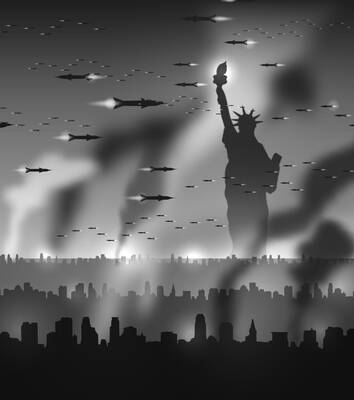
After declaring Iran’s military “gone,” US President Donald Trump appealed to the UK, France, Japan and South Korea — as well as China, Iran’s strategic partner — to send minesweepers and naval forces to reopen the Strait of Hormuz. When allies balked, the request turned into a warning: NATO would face “a very bad” future if it refused. The prevailing wisdom is that Trump faces a credibility problem: having spent years insulting allies, he finds they would not rally when he needs them. That is true, but superficial, as though a structural collapse could be caused by wounded feelings. Something


 RSS
RSS