


As Beijing seeks to tighten its grip on Hong Kong, it has a new mandate for the territory’s powerful property tycoons: pour resources and influence into backing Beijing’s interests, and help solve a potentially destabilizing housing shortage.
Chinese officials delivered the message in closed meetings this year amid broader efforts to bring the territory to heel under a National Security Law and make it more “patriotic,” three major developers and a Hong Kong government adviser familiar with the talks said.
“The rules of the game have changed,” they were told, said a source close to Chinese officials, who declined to be named because of the sensitivity of the matter.
Beijing is no longer willing to tolerate “monopoly behavior,” the source added.
For Hong Kong’s biggest property firms, that would be a big shift. The companies have long exerted outsized power under the territory’s hybrid political system, helping to choose its leaders, shaping government policies and reaping the benefits of a land auction system that kept supply tight and property prices among the world’s highest.
The sprawling businesses of the four major developers — CK Asset Holdings, Henderson Land Development, Sun Hung Kai Properties and New World Development — extend their influence even farther into society. For example, the empire of Hong Kong’s richest man, Li Ka-shing (李嘉誠) of CK Asset Holdings, includes property, supermarkets, pharmacies and utilities.
Because the tycoons are so deeply intertwined with the territory’s economy and politics, it would be difficult for Beijing to sideline them completely, said Leung Chun-ying (梁振英), former Hong Kong chief executive and now a vice-chairman of the National Committee of the Chinese People’s Political Consultative Conference (CPPCC).
“They are a major component of our political and economic ecosystem, so we need to be careful,” Leung said. “I think we need to be judicious with what we do and not throw the baby out with the bathwater.”
Some Chinese officials and state media have blamed tycoons for failing to prevent anti-government protests in 2019, which they say stemmed from sky-high property prices.
The protests, joined by millions of all ages and social strata, demanded greater democracy and less meddling by Beijing in Hong Kong, which had been promised wide-ranging freedoms until 2047.
The new directives mark an inflection point in the power play between Beijing and the tycoons, who were once the kingmakers in Hong Kong’s political leadership race.
“Now the focus is on contribution to the country; this is not what the traditional business sector in Hong Kong is used to,” said Raymond Tsoi (蔡志忠), chairman of Asia Property Holdings (HK) and a member of the CPPCC Shanxi Provincial Committee.
In March, Beijing made sweeping electoral changes. In a new Hong Kong Election Committee, responsible for choosing the next leader of Hong Kong and some of its lawmakers, a greater “patriotic” force has emerged, while many of the prominent tycoons, including Li, 93, are to be absent for the first time since Hong Kong returned to Chinese rule in 1997.
Hong Kong’s Constitutional and Mainland Affairs Bureau said the Election Committee would be more broadly representative of Hong Kong, going beyond the vested interests of specific sectors, specific districts and specific groups, which it called “inadequacies” in the system.
The source close to Chinese government officials said that a team in the Hong Kong and Macau Affairs Office (HKMAO) had sought to curtail the influence of groups perceived to have done little for Beijing’s interests in the territory.
The Hong Kong and Macau Affairs Office and the Hong Kong Liaison Office did not respond to requests for comment.
Sun Hung Kai said it was confident about the future of Hong Kong and would continue to invest there and in cities in China. Henderson Land and New World Development declined to comment, while CK Asset Holdings did not respond to request for comment. Li did not respond to a request for comment.
Developers have taken steps to show that Beijing’s message was received.
New World and Henderson Land have donated rural land as reserves for social housing. In the past few weeks, Nan Fung Group, Sun Hung Kai, Henderson Land and Wheelock applied for a public-private partnership scheme, the first applications since the program was launched in May last year.
The program offers developers an opportunity to build on a higher percentage of open land, but they must use at least 70 percent of the extra floor area for public housing.
Last year, several sources said that the program was unattractive because there were many restrictions and a risk of higher costs.
“Beijing is not telling us what to do, but saying you need to solve this problem,” Gordon Wu (胡應湘) of Hopewell Holdings said. “It won’t be impatient, but it will give you pressure,” Wu added.
Another developer source, who declined to be named because of the sensitivity of the issue, said that Chinese officials had laid out expectations, but no strategy or deadline.
“We can continue our businesses as long as we give back more to society,” said the source, a senior official at a top developer in Hong Kong.
The sector needs to step up efforts to ease the housing shortage, he added.
Most of the developers have published statements and newspaper advertisements, along with other Chinese corporations, to support the national security legislation and electoral changes.
Critics of the moves have said that they crush democratic dreams, while the authorities have said that they are necessary to restore stability after the 2019 demonstrations.
Adrian Cheng (鄭志剛), 41, who took over as chief executive of New World, founded by his grandfather, late last year said that the company needs to become more relevant to society, especially in a new environment in which firms must carefully balance the interests of various parties.
“It’s not easy. I have a lot of gray hair you can’t see,” Cheng said.
Minister of Labor Hung Sun-han (洪申翰) on April 9 said that the first group of Indian workers could arrive as early as this year as part of a memorandum of understanding (MOU) between the Taipei Economic and Cultural Center in India and the India Taipei Association. Signed in February 2024, the MOU stipulates that Taipei would decide the number of migrant workers and which industries would employ them, while New Delhi would manage recruitment and training. Employment would be governed by the laws of both countries. Months after its signing, the two sides agreed that 1,000 migrant workers from India would
In recent weeks, Taiwan has witnessed a surge of public anxiety over the possible introduction of Indian migrant workers. What began as a policy signal from the Ministry of Labor quickly escalated into a broader controversy. Petitions gathered thousands of signatures within days, political figures issued strong warnings, and social media became saturated with concerns about public safety and social stability. At first glance, this appears to be a straightforward policy question: Should Taiwan introduce Indian migrant workers or not? However, this framing is misleading. The current debate is not fundamentally about India. It is about Taiwan’s labor system, its
On March 31, the South Korean Ministry of Foreign Affairs released declassified diplomatic records from 1995 that drew wide domestic media attention. One revelation stood out: North Korea had once raised the possibility of diplomatic relations with Taiwan. In a meeting with visiting Chinese officials in May 1995, as then-Chinese president Jiang Zemin (江澤民) prepared for a visit to South Korea, North Korean officials objected to Beijing’s growing ties with Seoul and raised Taiwan directly. According to the newly released records, North Korean officials asked why Pyongyang should refrain from developing relations with Taiwan while China and South Korea were expanding high-level
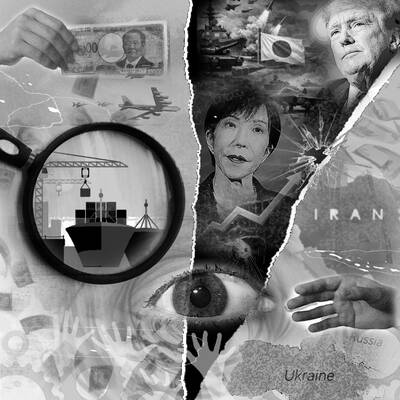
Japan’s imminent easing of arms export rules has sparked strong interest from Warsaw to Manila, Reuters reporting found, as US President Donald Trump wavers on security commitments to allies, and the wars in Iran and Ukraine strain US weapons supplies. Japanese Prime Minister Sanae Takaichi’s ruling party approved the changes this week as she tries to invigorate the pacifist country’s military industrial base. Her government would formally adopt the new rules as soon as this month, three Japanese government officials told Reuters. Despite largely isolating itself from global arms markets since World War II, Japan spends enough on its own


 RSS
RSS