


Since being re-elected, US President Donald Trump has consistently taken concrete action to counter China and to safeguard the interests of the US and other democratic nations.
The attacks on Iran, the earlier capture of deposed of Venezuelan president Nicolas Maduro and efforts to remove Chinese influence from the Panama Canal all demonstrate that, as tensions with Beijing intensify, Washington has adopted a hardline stance aimed at weakening its power.
Iran and Venezuela are important allies and major oil suppliers of China, and the US has effectively decapitated both.
The US has continuously strengthened its military presence in the Philippines. Japanese Prime Minister Sanae Takaichi, after receiving support from Trump for the US-Japan alliance, won the general election with the most votes in history. This highlights strong public support in Japan for Takaichi’s clear strategic stance that a “Taiwan contingency” could amount to a threat to Japan’s national security.
Taken together, these developments clearly demonstrate strategic deployments to counter China — using overwhelming military strength to safeguard peace in the Taiwan Strait and prevent the Chinese Communist Party (CCP) from crossing that line by even a single step.
During the summit between Trump and Chinese President Xi Jinping (習近平) scheduled for late this month, the US might need China to purchase large quantities of soybeans or increase investment and China appears to have room to use Taiwan as a bargaining chip in exchange for trade and economic concessions.
However, in safeguarding US geopolitical, economic and strategic interests, Trump has already demonstrated that, under his “America first” framework, “Taiwan is Taiwan” — separate issues must be addressed one at a time.
It would be impossible to sacrifice Taiwan in exchange for US-China trade benefits.
With Taiwan’s geopolitical position and its critical importance in high technology and maritime shipping, if China were to attack Taiwan, global GDP could fall by US$10 trillion, plunging the world into an economic crisis comparable to the Great Depression. The US would likely weaken as a result and the economic losses and severe blow to overall US national power would far exceed any economic benefits Washington might hope to gain from Beijing.
Due to Taiwan’s strategic importance in the Indo-Pacific region, its central role in advanced semiconductor technology and its position in global maritime shipping — alongside the fact that Taiwanese semiconductors are a key force behind making the US “great again” — to safeguard its economic interests and its strategic interests in the Indo-Pacific, the US is likely to follow the models applied in Iran and Venezuela.
It would continue strengthening its military presence in the Indo-Pacific region, increase the quality and quantity of arms sales to Taiwan and deepen military cooperation with Taipei, using overwhelming force to protect peace and stability in the Taiwan Strait and the broader Indo-Pacific region.
In light of this, pro-China and anti-US politicians from the Chinese Nationalist Party (KMT) should come to their senses.
The US is using overwhelming military strength to safeguard its interests.
Meanwhile, China’s economy is faltering, with foreign companies and Taiwanese businesses continuously withdrawing.
If the pan-blue camp remains oblivious to international realities, rejects public opinion and blindly places its hopes on China while opposing the US — such as by blocking the NT$1.25 trillion (US$39.55 billion) special defense budget and hindering US-Taiwan trade agreements — it could become an enemy of the public.
Such behavior would not only endanger Taiwan’s national security and put it at odds with the US, but would harm the KMT’s prospects in elections this year and in 2028.
Michael Lin is a retired diplomat formerly posted in the US.
Translated by Kyra Gustavsen
KMT Chairwoman Cheng Li-wun’s (鄭麗文) recent visit to Beijing and her upcoming visit to Washington will serve as a high-level test of her diplomatic mettle. In Beijing, Cheng was received with symbolic gestures, a warm reception, and high-level access. In Washington, she will receive far less pomp and far sharper questions about the KMT’s vision for the future of Taiwan. Her challenge will be to persuade Washington that the KMT’s engagement with China can coexist with strong deterrence. Cheng’s April 7-12 visit to mainland China coincided with an intense period of conflict in Iran. Despite the strategic significance of Cheng’s trip,
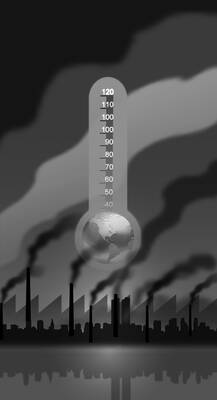
The closure of the Strait of Hormuz has sent the vast Asian chemicals industry into a tailspin. Deprived of the likes of Qatari natural gas and Saudi Arabian oil, the region’s fertilizer and plastics plants are slowing production or even shutting down. Everywhere except China, that is. In petrochemicals, China is unique. As well as a traditional industry that uses oil and gas as feedstock, it has parallel output that relies on its abundant domestic coal. Unsurprisingly, India and other regional powers want to copy and paste the Chinese method. This would not be easy — or climate friendly. The
Indonesian President Prabowo Subianto says he knows how to fix the problems facing Indonesia. Yet his economic mismanagement and authoritarian tendencies are steering the nation toward a familiar mix of currency instability and political chaos. The world’s fourth-most populous nation risks reversing the hard-won democratic and business reforms that came after the Asian Financial Crisis in 1997. At that time, the rupiah collapsed and the political upheaval that followed forced former president Haji Mohamed Suharto from power. Prabowo’s administration is ignoring similar warning signs. That disconnect was apparent in a national address on Wednesday, when Prabowo projected the swagger that has
“Of course you can choose not to be Taiwanese, just do not stay here,” chairwoman of Taipei 101 operator Taipei Financial Center Corp Janet Chia (賈永婕) said in an online interview with local entertainer Tai Chih-yuan (邰智源), triggering intense discussion on social media, with politicians across party lines weighing in. In the interview, which was aired on May 14, Chia and Tai’s discussion over a meal in Taipei 101 covered Chia’s career change from entertainer to chairwoman and US climber Alex Honnold’s free solo climb up the Taipei 101 building. During the interview, Chia said, “Being on this land, we


 RSS
RSS