


It started badly, with gag orders, cover-ups and ignored offers of help from overseas, but then the Chinese government seized the narrative. It reined in the burgeoning epidemic of COVID-19 at home and started exporting its rapidly accumulating scientific knowledge of the disease to the rest of the world.
Chinese science has often been marginalized and even mistrusted in the West.
However, will the pandemic change its standing in the world?
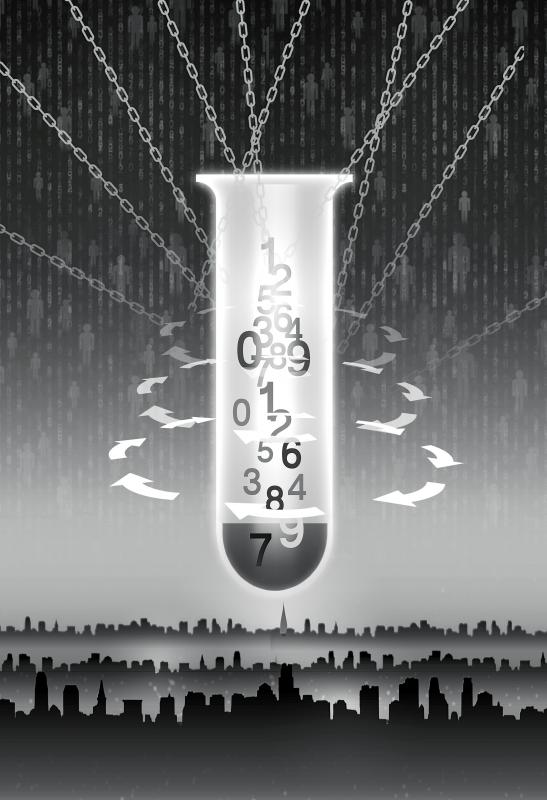
Illustration: Yusha
“China has moved from student to teacher,” said Kate Mason, an anthropologist at Brown University in Rhode Island and author of Infectious Change, an account of how the 2002-2003 epidemic of SARS in China transformed the way the country managed public health.
After SARS, Western experts went to China to help it put in place an evidence-based health system that was informed by international research, she said.
That system now exists, with its most visible symbol being the Chinese Center for Disease Control and Prevention in Beijing, and this time it has been Chinese experts giving instruction abroad.
“It has been a good year for China,” Mason said.
However, China has long held a goal to lead the world in science and it was already well on its way to achieving it before the pandemic.
Five years ago, it did not appear in the top 10 countries for university rankings; this year, it is joint sixth. It is second in the world for output of science and engineering publications, behind the EU, but ahead of the US, and the impact of Chinese research — as measured by the proportion of articles that are highly cited — doubled from 2000 to 2016, growing much faster than that of the US and the EU, which increased by about 10 percent and 30 percent respectively over the same period.
This turbo-charged performance reflects a long-term policy of rebuilding Chinese research and education in the post-Mao Zedong (毛澤東) era, said political scientist and China watcher Anna Ahlers of the Max Planck Institute for the History of Science (MPIWG) in Berlin.
Starting from the 1980s, the Chinese government began investing heavily in infrastructure, mass education and the training of a cadre of sophisticated researchers across all STEM disciplines of science, technology, engineering and mathematics.
Then, 20 years ago, its focus shifted outward — to achieving global prominence.
Among the initiatives that were devised in this new phase were programs for recruiting talent from abroad, such as the Thousand Talents Plan, and, domestically, a system of incentives for scientists to publish.
These bore fruit, as reflected in the rankings, but they also had negative consequences. The pressure to publish — with large cash bonuses paid to scientists for papers appearing in top scientific journals — resulted in an increase in academic fraud.
Meanwhile, the Thousand Talents Plan has been criticized by the US, Canada and others as a vehicle for espionage and intellectual property theft — criticisms that have been lent credence by cases such as that of Harvard nanotechnology expert Charles Lieber, who was arrested earlier this year for allegedly lying about his involvement in the program.
These tensions reflect a deep ambivalence in the rest of the world with regard to China’s emergence as a scientific superpower that the pandemic has only accentuated by highlighting that neither viruses nor science can be contained within national borders.
On the one hand, there is clear recognition that far less would be understood about COVID-19 and the virus that causes it without Chinese research. On the other, there are well-founded concerns about engaging with an authoritarian, one-party regime with a proven disregard for human rights. Muddying an already complex picture are national interests, and a US-China trade dispute.
The Thousand Talents Plan distills these tensions. Many wealthy countries have lured talent from abroad — in fact, it was the UK’s Royal Society that coined the term “brain drain” to describe the exodus of British talent to the US and Canada in the 1950s and 1960s.
However, questions have been raised about how China uses that talent and the technology that comes with it.
“The main concern is how the Chinese Communist Party [CCP] uses technology for the oppression of its people,” said James Jin Kang, a cybersecurity expert at Edith Cowan University in Perth, Australia.
He added that anyone buying technology developed in China should worry about data privacy, and that the pandemic has made it easier for China to recruit scientists who are working from home and hence subjected to less institutional oversight than usual.
China’s approach to ethics has drawn attention in a different way, now that there is a very real prospect of it being the first country to approve a vaccine against COVID-19 and perhaps also to develop effective treatments for the disease.
“China’s very good at speed,” Mason said. “If the game is speed, they’re going to win.”
There seems little doubt that the CCP is pushing its scientists to hand it that propaganda coup, causing some to ask what shortcuts are being taken in the process.
Ethical rules do exist in Chinese academia, Ahlers said, though their enforcement is sometimes lax — as illustrated by the case of He Jiankui (賀建奎), the scientist who in 2018 announced that he had edited the genes of human babies for the first time. He was punished later, though, with a prison sentence.
There is also greater emphasis on the collective good than in Western countries, so that testing an experimental COVID-19 vaccine on military personnel — which might be considered unacceptable in Europe or the US — is more acceptable there.
Yangyang Cheng, a physicist at Cornell University in New York and sometime critic of the Chinese regime, has written about how loyalty to the CCP overrides ethical considerations in China — with troubling implications for research.
However, she pointed out that debates about what is ethical with respect to a vaccine have raged in the US, too, and that Westerners need to ask themselves what they are really concerned about when they look East.
“Are they concerned because it is being done unethically, or because it is being done in China?” she asked. “I think these two things are often conflated.”
Cheng has been struck by the Sinophobia on display in the West since the beginning of the pandemic, starting with scrutiny of Chinese eating habits and ridicule of members of the Chinese diaspora preparing for a pandemic long before their fellow citizens of non-Chinese origin — who were more likely to regard COVID-19 as an exclusively Chinese problem.
“There’s not just a residual, but a very active Sinophobia in the West,” said Christos Lynteris, a medical anthropologist at the University of St Andrews.
That is unfortunate, because it can prevent foreign observers from taking a clear-eyed view of how China is changing and what problems it faces itself, he said.
For Harry Yi-Jui Wu (吳易睿), a historian of medicine at the University of Hong Kong, these include the increasing ungovernability of Chinese — including scientists.
Before the 1980s, science was a state-sanctioned, collective enterprise. Afterward, it became more individualistic and commercially oriented.
“Scientists took more pride in publishing in high-impact journals and in obtaining patents,” Wu said.
Though there was still political interference in the choice of research subjects, and over the publication process, the science itself — the gathering and analysis of data — was relatively free.
“These are paradoxes that are very common in authoritarian or totalitarian regimes,” Lynteris said.
The regime has also made adjustments to its strategy, to keep its ultimate goal of global scientific leadership in sight.
Earlier this year, for example, it banned bonuses for publications, encouraging researchers to focus on impact instead, and to publish more in Chinese journals.
It has its own fears about foreign espionage. A draft data security law unveiled this year could limit the international sharing of data generated in China.
Given the sway China already holds scientifically, as Sonia Qingyang Li of the MPIWG writes in a forthcoming paper, the impact of such changes “will likely be felt globally.”
The increasing ungovernability of Chinese scientists has also been revealed by the pandemic.
As science journalist Debora Mackenzie says in her book COVID-19: The Pandemic That Never Should Have Happened and How to Stop the Next One, a lab in Shanghai that tried to raise the alarm over the new virus was shut down in early January.
However, Cheng said the censorship can be traced back to local, not central, authorities.
“The central government is not directing that censorship directly,” she said. “But it has created this environment of fear and tension in which local politicians are motivated to suppress any bad news.”
The social credit system for monitoring trustworthiness, which has been under construction for five years, could be seen as an instrument of the self-discipline that the CCP has imposed since hardline Chinese President Xi Jinping (習近平) came to power to help it maintain control. It is not the only one.
Wu is planning to leave Hong Kong soon, feeling that it is no longer safe to investigate Chinese history critically there.
Such a perception is hardly conducive to China’s attempts to portray itself as an attractive place to conduct science and Ahlers said that Thousand Talents has hit a ceiling in terms of recruiting foreign talent.
Besides returning Chinese academics, that talent has mainly consisted of retired professors.
“China is missing out on the intermediate stratum of active, up-and-coming, mid-career scientists,” she said.
How will these tensions be resolved? Within 20 years, Kang predicted, the CCP will be forced to loosen its grip and give Chinese people more freedom — including more scientific freedom.
Until then, he said, it will continue to behave aggressively, using technology to increase its power, unless Western nations cooperate to prevent it.
The pandemic might provide an opportunity to establish the ground rules of a new relationship. Many Chinese feel pride in the way their government has handled the crisis, especially when they compare it with the responses of governments in supposedly advanced nations.
“Many of my friends who are professors say we did well, we set an example — why didn’t the West want to learn? Is it pride?” said economist Dabo Guan (關大博) of Tsinghua University in Beijing and University College London.
Prominent Chinese biomedical scientists have expressed dismay and irritation at persistent Western hostility.
“They see this double standard in how we look at China and what we do ourselves,” Ahlers said.
“We should welcome China’s growth in science,” said Venki Ramakrishnan, Nobel laureate and president of the Royal Society.
For him, that means China should be free to recruit overseas, as Western nations have for decades.
“But at the same time, we should stand up for what we consider our values, which I believe are universal values — they’re not the preserve of the West. They are those values that ensure that science and, indeed, humanity flourish,” he added.
Taiwan’s higher education system is facing an existential crisis. As the demographic drop-off continues to empty classrooms, universities across the island are locked in a desperate battle for survival, international student recruitment and crucial Ministry of Education funding. To win this battle, institutions have turned to what seems like an objective measure of quality: global university rankings. Unfortunately, this chase is a costly illusion, and taxpayers are footing the bill. In the past few years, the goalposts have shifted from pure research output to “sustainability” and “societal impact,” largely driven by commercial metrics such as the UK-based Times Higher Education (THE) Impact
History might remember 2026, not 2022, as the year artificial intelligence (AI) truly changed everything. ChatGPT’s launch was a product moment. What is happening now is an anthropological moment: AI is no longer merely answering questions. It is now taking initiative and learning from others to get things done, behaving less like software and more like a colleague. The economic consequence is the rise of the one-person company — a structure anticipated in the 2024 book The Choices Amid Great Changes, which I coauthored. The real target of AI is not labor. It is hierarchy. When AI sharply reduces the cost
The inter-Korean relationship, long defined by national division, offers the clearest mirror within East Asia for cross-strait relations. Yet even there, reunification language is breaking down. The South Korean government disclosed on Wednesday last week that North Korea’s constitutional revision in March had deleted references to reunification and added a territorial clause defining its border with South Korea. South Korea is also seriously debating whether national reunification with North Korea is still necessary. On April 27, South Korean President Lee Jae-myung marked the eighth anniversary of the Panmunjom Declaration, the 2018 inter-Korean agreement in which the two Koreas pledged to
I wrote this before US President Donald Trump embarked on his uneventful state visit to China on Thursday. So, I shall confine my observations to the joint US-Philippine military exercise of April 20 through May 8, known collectively as “Balikatan 2026.” This year’s Balikatan was notable for its “firsts.” First, it was conducted primarily with Taiwan in mind, not the Philippines or even the South China Sea. It also showed that in the Pacific, America’s alliance network is still robust. Allies are enthusiastic about America’s renewed leadership in the region. Nine decades ago, in 1936, America had neither military strength


 RSS
RSS