


Kioxia Holdings Corp’s plan to float American depositary shares (ADSs) is setting the company’s much sought-after stocks up for a liquidity boost, tapping into the global fervor over memory chips to expand its investor base.
The company is preparing to list the ADSs on a US stock exchange, it said in a release on Friday, saying the move would help raise corporate value. Details such as the schedule and method are as yet undetermined and the company might end up not pursuing the listing, according to the release. ADSs make the actual shares available for trading, making arbitrage cheaper than in the case of depositary receipts, which Kioxia already has.
Kioxia shares have surged more than 300 percent this year, a notable gain among major global stocks, and giving the company a market value of US$176.8 billion.
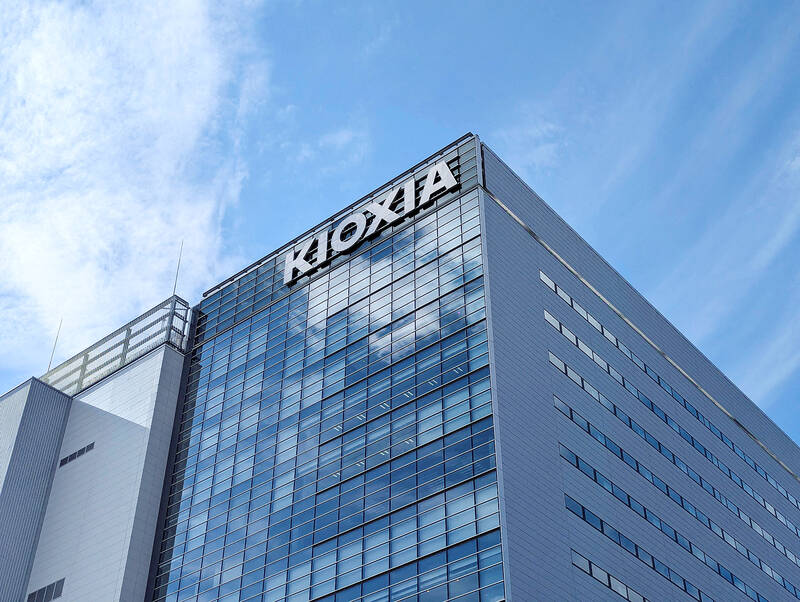
Photo: Reuters
The stock surged to an all-time high yesterday after the company on Friday reported record earnings of ¥596.8 billion (US$3.76 billion) for the first quarter, surpassing Toyota Motor Corp to become one of the most profitable businesses in Japan.
The Tokyo-based chipmaker said it expects to earn an operating profit of ¥1.3 trillion in the three months to June, more than the record profit it earned for the full year ending in March.
Kioxia’s shares are already the most-traded Japanese stock and the US listing could attract more traders. The ADS framework offers easier arbitrage opportunities, Ortus Advisors Pte Ltd head of Japan equity strategy Andrew Jackson said.
Kioxia specializes in NAND, chips used to store data in PCs, smartphones and in data centers alongside artificial intelligence (AI) accelerators such as those made by Nvidia Corp.
NAND prices more than doubled in the March quarter and are expected to rise further through the rest of this year due to tight supply conditions, the company said.
“This is the scorching summer for NAND,” SMBC Nikko Securities Inc analyst Takeru Hanaya said. “We do not see any need for concern over a loosening supply-demand balance.”
For years, Kioxia struggled to compete against bigger rivals Samsung Electronics Co and SK Hynix Inc, with less of a cushion to invest during downturns. The AI boom has stimulated multiyear demand that has disrupted the usual boom-bust cycle for memory makers.
The company, which was spun out of Toshiba Corp in 2018, said it expects demand to strengthen further across a wide range of customers. It is in discussions for long-term contracts with several large-scale AI data center clients that seek to secure supplies for next year and 2028.
Taiwan Semiconductor Manufacturing Co (TSMC, 台積電) has approved a capital budget of US$31.28 billion for production expansion to meet long-term development needs during the artificial intelligence (AI) boom. The company’s board meeting yesterday approved the capital appropriation plan for purposes such as the installation of advanced technology capacity and fab construction, the world’s largest contract chipmaker said in a statement. At an earnings conference last month, TSMC forecast that its capital expenditure for this year would be at the higher end of the US$52 billion to US$56 billion range it forecast in January in response to robust demand for 5G, AI and
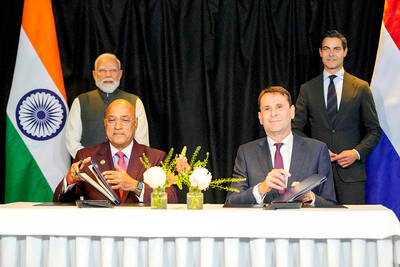
NEW MARKET: The partnership opens up India to the Dutch company, which already has a strong hold in the semiconductor market of South Korea, Taiwan and China ASML Holding NV entered into a partnership agreement with Tata Electronics Pvt Ltd aimed at ramping up India’s goal to develop domestic chip-manufacturing capabilities. The Dutch company’s technology would help power Tata Electronics’ planned 300 millimeter (mm) semiconductor foundry in Gujarat, according to a joint statement from the two companies on Saturday. The signing of a memorandum of understanding coincides with a visit by Indian Prime Minister Narendra Modi to the Netherlands, which is looking to deepen bilateral relations with New Delhi. ASML, whose top customers include Taiwan Semiconductor Manufacturing Co (台積電) and Samsung Electronics Co, makes lithography machines that can print
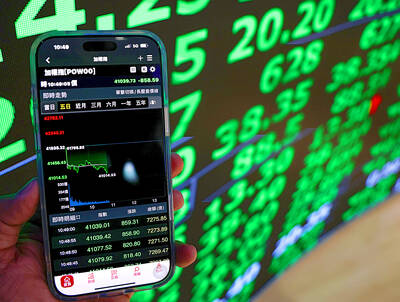
PORTFOLIO REBALANCING: The adjustments in three global equity indices reflect rising investor appetite for semiconductor and artificial intelligence-related stocks Taiwan’s weighting in major global equity indices compiled by MSCI Inc is to rise modestly following the latest quarterly review, underscoring the market’s expanding role in emerging-market portfolios, as global investors continue to favor the nation’s technology sector. Taiwan’s weighting in the MSCI Emerging Markets Index is to increase by 0.30 percentage points to 23.76 percent, after the changes take effect at the close of the May 29 session. Its weighting in the MSCI All-Country Asia ex-Japan Index is to rise 0.37 percentage points to 27.16 percent, while that in the MSCI All Country World Index is to edge up slightly to
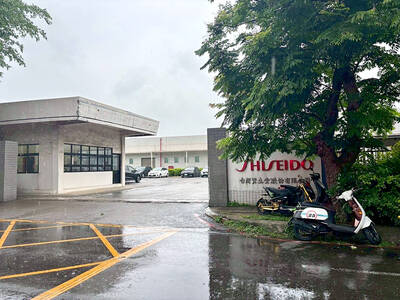
The Hsinchu County Government’s Labor Affairs Department yesterday said that it has received a plan from cosmetics brand Taiwan Shiseido Co (台灣資生堂) detailing mass layoffs at its plant in Hukou Township (湖口). While the labor authorities did not disclose the number of employees to be laid off, Japanese news media earlier in the day reported that the closure of the company’s factory in Hukou would result in 170 employees losing their jobs. Shiseido followed the law by reporting its layoff plan, the department said, adding that authorities would closely monitor negotiations between the management and affected employees and step in if any


 RSS
RSS