


Smartphone chip designer MediaTek Inc (聯發科) yesterday launched a new artificial intelligence (AI) data center with a maximum capacity of 45 megawatts to meet its rising demand for computing power required to develop new advanced chips for AI applications.
The company has completed the first-phase computing power buildup at the data center in Miaoli County’s Tongluo Township (銅鑼), providing 15 megawatts of capacity to support its research and development (R&D) capabilities, despite an industrywide shortage of key components, MediaTek said.
Supply constraints have plagued a wide range of key components, including memory chips, solid-state drives, power supply units and central processing units, the company said.
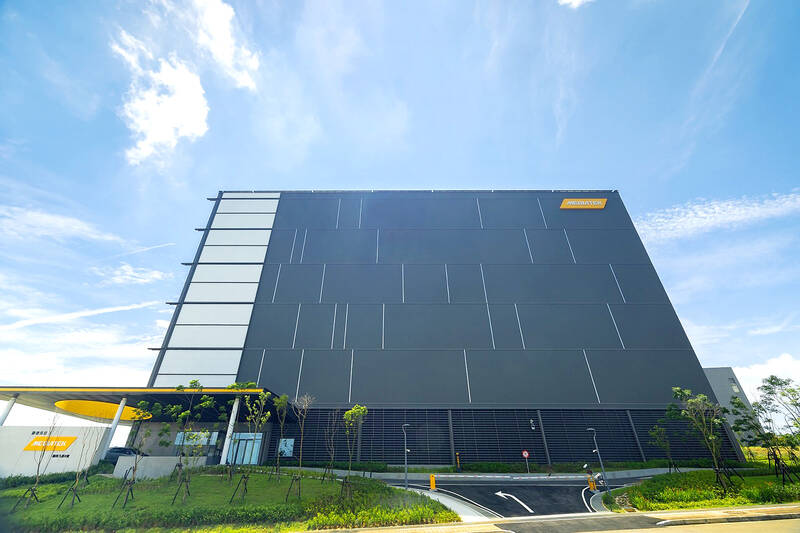
Photo courtesy of MediaTek Inc
The second-phase and third-phase expansions, each with an installed capacity of 15 megawatts, would be activated in accordance with the company’s business developments, MediaTek information security division deputy director Joseph Huang (黃博揚) said at a news conference.
The new AI data center provides up to 138 billion tokens per month for AI model training or inference, MediaTek said.
Tokens are units of data processed by AI models during training and inference, enabling prediction, generation and reasoning.
The token number is more than double than the 60 billion tokens consumed at the end of last year, Huang said.
Compared with leasing data center space, MediaTek believes operating an in-house data center is the most effective way to support its computing power demand and business growth, as well as cater to its functional and capability requirements, he said.
The Miaoli data center is powered by Nvidia Corp’s B200 Blackwell chips and enterprise-grade AI supercomputing infrastructure. It is also the first large-scale data center in Taiwan introducing immersion cooling technology to address the power consumption issue, reducing overall power usage effectiveness to 1.1.
When asked whether MediaTek would consider adopting tensor processing units, which are custom-designed application-specific integrated circuits (ASICs) developed by Google, to accelerate machine learning workloads, Huang said the company would not rule it out.
For now, Nvidia chips are still the optimal choice to support MediaTek’s R&D workloads, he said.
The new data center came one week after MediaTek said it aimed to capture 10 to 15 percent of the world’s AI ASIC market, even though the market is expected to accelerate to US$80 billion next year, rather than in 2028 as had been estimated previously.
MediaTek, which tapped into the AI ASIC market in the past few years by designing AI chips for other firms, said its first AI ASIC project is to contribute about US$2 billion in revenue in the fourth quarter of this year and generate multiple billions of dollars next year.
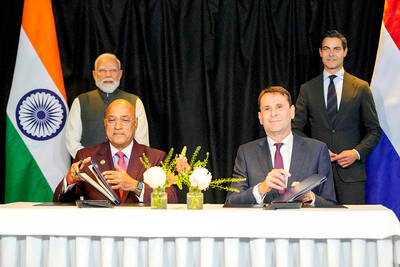
NEW MARKET: The partnership opens up India to the Dutch company, which already has a strong hold in the semiconductor market of South Korea, Taiwan and China ASML Holding NV entered into a partnership agreement with Tata Electronics Pvt Ltd aimed at ramping up India’s goal to develop domestic chip-manufacturing capabilities. The Dutch company’s technology would help power Tata Electronics’ planned 300 millimeter (mm) semiconductor foundry in Gujarat, according to a joint statement from the two companies on Saturday. The signing of a memorandum of understanding coincides with a visit by Indian Prime Minister Narendra Modi to the Netherlands, which is looking to deepen bilateral relations with New Delhi. ASML, whose top customers include Taiwan Semiconductor Manufacturing Co (台積電) and Samsung Electronics Co, makes lithography machines that can print
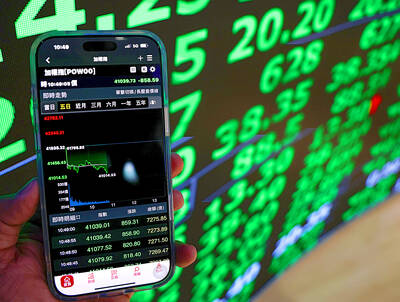
PORTFOLIO REBALANCING: The adjustments in three global equity indices reflect rising investor appetite for semiconductor and artificial intelligence-related stocks Taiwan’s weighting in major global equity indices compiled by MSCI Inc is to rise modestly following the latest quarterly review, underscoring the market’s expanding role in emerging-market portfolios, as global investors continue to favor the nation’s technology sector. Taiwan’s weighting in the MSCI Emerging Markets Index is to increase by 0.30 percentage points to 23.76 percent, after the changes take effect at the close of the May 29 session. Its weighting in the MSCI All-Country Asia ex-Japan Index is to rise 0.37 percentage points to 27.16 percent, while that in the MSCI All Country World Index is to edge up slightly to
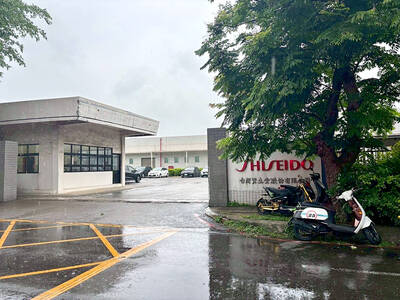
The Hsinchu County Government’s Labor Affairs Department yesterday said that it has received a plan from cosmetics brand Taiwan Shiseido Co (台灣資生堂) detailing mass layoffs at its plant in Hukou Township (湖口). While the labor authorities did not disclose the number of employees to be laid off, Japanese news media earlier in the day reported that the closure of the company’s factory in Hukou would result in 170 employees losing their jobs. Shiseido followed the law by reporting its layoff plan, the department said, adding that authorities would closely monitor negotiations between the management and affected employees and step in if any
Hon Hai Precision Industry Co (鴻海精密) on Tuesday confirmed a cyberattack targeting some of its North American facilities, but said the affected factories were gradually returning to normal. The company, known globally as Foxconn Technology Group (富士康科技集團), said that its cybersecurity team “activated the response mechanism and implemented operational measures to ensure the continuity of production and delivery.” “The affected factories are resuming normal production,” the company said in a statement. Hon Hai had previously described it as a “technical issue,” when news of the cyberattack first surfaced. The confirmation followed media reports of a large-scale information technology system incident that broke out at


 RSS
RSS