


Apple Inc celebrates its 50th anniversary as artificial intelligence (AI) challenges the Silicon Valley legend to prove it can deliver yet another culture-changing innovation.
Steve Jobs, a driven marketing genius, and Steve Wozniak, who invented the Apple computer, revolutionized how people use technology in the Internet age and built a company now worth more than US$3.6 trillion.
The two college dropouts changed the way people use computers, listen to music and communicate on the go, giving rise to lifestyles revolving around smartphone apps.
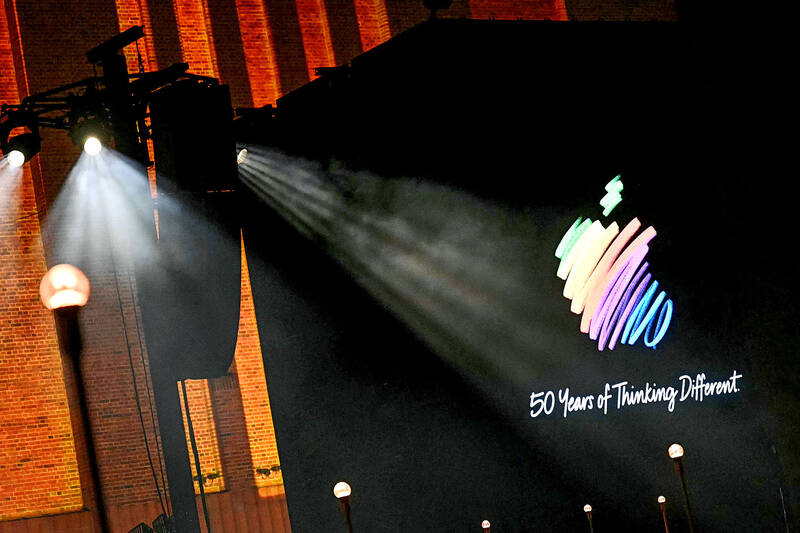
Photo: Justin Tallis, AFP
Apple’s hit products — the Mac, the iPhone, the Apple Watch and the iPad — command a cult-like following, long after the company’s humble beginnings on April 1, 1976 in Jobs’ Cupertino, California garage.
Apple has sold more than 3.1 billion iPhones since the handsets debuted in 2007, generating about US$2.3 trillion in revenue, according to Counterpoint Research.
For Counterpoint analyst Yang Wang (汪陽), the iPhone is the most successful consumer electronics product ever, reshaping human communication while becoming “a global fashion and status symbol.”
Before the iPhone, Apple shook up home computing with the 1984 Macintosh, whose icon-based interface and mouse made computing accessible beyond specialists — and sparked a legendary rivalry between Jobs and Microsoft Corp’s Bill Gates.
“Apple was founded on the simple notion that technology should be personal, and that belief — radical at the time — changed everything,” chief executive Tim Cook said in an anniversary letter posted online.
Apple transformed the music market with the iPod and iTunes, made the smartphone a mass-market staple with the iPhone, and took tablets mainstream with the iPad. The Apple Watch quickly seized the lead in the smartwatch market, despite debuting later than its rivals.
While not an inventor, Jobs — who died in 2011 at age 56 — was renowned for his uncompromising drive to marry technology with design to create products that were intuitive and hassle-free.
Apple marketed the Macintosh as the “computer for the rest of us,” but it was the iPhone that fulfilled that promise, said David Pogue, author of the recently released “Apple: The First 50 Years.”
The iPhone’s dominance reshaped Apple’s business model. With the premium smartphone market widely seen as saturated, Cook has increasingly turned to selling digital content and services to the company’s vast existing base of users.
Central to that strategy is the App Store, which Apple made the sole gateway to software on its devices, taking a cut of transactions — and thereby drawing accusations of monopoly abuse, regulatory scrutiny in Europe and court orders in the US to open up its platform.
No country has been more central to Apple’s rise — or more fraught for its future — than China, with Cook cementing ties to the Asian superpower through regular appearances at local Apple stores and official visits.
Cook was the mastermind of the strategy that made China the primary manufacturing base for Apple devices, with the vast majority of iPhones assembled by contractor Foxconn Technology Group (富士康) and other suppliers in Chinese factories.
It is also one of Apple’s largest consumer markets, generating tens of billions of dollars in annual revenue.
But the company faces mounting pressure on both fronts: trade tensions and tariffs have accelerated efforts to diversify manufacturing to India and Vietnam, while competition from domestic rivals such as Huawei Technologies Co (華為) has eaten into Apple’s Chinese market share.
A concern haunting investors is that Apple appears to be easing into generative AI while rivals Google, Microsoft and OpenAI race ahead.
A promised upgrade to its Siri digital assistant was delayed, in what analysts called a rare stumble for the company.
And rather than relying on its own engineers to overhaul Siri, Apple has turned to Google for AI capability.
But whether built in-house or outsourced, Apple’s obsession with user privacy and its premium hardware could position it to drive widespread adoption of personalized AI — and make it profitable, a goal that has proved elusive for much of the AI industry.
Already, Apple’s AirPods are being steadily improved with sensors and smart software, and lessons learned from the Vision Pro could feed into AI smart glasses to rival Meta Platforms Inc’s.
“They are the ones that always seem able to create something so simple that users just fall in love with it,” Creative Strategies Inc analyst Carolina Milanesi said.
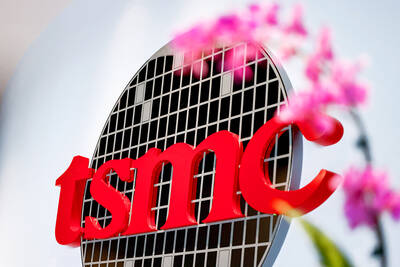
Taiwan Semiconductor Manufacturing Co (TSMC, 台積電) has approved a capital budget of US$31.28 billion for production expansion to meet long-term development needs during the artificial intelligence (AI) boom. The company’s board meeting yesterday approved the capital appropriation plan for purposes such as the installation of advanced technology capacity and fab construction, the world’s largest contract chipmaker said in a statement. At an earnings conference last month, TSMC forecast that its capital expenditure for this year would be at the higher end of the US$52 billion to US$56 billion range it forecast in January in response to robust demand for 5G, AI and
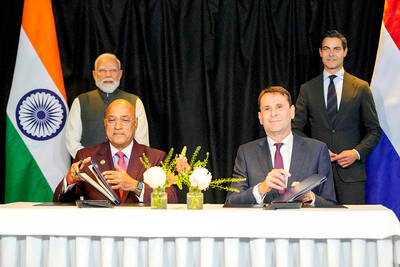
NEW MARKET: The partnership opens up India to the Dutch company, which already has a strong hold in the semiconductor market of South Korea, Taiwan and China ASML Holding NV entered into a partnership agreement with Tata Electronics Pvt Ltd aimed at ramping up India’s goal to develop domestic chip-manufacturing capabilities. The Dutch company’s technology would help power Tata Electronics’ planned 300 millimeter (mm) semiconductor foundry in Gujarat, according to a joint statement from the two companies on Saturday. The signing of a memorandum of understanding coincides with a visit by Indian Prime Minister Narendra Modi to the Netherlands, which is looking to deepen bilateral relations with New Delhi. ASML, whose top customers include Taiwan Semiconductor Manufacturing Co (台積電) and Samsung Electronics Co, makes lithography machines that can print
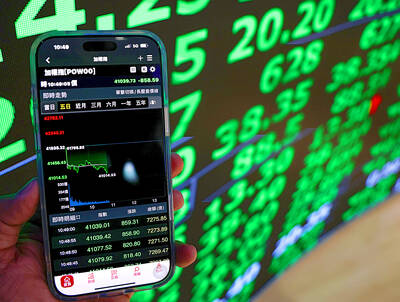
PORTFOLIO REBALANCING: The adjustments in three global equity indices reflect rising investor appetite for semiconductor and artificial intelligence-related stocks Taiwan’s weighting in major global equity indices compiled by MSCI Inc is to rise modestly following the latest quarterly review, underscoring the market’s expanding role in emerging-market portfolios, as global investors continue to favor the nation’s technology sector. Taiwan’s weighting in the MSCI Emerging Markets Index is to increase by 0.30 percentage points to 23.76 percent, after the changes take effect at the close of the May 29 session. Its weighting in the MSCI All-Country Asia ex-Japan Index is to rise 0.37 percentage points to 27.16 percent, while that in the MSCI All Country World Index is to edge up slightly to
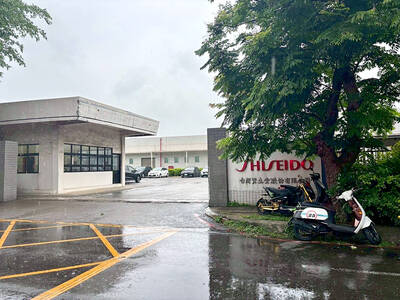
The Hsinchu County Government’s Labor Affairs Department yesterday said that it has received a plan from cosmetics brand Taiwan Shiseido Co (台灣資生堂) detailing mass layoffs at its plant in Hukou Township (湖口). While the labor authorities did not disclose the number of employees to be laid off, Japanese news media earlier in the day reported that the closure of the company’s factory in Hukou would result in 170 employees losing their jobs. Shiseido followed the law by reporting its layoff plan, the department said, adding that authorities would closely monitor negotiations between the management and affected employees and step in if any


 RSS
RSS