


The US-Israel war with Iran could disrupt supplies of key semiconductor manufacturing materials, a South Korean ruling party lawmaker said yesterday, as the conflict in the Middle East entered its sixth day.
South Korea’s chip industry, which supplies around two-thirds of global memory chips, is also concerned that a prolonged conflict in Iran will lead to higher energy costs and prices, Kim Young-bae said after meeting with executives from companies such as Samsung Electronics Co and trade groups.
“Officials raised a possibility that semiconductor production could be disrupted if some of these key materials cannot be sourced from the Middle East,” he said at a briefing with reporters, giving helium as one example.
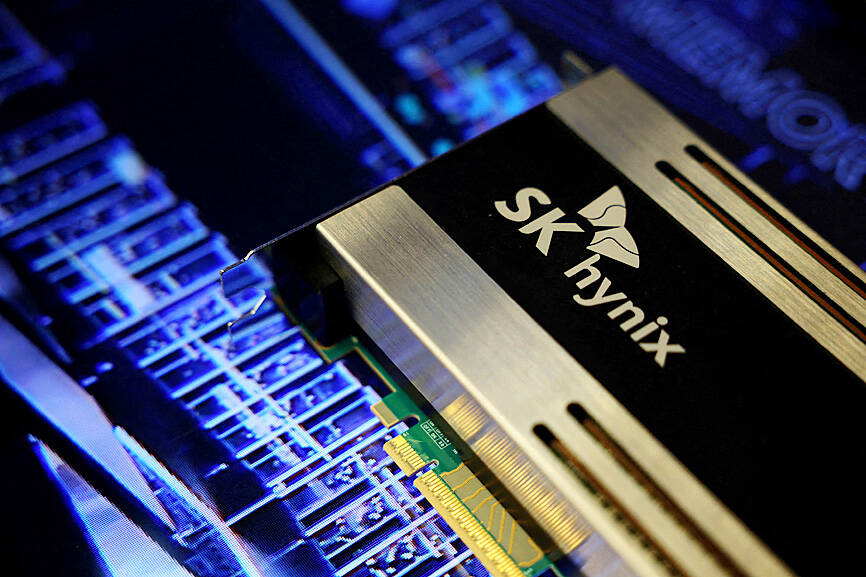
Photo: Reuters
Helium is essential for heat management during semiconductor production and it has no viable alternatives currently. It is only produced in a handful of countries, with Qatar among the leading players in the industry.
The warnings come as chipmakers grapple with severe supply bottlenecks due to surging chip demand from artificial intelligence (AI) data center operators that has tightened supplies to many other industries, including smartphones, laptops and automobiles.
South Korean chipmaker SK Hynix Inc said in a statement that it has “long secured diverse supply chains and sufficient inventory” of helium, “therefore there is almost no chance that the company will be affected.”
Samsung declined to comment.
Taiwan Semiconductor Manufacturing Co (台積電) said in a statement that it does not anticipate any significant impact currently, and will continue monitoring the situation closely.
Contract chipmaker GlobalFoundries Inc said it is “in direct contact with suppliers, customers and partners in the region,” and “mitigation plans” are in place.
South Korean Ministry of Trade, Industry and Resources said the country relies heavily on the Middle East for 14 other items in chip supply chains, including bromine and chip inspection equipment, but that many of them can be sourced domestically or from other markets.
South Korea’s chip industry also warned the crisis could deal a setback to plans by big tech firms to build AI data centers in the Middle East in the longer term, thus weighing on chip demand, Kim said.
US tech giants like Microsoft Corp and Nvidia Corp have been positioning the UAE as a regional hub for AI computing needed to power services such as ChatGPT.
However, Amazon.com Inc said on Monday that some of its data centers in the UAE and Bahrain were damaged by drone strikes, sparking questions around Big Tech’s pace of expansion in the region.

NEW IDENTITY: Known for its software, India has expanded into hardware, with its semiconductor industry growing from US$38bn in 2023 to US$45bn to US$50bn India on Saturday inaugurated its first semiconductor assembly and test facility, a milestone in the government’s push to reduce dependence on foreign chipmakers and stake a claim in a sector dominated by China. Indian Prime Minister Narendra Modi opened US firm Micron Technology Inc’s semiconductor assembly, test and packaging unit in his home state of Gujarat, hailing the “dawn of a new era” for India’s technology ambitions. “When young Indians look back in the future, they will see this decade as the turning point in our tech future,” Modi told the event, which was broadcast on his YouTube channel. The plant would convert

‘SEISMIC SHIFT’: The researcher forecast there would be about 1.1 billion mobile shipments this year, down from 1.26 billion the prior year and erasing years of gains The global smartphone market is expected to contract 12.9 percent this year due to the unprecedented memorychip shortage, marking “a crisis like no other,” researcher International Data Corp (IDC) said. The new forecast, a dramatic revision down from earlier estimates, gives the latest accounting of the ongoing memory crunch that is affecting every corner of the electronics industry. The demand for advanced memory to power artificial intelligence (AI) tasks has drained global supply until well into next year and jeopardizes the business model of many smartphone makers. IDC forecast about 1.1 billion mobile shipments this year, down from 1.26 billion the prior
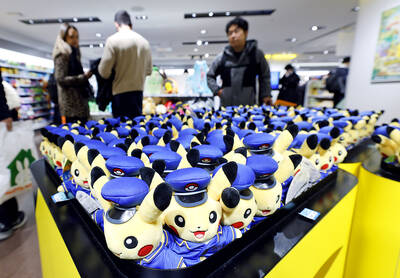
People stand in a Pokemon store in Tokyo on Thursday. One of the world highest-grossing franchises is celebrated its 30th anniversary yesterday.

Zimbabwe’s ban on raw lithium exports is forcing Chinese miners to rethink their strategy, speeding up plans to process the metal locally instead of shipping it to China’s vast rechargeable battery industry. The country is Africa’s largest lithium producer and has one of the world’s largest reserves, according to the US Geological Survey (USGS). Zimbabwe already banned the export of lithium ore in 2022 and last year announced it would halt exports of lithium concentrates from January next year. However, on Wednesday it imposed the ban with immediate effect, leaving unclear what the lithium mining sector would do in the


 RSS
RSS