


The semiconductor industry is to reach US$1 trillion in revenue this year for the first time, fueled by artificial intelligence (AI) and the spread of computer chips to virtually every part of the economy.
Total industry sales were US$791.7 billion last year and are forecast to chalk up another 26 percent surge this year, the Semiconductor Industry Association (SIA) said.
The market is hitting the US$1 trillion milestone much faster than originally anticipated — something that bodes well for the business world at large, SIA chief executive officer John Neuffer said.
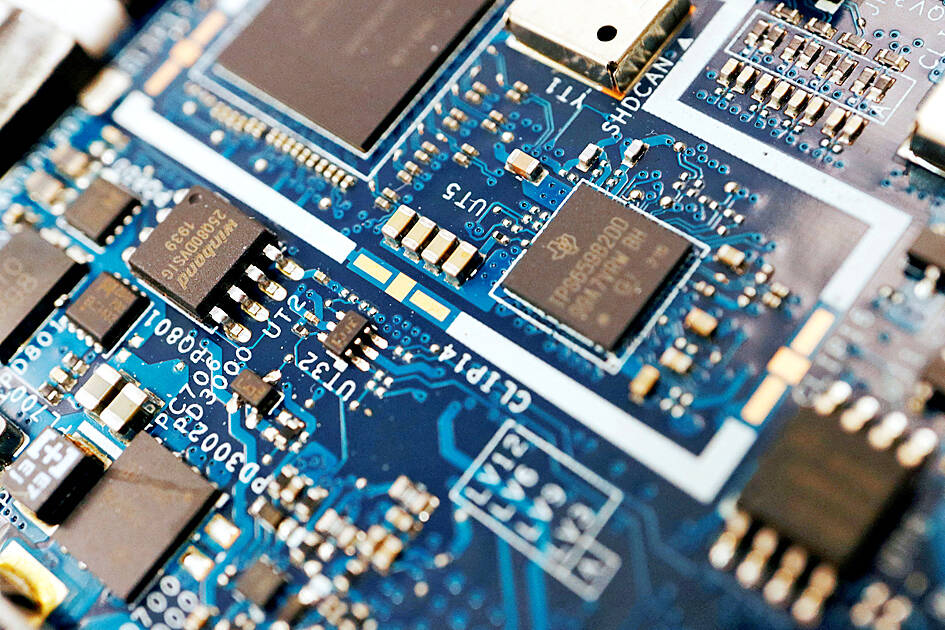
Photo: Reuters
“When we have growth in our sector, it means exponential benefits in other sectors,” Neuffer said in an interview. “Our technology is foundational for pretty much every critical strategic industry. It’s a pretty good fundamental sign.”
Colossal demand for new data centers has provided a bonanza for Nvidia Corp, Micron Technology Inc and other chipmakers. That has allowed the industry to keep eclipsing growth estimates.
Forecasters previously thought it might take four more years to reach a trillion-dollar level, Neuffer said.
Revenue from logic chips — often described as the brains of devices — soared 40 percent to US$301.9 billion last year.
Sales of memory chips, which help computers store and manage data, grew 35 percent to US$223.1 billion, SIA data showed.
On a regional basis, Asia-Pacific, the Americas, Europe and China posted growth, with only Japan declining, the data found.
The chip market would continue to have its characteristic boom-and-bust cycles, but the long-term upward trend is clearly established, Neuffer said.
“We do like our oscillations, and this is no doubt going to continue,” he said. “The pie is just simply getting bigger.”
Nvidia chief executive officer Jensen Huang (黃仁勳) on Friday said that spending on data centers and other AI infrastructure is sustainable, downplaying concerns that his customers are throwing too much money at the technology.
The build-out of AI will continue for seven to eight years, Huang told CNBC.
“AI has become useful and very capable,” he said. “The adoption of it has become incredibly high.”
US-China trade tensions have cast a cloud over the industry, but the relationship between the world’s two largest economies is showing signs of improving, Neuffer said.
Washington has imposed increasingly restrictive export curbs in the past few years, and Beijing has responded in kind.
For the US chip industry to thrive in the long run, there needs to more state support of research and development, as well as immigration reform that allows the country to attract and retain overseas talent, he said.
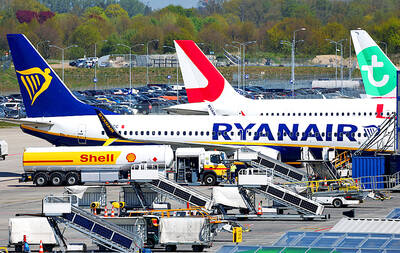
Ryanair, Transavia, Volotea and other low-cost airlines are feeling the financial pain from high jet fuel prices as a result of the Middle East war and are cutting flights. The closure of the Strait of Hormuz has taken a huge chunk of oil supplies off the market, sending the price of jet fuel soaring and triggering fears of shortages that could force airlines to cancel flights. Airlines are not waiting for a lack of supplies to react. “Travel alert: Airlines are cutting thousands of flights right now,” Travel Therapy host Karen Schaler said in an Instagram reel this past weekend.
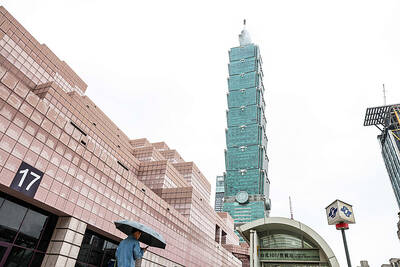
MANAGING RISKS: Taiwan has secured LNG sufficient to cover 95 percent of electricity demand for next month, UBS said, describing the government’s approach as proactive UBS Group AG has raised its forecast for Taiwan’s economic growth this year to 8 percent, up from 6.9 percent previously, and said expansion could reach as high as 8.6 percent if external energy shocks are avoided. The upgrade reflects a stronger-than-expected first-quarter performance and sustained momentum in artificial intelligence (AI)-driven exports, which UBS said are providing a firm foundation for growth despite geopolitical and energy risks. Taiwan’s GDP expanded 13.69 percent year-on-year in the first quarter, the fastest growth since the second quarter of 1987, the Directorate-General of Budget, Accounting and Statistics (DGBAS) reported on Thursday. On a seasonally
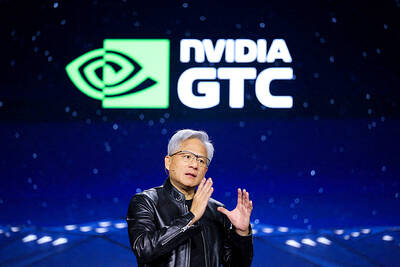
The list of Asian stocks that benefit from business partnership with Nvidia Corp is getting longer, as the region further integrates into the artificial intelligence (AI) chip giant’s business ecosystem. Just in the past week, South Korea’s LG Electronics Inc, Taiwan’s Nanya Technology Corp (南亞科技), as well as China’s Huizhou Desay SV Automotive Co (德賽西威) and Pateo Connect Technology Shanghai Corp (博泰車聯) have become the latest to rally on news of tie-ups, supply-chain participation or product collaboration with the US chip designer. Asian suppliers account for about 90 percent of Nvidia’s production costs, up from about 65 percent last year, data compiled

The Fair Trade Commission’s (FTC) ongoing review of Grab Holdings Ltd’s US$600 million acquisition of Foodpanda Taiwan’s operations, announced on March 23, has taken on fresh urgency as industry experts warn that the transaction could embed significant Chinese cybersecurity vulnerabilities into Taiwan’s digital infrastructure through Grab’s deep ties to autonomous-driving firm WeRide (文遠知行). Less than 16 months after the FTC blocked Uber Eats’ direct attempt to acquire Foodpanda Taiwan — citing potential combined market shares of 80 to 90 percent — the emergence of Grab as the buyer has prompted questions about whether the same competitive harm is simply being rerouted


 RSS
RSS