


Taiwan Cement Corp (TCC, 台灣水泥) chairman Nelson Chang (張安平) yesterday urged curbs on cement imports, saying that otherwise Taiwan runs the risk of becoming a dumping ground for overseas excess capacity, undermining the domestic cement industry and threatening tens of thousands of jobs.
Chang said he strongly agreed with Minister of Environment Peng Chi-ming’s (彭啟明) call to reduce reliance on imported cement, adding that the issue extends beyond environmental protection and carbon reduction.
Chang in a statement said that if Taiwan becomes a destination for surplus foreign production, the local cement industry and its workforce would be adversely impacted.
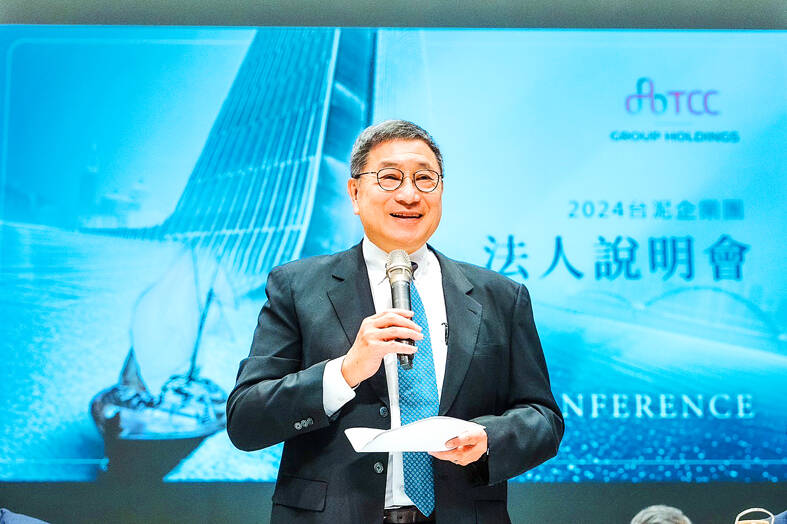
Photo courtesy of Taiwan Cement Corp via CNA
Citing Ministry of Finance customs import pricing and domestic sales data, TCC said that super low-priced cement imported from countries including Vietnam, Indonesia and Japan showed clear signs of dumping.
Based on a comparison covering the second half of last year through the first half of this year, Japanese cement was sold domestically at about NT$3,800 per tonne, while exports to Taiwan were priced at just NT$1,400 per tonne, or NT$2,400 less, representing a dumping margin of up to 106 percent, the company said.
Indonesian cement clinker sold domestically at about NT$1,200 per tonne, but exports to Taiwan were priced at only NT$680, nearly half the local price, it added.
The company also said that despite the government’s imposition of anti-dumping duties on Vietnamese cement in July to curb unfair trade practices, import prices continued to fall.
According to customs data cited by TCC, the price of Vietnamese cement dropped 15 percent after the duties took effect, while clinker prices fell 22 percent.
Indonesian suppliers followed with a 5 percent price cut, further widening the price gap, which previously ranged from NT$500 to NT$700 per tonne.
Taiwan continues to maintain zero tariffs on imported cement, Chang said, calling the nation’s policy neither reciprocal nor fair to domestic producers.
As the government prepares to introduce new carbon footprint reporting rules, stricter controls are needed on cement used in public construction projects, he said.
Chang called for enforceable, traceable single-source material requirements to prevent the mixing of imported cement, saying that this is important for construction quality and structural safety, as well as to avoid unnecessary environmental impacts.
Imported cement should be required to meet internationally recognized carbon footprint standards and undergo third-party verification, he said, adding that some overseas producers use net emissions calculations, while Taiwanese producers follow stricter gross emissions standards.
TCC said its Heping plant in Hualien County and Suao plant in Yilan County have invested in facility upgrades to process industrial waste from multiple sectors, including semiconductors, converting waste into alternative raw materials and fuels, responsibilities it said imported cement suppliers do not share.
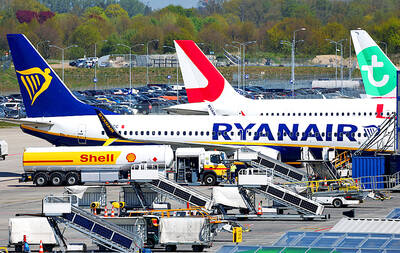
Ryanair, Transavia, Volotea and other low-cost airlines are feeling the financial pain from high jet fuel prices as a result of the Middle East war and are cutting flights. The closure of the Strait of Hormuz has taken a huge chunk of oil supplies off the market, sending the price of jet fuel soaring and triggering fears of shortages that could force airlines to cancel flights. Airlines are not waiting for a lack of supplies to react. “Travel alert: Airlines are cutting thousands of flights right now,” Travel Therapy host Karen Schaler said in an Instagram reel this past weekend.
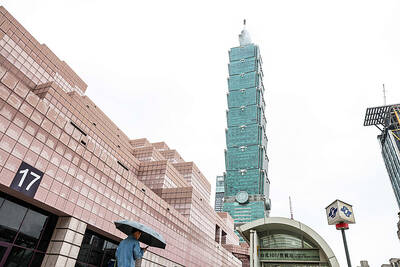
MANAGING RISKS: Taiwan has secured LNG sufficient to cover 95 percent of electricity demand for next month, UBS said, describing the government’s approach as proactive UBS Group AG has raised its forecast for Taiwan’s economic growth this year to 8 percent, up from 6.9 percent previously, and said expansion could reach as high as 8.6 percent if external energy shocks are avoided. The upgrade reflects a stronger-than-expected first-quarter performance and sustained momentum in artificial intelligence (AI)-driven exports, which UBS said are providing a firm foundation for growth despite geopolitical and energy risks. Taiwan’s GDP expanded 13.69 percent year-on-year in the first quarter, the fastest growth since the second quarter of 1987, the Directorate-General of Budget, Accounting and Statistics (DGBAS) reported on Thursday. On a seasonally

The list of Asian stocks that benefit from business partnership with Nvidia Corp is getting longer, as the region further integrates into the artificial intelligence (AI) chip giant’s business ecosystem. Just in the past week, South Korea’s LG Electronics Inc, Taiwan’s Nanya Technology Corp (南亞科技), as well as China’s Huizhou Desay SV Automotive Co (德賽西威) and Pateo Connect Technology Shanghai Corp (博泰車聯) have become the latest to rally on news of tie-ups, supply-chain participation or product collaboration with the US chip designer. Asian suppliers account for about 90 percent of Nvidia’s production costs, up from about 65 percent last year, data compiled
The Fair Trade Commission’s (FTC) ongoing review of Grab Holdings Ltd’s US$600 million acquisition of Foodpanda Taiwan’s operations, announced on March 23, has taken on fresh urgency as industry experts warn that the transaction could embed significant Chinese cybersecurity vulnerabilities into Taiwan’s digital infrastructure through Grab’s deep ties to autonomous-driving firm WeRide (文遠知行). Less than 16 months after the FTC blocked Uber Eats’ direct attempt to acquire Foodpanda Taiwan — citing potential combined market shares of 80 to 90 percent — the emergence of Grab as the buyer has prompted questions about whether the same competitive harm is simply being rerouted


 RSS
RSS