


A quarterly survey of major Japanese manufacturers released yesterday showed business sentiment improving to its best level in four years, even after US President Donald Trump raised tariffs on goods from the US ally to a baseline level of 15 percent.
The Bank of Japan (BOJ) is bound to take the results of its quarterly “tankan” survey into account during a policy meeting on Friday, when it is expected to raise its benchmark interest rate.
Analysts said the stronger results might sway the BOJ toward pressing ahead with a 0.25 percentage point rate hike that would take the key rate to 0.75 percent.
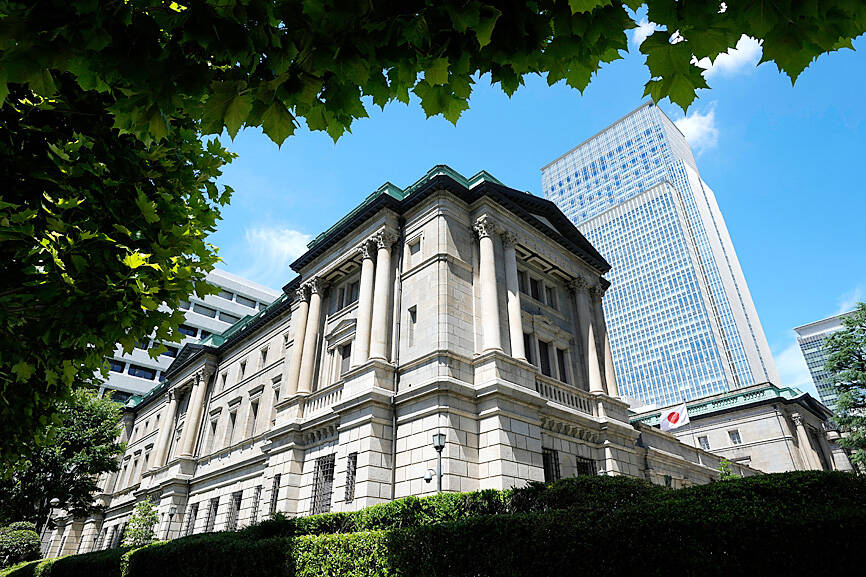
Photo: AP
That expectation gave the yen an advantage over the US dollar, allowing the currency to appreciate 0.6 percent to 154.955 against the US dollar, nearing its strongest level in a week.
The BOJ survey showed the measure of major manufacturers expressing optimism rose to 15 from 14 in the past quarter, the highest level in four years. The index showed the percentage of companies reporting positive conditions minus the percentage reporting unfavorable ones.
The measure of sentiment for all companies rose to 17 from 15, it said.
The survey “struck all the right notes from the Bank of Japan’s perspective,” Capital Economics senior Asia-Pacific economist Abhijit Surya said in a report.
“It showed that business conditions are improving, profit margins remain elevated and firms are upbeat about their investment intentions,” he added.
While the BOJ’s overall survey showed improvement, forecasts for the next quarter were less positive, and businesses expected inflation to remain at 2.4 percent, above the central bank’s target range.
Elsewhere, the Bank of England (BoE) and the European Central Bank (ECB) also set monetary policy this week.
Markets have almost fully priced in a cut by the BoE, as UK inflation is finally showing some signs of easing, while expectations are for the ECB to leave rates unchanged.
Traders have begun speculating that a rate hike could be on the cards for the ECB next year.
Meanwhile, investors would also have the chance to catch up on economic data that was delayed by the US government shutdown, including the jobs report for last month and the monthly consumer price index.
“It’s worth taking this week’s data with a pinch of salt, given problems collecting data as well as the direct economic impact of the government shutdown,” L&G Asset Management Ltd investment strategy head Ben Bennett said. “We’ll have to wait until 2026 to get a clearer reading on the US economy.”
Additional reporting by Reuters
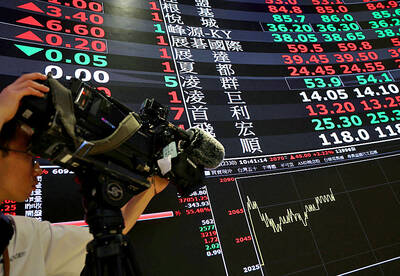
After several years flying high as Asia’s best Nvidia Corp proxy, Taiwan Semiconductor Manufacturing Co (TSMC, 台積電) is increasingly vying with other artificial intelligence (AI) stocks for investor attention. Stock traders are chasing a wider array of beneficiaries as mainstream usage of AI creates demand for hardware beyond the most-advanced chips TSMC makes for Nvidia. Subthemes from the deepening memory crunch to advances in robotics are also luring bids. At the same time, investment caps on single stocks are pushing funds to diversify, while retail investors long familiar with TSMC through its US depositary receipts are being offered a broader set of
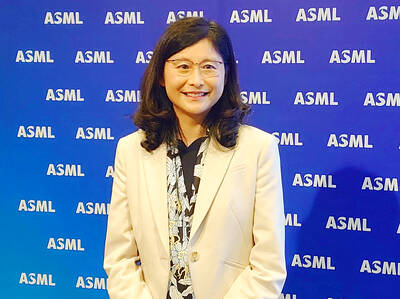
Netherlands-based semiconductor equipment supplier ASML Holding NV yesterday said that it is planning to hire an additional 1,000 people in Taiwan this year in response to growing demand from clients. ASML had previously planned to recruit 600 people this year, but that the plan has been adjusted upward, ASML vice president and ASML Taiwan general manager Grace Wang (汪佳慧) told reporters. ASML has a workforce of more than 4,500 in Taiwan, accounting for about 10 percent of its global total, Wang said. This year’s recruitment campaign would focus on adding people in the customer support, manufacturing and supply chain domains to assist ASML
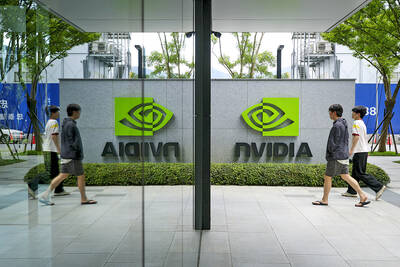
UNDER MICROSCOPE: Taiwan detained three people who allegedly conspired to buy servers in Taiwan and export them using fraudulent documentation, prosecutors said Nvidia Corp chief executive officer Jensen Huang (黃仁勳) on Saturday urged Super Micro Computer Inc to tighten up on compliance after Taiwan detained three people this week for allegedly making fraudulent declarations about artificial intelligence (AI) servers made by its US partner. The development marked the nation’s first crackdown on semiconductor smuggling, which grew after the US slapped restrictions on exports of high-end chips such as Nvidia AI accelerators to China. Nvidia is “rigorous” in explaining regulations to all of its partners, Huang told reporters after arriving in Taipei. “Ultimately Super Micro has to run their own company,” he said in response to

Nvidia Corp yesterday announced that CEO Jensen Huang (黃仁勳) would attend an employee meeting in Taipei tomorrow to celebrate the launch of the company’s Taiwan headquarters project. Huang would attend a gathering at the site of Nvidia’s planned headquarters in Beitou Shilin Technology Park (北投士林科技園區), the company said in a statement. After arriving in Taiwan on Saturday last week, Huang told reporters that he plans to meet with Quanta Computer Inc (廣達) chairman Barry Lam (林百里) and Taiwan Semiconductor Manufacturing Co (TSMC, 台積電) chairman C.C. Wei (魏哲家), and would attend the groundbreaking ceremony for Nvidia’s Taiwan headquarters tomorrow. Nvidia has not yet applied


 RSS
RSS