


China’s investment slumped further and retail sales expanded at their weakest pace since the crash caused by the COVID-19 pandemic, in another month of lopsided growth that is inflaming trade tensions with the rest of the world.
While factory output is seeing little pullback, retail sales rose just 1.3 percent last month from a year earlier — the slowest figures on record, outside the pandemic, official data released yesterday showed. That was worse than every estimate in a Bloomberg survey of analysts, whose median forecast was for the growth pace to stay at 2.9 percent for a second month.
Fixed-asset investment also disappointed and shrank 2.6 percent in the first 11 months of the year, keeping it on track to post the first annual drop in data going back to 1998.

Photo: Bloomberg
Industrial output also fell short of forecasts, but still grew 4.8 percent from a year earlier, a sign that booming exports are keeping the production side of the economy humming. However, that is also deepening imbalances and weighing on prices as domestic demand languishes.
“With supply indicators still exceeding demand indicators, we think China’s deflation pressure could persist and its export-led growth model continue, which could lead to rising trade and investment tensions between China and non-US economies,” Barclays PLC economists said in a note.
China’s inability to revive consumer spending is leaving the economy vulnerable to risks abroad, after it relied on foreign demand to propel growth for much of this year despite the tariff war unleashed by US President Donald Trump.
Exports are forecast to slow in the months ahead after a surprisingly strong year, as protectionism spreads and trade tensions intensify with countries beyond the US.
The property sector deteriorated again, as state-backed developer China Vanke Co (萬科) moved closer to the brink of defaulting. The plunge in real-estate investment reached 16 percent in the first 11 months from a year earlier.
Home prices fell faster last month, reversing the trend of narrower declines from earlier this year.
The fading effect of the government’s trade-in subsidies was clear in the breakdown of spending figures last month. Sales of home appliances slumped 19 percent from a year earlier, the worst reading since early 2020. Car sales fell 8 percent — their biggest drop since May 2022.
The investment figure also pointed to weakening demand. It implied a contraction of about 11 percent last month from a year earlier, estimates from Goldman Sachs Group Inc and Capital Economics showed.
Natixis SA senior economist Gary Ng (吳卓殷) said “the government policies of supporting consumption and the property market are far from adequate,” even as the official goal for the economy is easily within reach this year.
“While a 5 percent real growth target is likely a done deal, 2026 will be a much more challenging year if the stress persists,” Ng said.
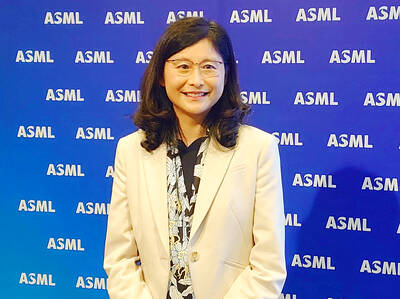
Netherlands-based semiconductor equipment supplier ASML Holding NV yesterday said that it is planning to hire an additional 1,000 people in Taiwan this year in response to growing demand from clients. ASML had previously planned to recruit 600 people this year, but that the plan has been adjusted upward, ASML vice president and ASML Taiwan general manager Grace Wang (汪佳慧) told reporters. ASML has a workforce of more than 4,500 in Taiwan, accounting for about 10 percent of its global total, Wang said. This year’s recruitment campaign would focus on adding people in the customer support, manufacturing and supply chain domains to assist ASML
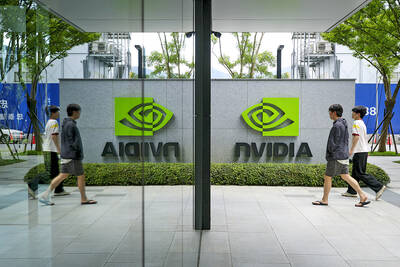
UNDER MICROSCOPE: Taiwan detained three people who allegedly conspired to buy servers in Taiwan and export them using fraudulent documentation, prosecutors said Nvidia Corp chief executive officer Jensen Huang (黃仁勳) on Saturday urged Super Micro Computer Inc to tighten up on compliance after Taiwan detained three people this week for allegedly making fraudulent declarations about artificial intelligence (AI) servers made by its US partner. The development marked the nation’s first crackdown on semiconductor smuggling, which grew after the US slapped restrictions on exports of high-end chips such as Nvidia AI accelerators to China. Nvidia is “rigorous” in explaining regulations to all of its partners, Huang told reporters after arriving in Taipei. “Ultimately Super Micro has to run their own company,” he said in response to

Nvidia Corp yesterday announced that CEO Jensen Huang (黃仁勳) would attend an employee meeting in Taipei tomorrow to celebrate the launch of the company’s Taiwan headquarters project. Huang would attend a gathering at the site of Nvidia’s planned headquarters in Beitou Shilin Technology Park (北投士林科技園區), the company said in a statement. After arriving in Taiwan on Saturday last week, Huang told reporters that he plans to meet with Quanta Computer Inc (廣達) chairman Barry Lam (林百里) and Taiwan Semiconductor Manufacturing Co (TSMC, 台積電) chairman C.C. Wei (魏哲家), and would attend the groundbreaking ceremony for Nvidia’s Taiwan headquarters tomorrow. Nvidia has not yet applied

Huawei Technologies Co (華為) said it has come up with a new pathway to shorten its gap with industry leader Taiwan Semiconductor Manufacturing Co (TSMC, 台積電), potentially achieving a breakthrough in making advanced semiconductors without cutting-edge equipment. Right now there is about a five-year gap between what TSMC is capable of and what Huawei, together with its manufacturing partner Semiconductor Manufacturing International Corp (中芯), can produce. Huawei is to start making 1.4-nanometer chips by 2031 with its own “LogicFolding” technology, Huawei semiconductor chief He Tingbo (何庭波) said in a rare public appearance during a chip conference yesterday, while TSMC has


 RSS
RSS