


Rivian Automotive Inc has developed its own artificial intelligence (AI) chip, replacing Nvidia Corp technology in a push to add and enhance automated-driving features in its vehicles.
The automaker would equip its upcoming R2 sport utility vehicles with Rivian Autonomy Processor 1 (RAP1) chips and a new lidar sensor. Taiwan Semiconductor Manufacturing Co (台積電) would produce the chips that, combined with the new sensor and AI model developments, would bolster Rivian’s efforts to eventually offer autonomous driving capability.
“This is not a bet one takes lightly, this is a huge commitment that’s taken us years,” Rivian CEO R.J. Scaringe said in an interview. “Usually, you can’t lower cost and improve performance. But here, we improved performance dramatically and simultaneously lowered cost by hundreds of dollars per vehicle.”
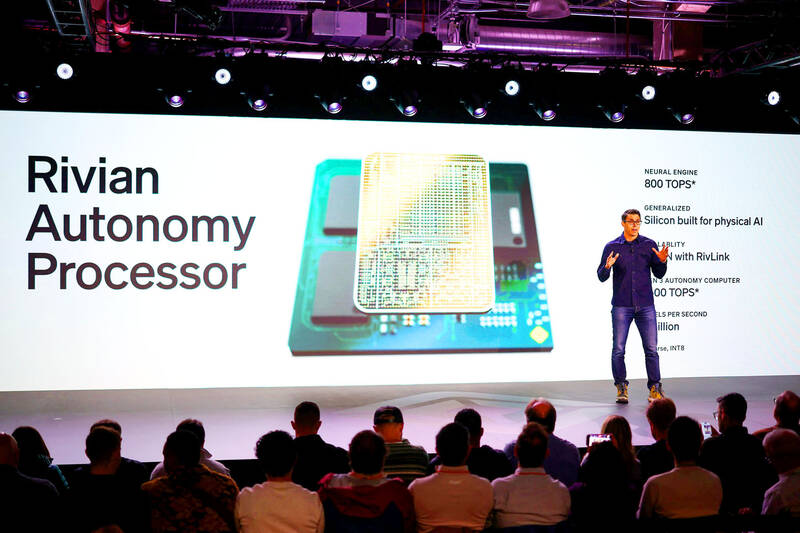
Photo: REUTERS
Two RAP1 chips would power Rivian’s next-generation on-board computer, called Autonomy Compute Module 3, which would process 5 billion pixels per second and deliver four times the performance of the Nvidia-powered system. The company’s SUVs and pickups offer driver-assistance features that require constant supervision.
Automakers have for years competed to develop more capable automated-driving systems and sold investors on a future where vehicles are eventually able to offer full autonomy. However, most manufacturers have tended to count on specialist chipmakers like Nvidia, Mobileye Global Inc or Qualcomm Inc, as developing custom AI silicon is challenging and expensive.
Nvidia — the world’s most valuable company — dominates the market for chips in data centers used to train AI models. Its business offering automotive chips remains small, accounting for only about 1 percent of sales, but the company is looking to increase that share.
Tesla Inc has been an exception to the outsourcing trend, designing its own chips and making them standard hardware to help justify the investment.
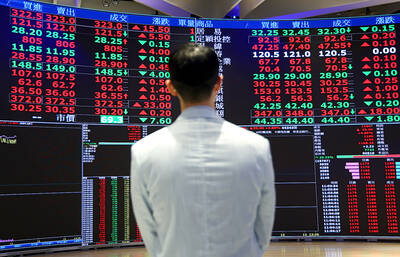
Shares in Taiwan closed at a new high yesterday, the first trading day of the new year, as contract chipmaker Taiwan Semiconductor Manufacturing Co (TSMC, 台積電) continued to break records amid an artificial intelligence (AI) boom, dealers said. The TAIEX closed up 386.21 points, or 1.33 percent, at 29,349.81, with turnover totaling NT$648.844 billion (US$20.65 billion). “Judging from a stronger Taiwan dollar against the US dollar, I think foreign institutional investors returned from the holidays and brought funds into the local market,” Concord Securities Co (康和證券) analyst Kerry Huang (黃志祺) said. “Foreign investors just rebuilt their positions with TSMC as their top target,
H200 CHIPS: A source said that Nvidia has asked the Taiwanese company to begin production of additional chips and work is expected to start in the second quarter Nvidia Corp is scrambling to meet demand for its H200 artificial intelligence (AI) chips from Chinese technology companies and has approached contract manufacturer Taiwan Semiconductor Manufacturing Co (TSMC, 台積電) to ramp up production, sources said. Chinese technology companies have placed orders for more than 2 million H200 chips for this year, while Nvidia holds just 700,000 units in stock, two of the people said. The exact additional volume Nvidia intends to order from TSMC remains unclear, they said. A third source said that Nvidia has asked TSMC to begin production of the additional chips and work is expected to start in the second
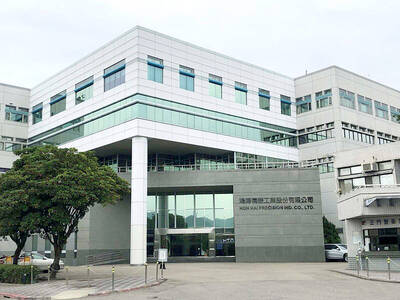
REVENUE PERFORMANCE: Cloud and network products, and electronic components saw strong increases, while smart consumer electronics and computing products fell Hon Hai Precision Industry Co (鴻海精密) yesterday posted 26.51 percent quarterly growth in revenue for last quarter to NT$2.6 trillion (US$82.44 billion), the strongest on record for the period and above expectations, but the company forecast a slight revenue dip this quarter due to seasonal factors. On an annual basis, revenue last quarter grew 22.07 percent, the company said. Analysts on average estimated about NT$2.4 trillion increase. Hon Hai, which assembles servers for Nvidia Corp and iPhones for Apple Inc, is expanding its capacity in the US, adding artificial intelligence (AI) server production in Wisconsin and Texas, where it operates established campuses. This
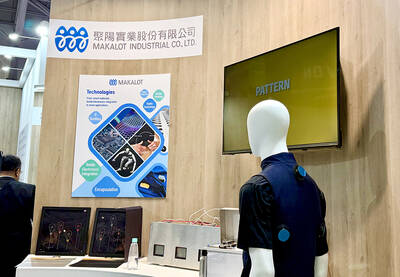
Garment maker Makalot Industrial Co (聚陽) yesterday reported lower-than-expected fourth-quarter revenue of NT$7.93 billion (US$251.44 million), down 9.48 percent from NT$8.76 billion a year earlier. On a quarterly basis, revenue fell 10.83 percent from NT$8.89 billion, company data showed. The figure was also lower than market expectations of NT$8.05 billion, according to data compiled by Yuanta Securities Investment and Consulting Co (元大投顧), which had projected NT$8.22 billion. Makalot’s revenue this quarter would likely increase by a mid-teens percentage as the industry is entering its high season, Yuanta said. Overall, Makalot’s revenue last year totaled NT$34.43 billion, down 3.08 percent from its record NT$35.52


 RSS
RSS