


In India’s tech capital of Bengaluru, the morning “rush hour” lasts so long it devours half the workday, throttling productivity in a city often viewed as the poster child of a booming economy.
Entrepreneur R.K. Misra, cofounder of a multimillion-dollar start-up, avoids scheduling in-person meetings until nearly noon — then squeezes them in before gridlock returns.
The “situation is pretty bad. And it hurts by not being able to plan your day,” Misra said, describing his grueling 16km commute, which can take up to two hours at peak times.
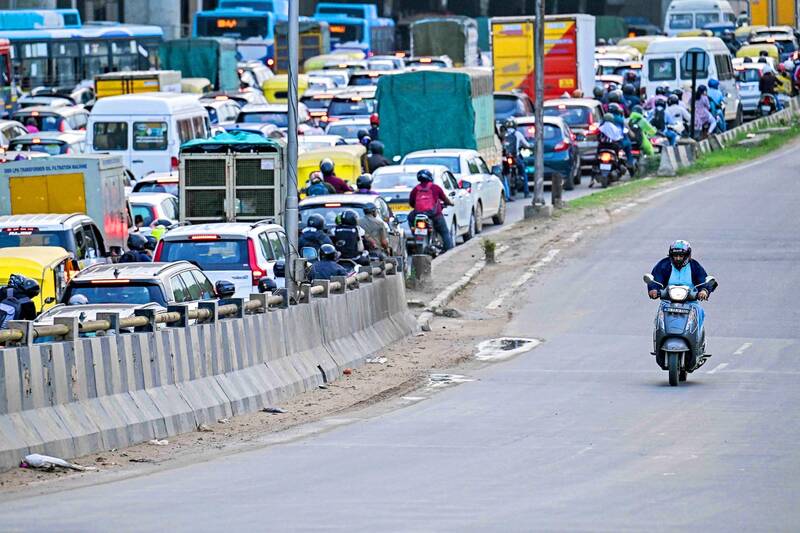
Photo: AFP
“It also discourages people from doing anything other than work, because there’s no work-life balance any more,” he said.
Bengaluru, home to nearly 12 million people and state capital of Karnataka, is the “Silicon Valley” of the world’s fifth-biggest economy — hosting thousands of start-ups, outsourcing firms and global tech giants from Google to Microsoft.
Yet its flagship Outer Ring Road (ORR) business district is clogged with traffic, pocked with potholes and often flooded during the monsoon. Water shortages plague the summer months.
The roughly 20km ORR corridor, lined with swanky tech parks, hosts dozens of Fortune 500 offices and more than 1 million employees.
Frustration boiled over in September when Rajesh Yabaji, chief executive officer of digital trucking logistics platform BlackBuck, announced that he was moving his company out of the ORR.
Yabaji said he snapped after the “average commute for my colleagues shot up to 1.5+ hours” one way, he wrote on social media, adding that the roads were “full of potholes and dust, coupled with lowest intent to get them rectified.”
Pharma tycoon Kiran Mazumdar-Shaw, founder of Biocon, chimed in.
“I had an overseas business visitor to Biocon Park who said: ‘Why are the roads so bad and why is there so much garbage around? Doesn’t the government want to support investment?’” Mazumdar-Shaw wrote on social media.
Bengaluru had the world’s third-slowest traffic last year, according to the TomTom Traffic Index — far worse than San Francisco or London.
Manas Das, of the Outer Ring Road Companies’ Association, works with city authorities to resolve infrastructure woes for global tech companies.
“Companies would like to get the basics right — and today those basics are getting compromised,” Das said.
B.S. Prahallad, technical director of the government-backed Bengaluru Smart Infrastructure Limited, set up to manage major projects, said an average resident needed 90 to 100 minutes to cover 16km.
“Something has to be done, now or never,” Prahallad told reporters. “The next step is, we will decay.”
Karnataka Deputy Chief Minister D.K. Shivakumar wrote on X last month that “10000+ potholes” had been identified, with half of them fixed so far.
“Instead of tearing Bengaluru down, let’s build it up — together,” Shivakumar said. “The world sees India through Bengaluru, and we owe it to our city to rise united!”
Borrowing a page from London’s playbook, authorities have split the municipal corporation into five smaller bodies and set up an overarching Greater Bengaluru Authority.
Shivakumar said that the move would “transform the way Bengaluru is planned and governed.”
The southern Indian city was not always an overrun metropolis. Once part of the erstwhile princely state of Mysore, it was known as “garden city” or a “pensioner’s paradise.”
India’s software boom began in the 1990s, with outsourcing companies striking gold.
Waves of investment since then from Silicon Valley companies and start-ups helped quadruple the state’s software exports from 2014 to last year to US$46 billion.
Venture capitalist T.V. Mohandas Pai, former chief financial officer of Indian IT giant Infosys, said that the city’s infrastructure was “possibly three to five years behind.”
Rapid expansion clogged waterways, cut trees and filled wetlands, straining the infrastructure, ecologist Harini Nagendra said.
“We have flooding because water has no place to go, drought because the water is not infiltrating into the ground,” Nagendra said.
“People are choking on pollution, choking on the concrete — and all the dust that comes with the construction, traffic, smog, heatwaves,” she said.
Nearly half the city depends on boreholes that run dry in summer, while the rest rely on costly water trucked in, according to the Water, Environment, Land and Livelihoods Labs research center.
Pai, 67, remains optimistic.
“The future is going to be bright, but there is going to be pain,” he said. “We are suffering the pangs of growth because India knows how to handle poverty, not prosperity.”
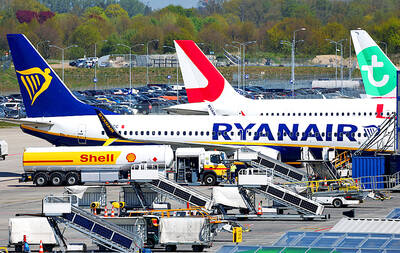
Ryanair, Transavia, Volotea and other low-cost airlines are feeling the financial pain from high jet fuel prices as a result of the Middle East war and are cutting flights. The closure of the Strait of Hormuz has taken a huge chunk of oil supplies off the market, sending the price of jet fuel soaring and triggering fears of shortages that could force airlines to cancel flights. Airlines are not waiting for a lack of supplies to react. “Travel alert: Airlines are cutting thousands of flights right now,” Travel Therapy host Karen Schaler said in an Instagram reel this past weekend.
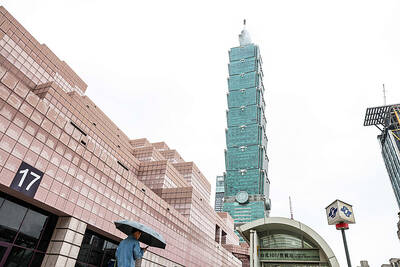
MANAGING RISKS: Taiwan has secured LNG sufficient to cover 95 percent of electricity demand for next month, UBS said, describing the government’s approach as proactive UBS Group AG has raised its forecast for Taiwan’s economic growth this year to 8 percent, up from 6.9 percent previously, and said expansion could reach as high as 8.6 percent if external energy shocks are avoided. The upgrade reflects a stronger-than-expected first-quarter performance and sustained momentum in artificial intelligence (AI)-driven exports, which UBS said are providing a firm foundation for growth despite geopolitical and energy risks. Taiwan’s GDP expanded 13.69 percent year-on-year in the first quarter, the fastest growth since the second quarter of 1987, the Directorate-General of Budget, Accounting and Statistics (DGBAS) reported on Thursday. On a seasonally

The list of Asian stocks that benefit from business partnership with Nvidia Corp is getting longer, as the region further integrates into the artificial intelligence (AI) chip giant’s business ecosystem. Just in the past week, South Korea’s LG Electronics Inc, Taiwan’s Nanya Technology Corp (南亞科技), as well as China’s Huizhou Desay SV Automotive Co (德賽西威) and Pateo Connect Technology Shanghai Corp (博泰車聯) have become the latest to rally on news of tie-ups, supply-chain participation or product collaboration with the US chip designer. Asian suppliers account for about 90 percent of Nvidia’s production costs, up from about 65 percent last year, data compiled

The Fair Trade Commission’s (FTC) ongoing review of Grab Holdings Ltd’s US$600 million acquisition of Foodpanda Taiwan’s operations, announced on March 23, has taken on fresh urgency as industry experts warn that the transaction could embed significant Chinese cybersecurity vulnerabilities into Taiwan’s digital infrastructure through Grab’s deep ties to autonomous-driving firm WeRide (文遠知行). Less than 16 months after the FTC blocked Uber Eats’ direct attempt to acquire Foodpanda Taiwan — citing potential combined market shares of 80 to 90 percent — the emergence of Grab as the buyer has prompted questions about whether the same competitive harm is simply being rerouted


 RSS
RSS