


On a recent trip to Taiwan, Citi’s Head of Banking Vis Raghavan discussed his priorities in supporting clients across the bank’s franchise.
Q: You have all your key Banking business lines in Taiwan, Commercial, Corporate and Investment Banking. How important is Taiwan overall to Citi’s Banking business?
Taiwan is a great example of Citi’s Banking model. We have a best-in-class corporate bank that is deeply embedded into the operations of our clients. Citi’s Investment Bank here is world-class and whether our clients are looking to pursue M&A, issue debt or equity, we can deliver. Our role is to be a strategic advisor for our clients and follow-through with impeccable execution. And our Commercial Bank is growing and working with those companies that will be the large multi-nationals of tomorrow. So, Taiwan really is a key strategic market for Citi.
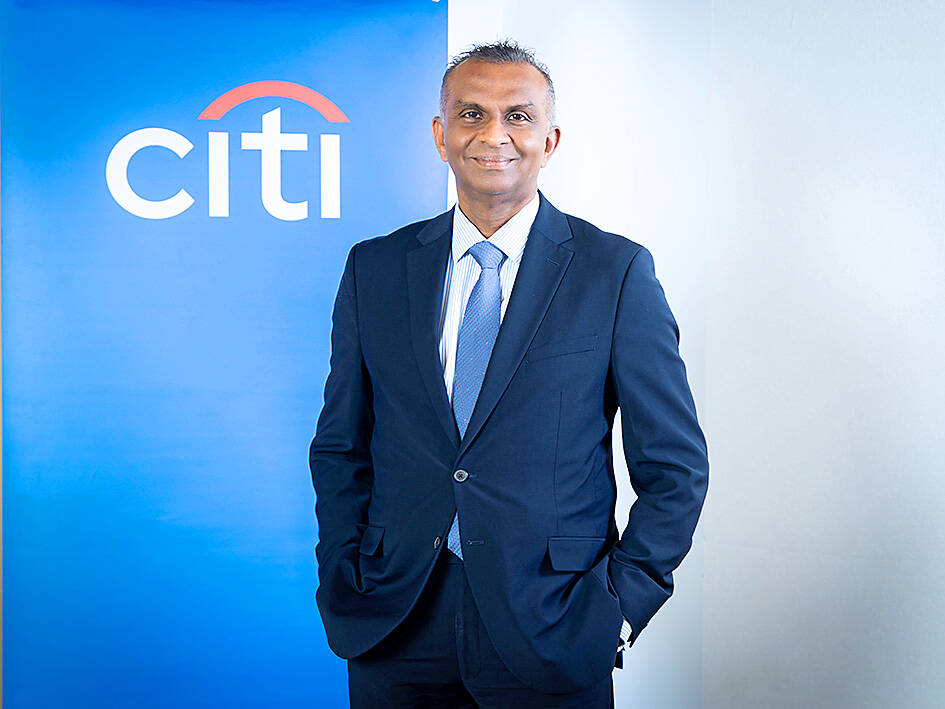
Photo courtesy of Citibank Taiwan
To underline that, our team has raised over US$30bn for Taiwanese clients since 2020 from global capital markets to support their growth. Many of these financings were for leading companies that Citi supports across our Banking business locally and globally. We help Taiwan corporates go global, global MNCs expand in Taiwan and new economy companies grow – we are in the sweet spot connecting Taiwan to the world, and the world to Taiwan. From established corporate champions of today to the titans of tomorrow, our model is to support these companies with their growth ambitions. They choose Citi because we have the local insight and knowledge built over six decades operating in Taiwan along with a truly global network.
We also support our clients across a One Citi principle, making sure we are connecting them with businesses across Citi. This could be in areas like trade finance and cash management in our Services business or hedging in rates or FX in the Markets business. We have market leading businesses in Taiwan and from this powerful base, there are increased opportunities to grow with our clients. I have been excited to meet clients on this trip and learn and understand how we can support them further across Citi.
Q: How does Citi use its physical network across more than 90 markets to support local companies?
In Taiwan, we empower leading local companies to achieve global success, facilitating their business expansion into over 50 markets worldwide. Notably, more than 60% of these companies operate in over 5 markets, and over half of them have a presence in more than 10 markets. These numbers have increased significantly versus a decade ago. What Citi can uniquely provide for clients remains in high demand. We are deeply engaged with our clients, proactively helping them navigate macro and geopolitical uncertainty, and that has driven strong third quarter growth for Citi overall. We’ve supported clients with issues that include supply chain shifts and hedging, and with their strategic agendas. In times of uncertainty, Citi’s business model, global footprint and strong balance sheet serve as a pillar of strength and stability for our clients.
Q: In today’s volatile and uncertain environment, what advice and services can Citi offer to Taiwanese companies?
As geopolitical tensions and evolving economic policies create new and uncharted territory for markets and companies, Citi’s international network is a competitive advantage. More clients are leaning into Citi for advice. Trade policies and international relations are impacting both the markets and the economy. So, while market activity is busy, our general advice now is stay liquid, be prudent and keep your capital structure clean. Important opportunities will come up, and they will require financial flexibility and efficient decision-making. More broadly though all companies are preparing for fundamental shifts in trade and capital flows. Our ability to connect the dots across markets, provide real-time insights and execute at scale is what sets Citi apart. The uncertainty will continue to drive fluctuations in global markets. We continue to find ways to help clients mitigate risks and seize opportunities.
Q: Citi is a leader in capital markets (both ECM and DCM) for Taiwan corporates, what is the outlook for financing? And do you expect more M&A involving Taiwan companies, and will it be more outbound or inbound?
Citi continues to solidify its position as a clear market leader in Taiwan across M&A, ECM, and DCM, building on our performance in 2024 and maintaining a top-tier ranking in 2025 year-to-date. We anticipate sustained momentum with a robust pipeline. In capital markets, significant growth opportunities driven by the booming AI industry have attracted investor interest in high-quality Taiwanese issuers. This has resulted in recent transactions being multiple times oversubscribed by investors, consistently achieving highly successful fundraising outcomes for our clients. On the M&A front, we actively leverage our extensive global network to empower clients in pursuing their transformative strategies and cross-border expansion objectives. This support is particularly crucial given the evolving dynamics of global supply chains.
Q: Taiwan is key on the global semiconductor and AI supply chain. As technology and AI reshape industries worldwide, Taiwan stands at the center of these mega trends, driving innovation, how will you further support Taiwan companies?
Taiwan is home to some of the most innovative and advanced companies in the world. It has risen up the value chain and remains competitive across the tech space. While many of these companies already see strong growth, they are also keen on growing and expanding their presence in new markets. Citi is focused on supporting them further. Citi’s strategic focus for Taiwanese companies centers on global expansion and connectivity, leveraging our unparalleled global network. We provide critical services such as cross-border payment solutions, trade finance structures, and risk advisory for FX exposure management, all essential for optimizing global supply chains and ensuring successful market entry. Building supply chain resilience and optimizing operations is another critical focus for the work with our clients here in Taiwan. Recognizing the intensive capital requirements inherent in AI and other advanced technology development, Citi delivers comprehensive financing solutions tailored for these companies.
We are also embracing AI at Citi to support our teams and clients. Generative Artificial Intelligence (GenAI) is rapidly transforming industries, and banking is no exception. We are rapidly scaling the technology across the firm – putting the power of GenAI into the hands of our colleagues to help them make faster decisions, automate repetitive tasks, and increase productivity. This exciting technology offers a wide range of opportunities for us to make the bank more efficient by using it in our businesses with specific use cases. We are investing in the future by building towards our goal of an AI-ready workforce by giving colleagues access to AI allowing them to explore the tech and become familiar by integrating it into their daily work routines. We are exploring how GenAI will enhance our client’s experiences and the technology could potentially lead to AI-enhanced M&A and capital markets tools which will streamline processes, analyze market sentiment better, and optimize pricing and timing for IPOs or bond issuances, improving valuations and deal competitiveness.
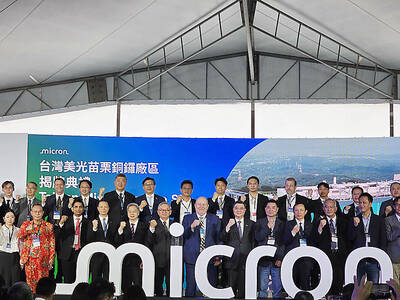
UNPRECEDENTED PACE: Micron Technology has announced plans to expand manufacturing capabilities with the acquisition of a new chip plant in Miaoli Micron Technology Inc unveiled a newly acquired chip plant in Miaoli County yesterday, as the company expands capacity to meet growing demand for advanced DRAM chips, including high-bandwidth memory chips amid the artificial intelligence boom. The plant in Miaoli County’s Tongluo Township (銅鑼), which Micron acquired from Powerchip Semiconductor Manufacturing Corp (力積電) for US$1.8 billion, is expected to make a sizeable capacity contribution to the company from fiscal 2028, the company said in a statement. It would be an extended production site of Micron’s large-scale manufacturing hub in Taichung, the company said. As the global semiconductor industry is racing to reach US$1 trillion

Singapore-based ride-hailing and delivery giant Grab Holdings Ltd has applied for regulatory approval to acquire the Taiwan operations of Germany-based Delivery Hero SE's Foodpanda in a deal valued at about US$600 million. Grab submitted the filing to the Fair Trade Commission on Friday last week, with the transaction subject to regulatory review and approval, the company said in a statement yesterday. Its independent governance structure would help foster a healthy and competitive market in Taiwan if the deal is approved, Grab said. Grab, which is listed on the NASDAQ, said in the filing that US-based Uber Technologies Inc holds about 13 percent of
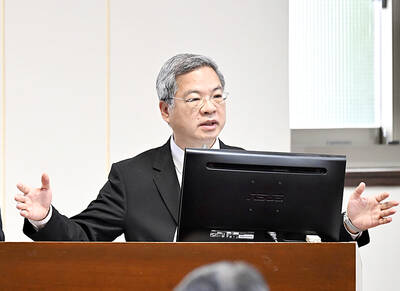
ABOVE LEGAL REQUIREMENT: The Ministry of Economic Affairs is prepared if LNG supply is disrupted, with more than the legal requirement of 11 days of inventory Taiwan has largely secured liquefied natural gas (LNG) supplies through May and arranged about half of June’s supply, Minister of Economic Affairs Kung Ming-hsin (龔明鑫) said yesterday. Since the Middle East conflict began on Feb. 28, Taiwan’s LNG inventories have remained more than 12 days, exceeding the legal requirement of 11 days, indicating no major supply concerns for domestic gas and electricity, Kung said at a meeting of the legislature’s Economics Committee in Taipei. The ministry aims to increase the figure to 14 days by the end of next year, he said. While one or two LNG or crude oil shipments for May

Taiwan’s food delivery market could undergo a major shift if Singapore-based Grab Holdings Ltd completes its planned acquisition of Delivery Hero SE’s Foodpanda business in Taiwan, industry experts said. Grab on Monday last week announced it would acquire Foodpanda’s Taiwan operations for US$600 million. The deal is expected to be finalized in the second half of this year, with Grab aiming to complete user migration to its platform by the first half of next year. A duopoly between Uber Eats and Foodpanda dominates Taiwan’s delivery market, a structure that has remained intact since the Fair Trade Commission (FTC) blocked Uber Technologies Inc’s


 RSS
RSS