


Teco Electric and Machinery Co Ltd (東元電機) aims to increase its overseas revenue to more than 50 percent of its total, with a focus on Southeast Asia and the US, company chairman Morris Li (利明献) said on the sidelines of an event in Taipei yesterday.
Li said that the company’s newly secured mechanical, electrical and plumbing (MEP) contracts for two hyperscale data center engineering projects in Malaysia earlier this month are designed to leverage the country’s energy-saving advantages, supportive policies and favorable operating environment.
The NT$1.17 billion (US$39.4 million) deal follows Teco’s acquisition in March of an 80 percent stake in Malaysian MEP firm NCL Energy Sdn Bhd, marking Teco’s entry into the Malaysian data center market, where several leading cloud service providers have established operations, he said.
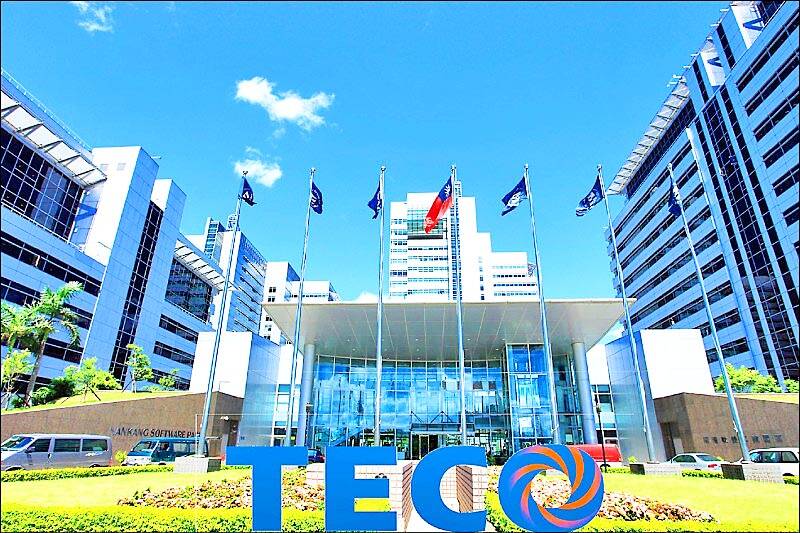
Photo courtesy of Teco Electric & Machinery Co
The project in Selangor’s Elmina Business Park involves installing server rooms and deploying hyperscale fiber-optic communications infrastructure, while the Johor Bahru project at Sedenak Tech Park focuses on providing fiber-optic solutions for hyperscale data centers, Teco said.
Prior to establishing its presence in Malaysia, Teco’s Singaporean subsidiary, Teco Electric & Machinery Pte Ltd, had been handling sales, services and construction for its electric machinery and MEP business since 1972, the company said.
The Singapore unit would serve as a regional office for Teco and is expected to support operations in Malaysia through management and resource integration, Li said.
In addition, the company has formed a partnership with power transformer maker PT Sintra, an Indonesian affiliate of Shenchang Electric Co (伸昌電機), to expand its product portfolio in the country, with a focus on North America and Taiwan.
“The partnership is expected to significantly support Teco’s expansion in the power transformer sector,” Li said.
Teco in late September last year acquired a 57.2 percent stake in Shenchang.
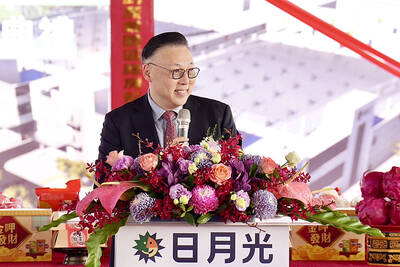
ENERGY ISSUES: The TSIA urged the government to increase natural gas and helium reserves to reduce the impact of the Middle East war on semiconductor supply stability Chip testing and packaging service provider ASE Technology Holding Co (日月光投控) yesterday said it planned to invest more than NT$100 billion (US$3.15 billion) in building a new advanced chip testing facility in Kaohsiung to keep up with customer demand driven by the artificial intelligence (AI) boom. That would be included in the company’s capital expenditure budget next year, ASE said. There is also room to raise this year’s capital spending budget from a record-high US$7 billion estimated three months ago, it added. ASE would have six factories under construction this year, another record-breaking number, ASE chief operating officer Tien Wu
The EU and US are nearing an agreement to coordinate on producing and securing critical minerals, part of a push to break reliance on Chinese supplies. The potential deal would create incentives, such as minimum prices, that could advantage non-Chinese suppliers, according to a draft of an “action plan” seen by Bloomberg. The EU and US would also cooperate on standards, investments and joint projects, as well as coordinate on any supply disruptions by countries like China. The two sides are additionally seeking other “like-minded partners” to join a multicountry accord to help create these new critical mineral supply chains, which feed into

For weeks now, the global tech industry has been waiting for a major artificial intelligence (AI) launch from DeepSeek (深度求索), seen as a benchmark for China’s progress in the fast-moving field. More than a year has passed since the start-up put Chinese AI on the map in early last year with a low-cost chatbot that performed at a similar level to US rivals. However, despite reports and rumors about its imminent release, DeepSeek’s next-generation “V4” model is nowhere in sight. Speculation is also swirling over the geopolitical implications of which computer chips were chosen to train and power the new
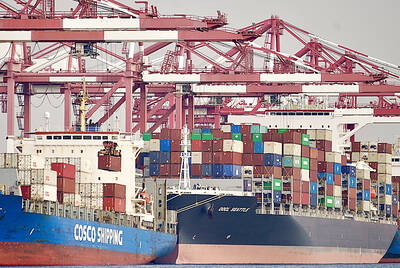
TECH WINNERS: Taiwan and South Korea reported robust trade, which suggests that they have critical advantages in the rapidly expanding AI supply chain, an official said Exports last month surged to a new high, as booming demand tied to artificial intelligence (AI) infrastructure fueled shipments of advanced technology components, underscoring the nation’s pivotal role in the global semiconductor supply chain. Outbound shipments climbed to US$80.18 billion, the highest ever for a single month, rising 61.8 percent from a year earlier and marking the 29th consecutive month of growth, the Ministry of Finance said yesterday. “The surge was driven primarily by global investment in AI infrastructure,” Department of Statistics Director-General Beatrice Tsai (蔡美娜) said. The mass production of next-generation AI computing systems has accelerated procurement across the semiconductor supply


 RSS
RSS