


Exports last month surged to a new high, as booming demand tied to artificial intelligence (AI) infrastructure fueled shipments of advanced technology components, underscoring the nation’s pivotal role in the global semiconductor supply chain.
Outbound shipments climbed to US$80.18 billion, the highest ever for a single month, rising 61.8 percent from a year earlier and marking the 29th consecutive month of growth, the Ministry of Finance said yesterday.
“The surge was driven primarily by global investment in AI infrastructure,” Department of Statistics Director-General Beatrice Tsai (蔡美娜) said.
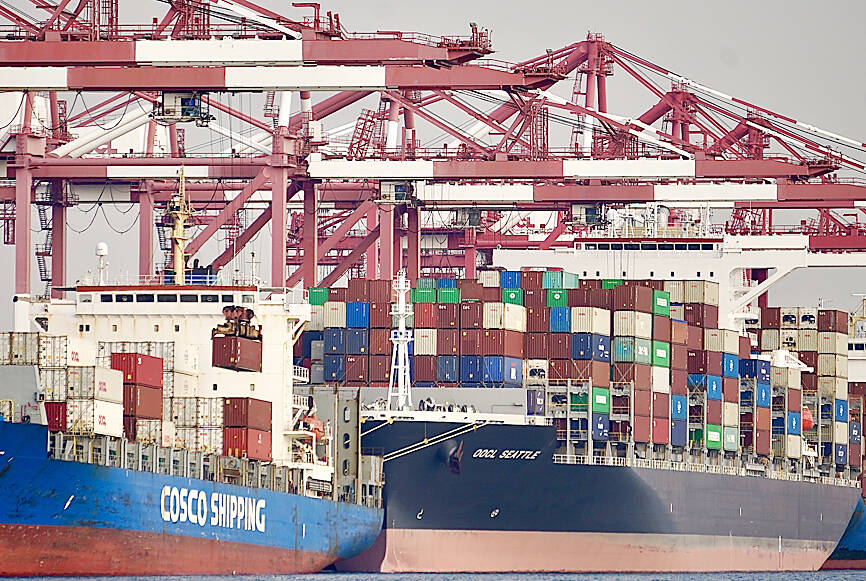
Photo: CNA
The mass production of next-generation AI computing systems has accelerated procurement across the semiconductor supply chain, she added.
Rising electronic component costs have also prompted manufacturers to bring forward purchases, while companies are building inventories more quickly ahead of new product launches, further supporting export momentum, Tsai said.
Supply constraints in the electronics industry also pushed up inflationary pressures within the supply chain.
Taiwan’s export price index rose at its fastest pace in nearly four years, reflecting higher costs for key materials and components.
Meanwhile, imports also climbed to a record high, highlighting global collaboration within the AI supply chain.
Taiwan last month imported US$58.91 billion worth of goods, up 38.3 percent from a year earlier, driven by export-related demand and increased purchases of semiconductor manufacturing equipment, Tsai said.
Imports of electronic components and capital equipment reached new monthly highs as global technology firms ramped up AI investments.
The nation last month posted a trade surplus of US$21.27 billion, a 206.8 percent jump from a year earlier.
Export growth momentum is expected to continue this month, with shipments projected to rise 44 percent to 51 percent year-on-year, Tsai said.
However, traditional industries showed subdued performance, with exports rising just 0.9 percent year-on-year and results mixed across sectors.
Machinery shipments grew 16.3 percent, supported by demand for semiconductor and laboratory equipment from the US, Europe and Southeast Asia. Electrical machinery exports rose 12 percent, benefiting from spillover demand from the AI sector and US infrastructure projects.
By contrast, exports of basic metals and related products fell 7.4 percent, while textile shipments dropped 10.3 percent amid weaker global demand. Transportation equipment exports declined 15.6 percent — the steepest drop among major categories — largely due to reduced shipments of auto parts to the US and passenger cars to the Middle East.
For the first quarter, Taiwan’s exports totaled US$195.74 billion, up 51.1 percent from a year earlier. The figure also surpassed the traditionally stronger fourth quarter of last year and exceeded the government’s forecast by 11.4 percentage points, suggesting the possibility of an upward revision to this year’s GDP growth.
Among major economies, Taiwan was the only one that posted export growth exceeding 50 percent in the first quarter, Tsai said.
South Korea also reported robust trade results, with exports last month reaching a record US$86.13 billion on strong global demand for memory chips.
The parallel surges suggests that both economies hold critical advantages in the rapidly expanding AI supply chain, she added.

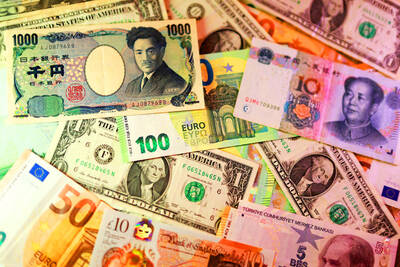
Taiwan’s foreign exchange reserves fell below the US$600 billion mark at the end of last month, with the central bank reporting a total of US$596.89 billion — a decline of US$8.6 billion from February — ending a three-month streak of increases. The central bank attributed the drop to a combination of factors such as outflows by foreign institutional investors, currency fluctuations and its own market interventions. “The large-scale outflows disrupted the balance of supply and demand in the foreign exchange market, prompting the central bank to intervene repeatedly by selling US dollars to stabilize the local currency,” Department of Foreign

Intel Corp is joining Elon Musk’s long-shot effort to develop semiconductors for Tesla Inc, Space Exploration Technologies Corp and xAI, marking a surprising twist in the chipmaker’s comeback bid. Intel would help the Terafab project “refactor” the technology in a chip factory, the company said on Tuesday in a post on X, Musk’s social media platform. That is a stage in the development process that typically helps make chips more powerful or reliable. The chipmaker’s shares jumped 4.2 percent to US$52.91 in New York trading on Tuesday. The Terafab project is a grand plan by Musk to eventually manufacture his own chips for
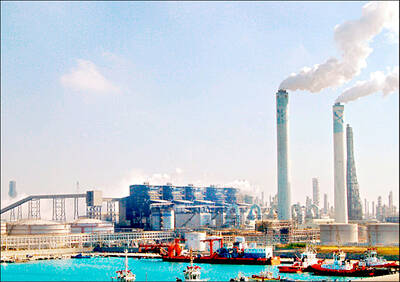
Taiwan Power Co (Taipower, 台電) yesterday said it plans to resume operations at two coal-fired power generators for three months to boost security of electricity supply as liquefied natural gas (LNG) supply risks are running high due to the Middle East conflict. The two coal-fired power generators are at Mailiao Power Plant in Yunlin County’s Mailiao Township (麥寮). The plant, operated by Formosa Plastics Group (台塑集團), supplied electricity to Taipower’s power grid until the end of last year. Taipower’s decision came about one month after Minister of Economic Affairs Kung Ming-hsin (龔明鑫) on March 10 said that the nation had no imminent

Some robotaxi passengers were left stranded in the middle of fast-moving traffic in a major Chinese city after their driverless vehicles stopped running, according to police and media reports on Wednesday. A preliminary investigation indicates more than 100 robotaxis came to a halt because of a “system malfunction,” police in the city of Wuhan said in a statement, without elaborating. No injuries were reported. One passenger told Chinese media that their robotaxi stopped after turning a corner. An instruction on a screen read: “Driving system malfunction. Staff are expected to arrive in 5 minutes.” After no one showed up, the passenger pushed


 RSS
RSS