


Two scoops of pistachio, one of corruption. For years holidaymakers have guzzled Sicilian gelato at famous parlors in Palermo, unaware that the booming businesses were controlled by organized crime.
The fraud was a textbook case for detectives trained to sniff out dirty money, but even with three mobster classics — a suspicious bankruptcy, a front man and a scheming “Godfather” — it took years for investigators to shut the operation down.
The Brioscia brand, made up of two ice cream parlors, was thriving at the end of the 2010s, attracting locals and foreign visitors alike with its glittering gold stars on travel Web sites.
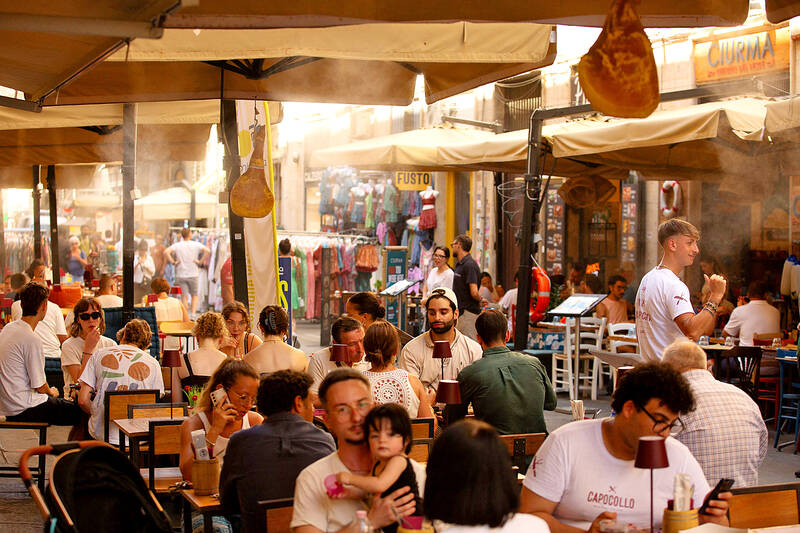
Photo: Reuters
The shops were run by Mario Mancuso. Behind the scenes was Michele Micalizzi, who had served several stretches in jail for mafia association.
Mancuso took care of the ice cream, Micalizzi managed the rest.
That included taking a cut of the profits for protecting Mancuso from extortion attempts by other gangsters, a judicial source said.
However, the company was in the name of Mancuso’s wife and when divorce loomed, the men feared they would lose control.
They declared Brioscia bankrupt in 2021, blaming the 4 million euro (US$4.32 million) hole in the books on the COVID-19 lockdown, the source said.
“It was a flourishing business, very well known in Palermo. The bankruptcy was therefore unjustified,” he said.
Suspicious investigators used wiretaps to discover the two men — far from being bankrupt — had grand plans to open parlors abroad.
The pair launched a new company called Sharbat, renaming the shops, the source said.
“I’m not even sure the employees knew who they were working for,” a nearby shop worker said, speaking on condition of anonymity.
Investigators say the men divided the windfall, with Micalizzi passing part of it to his jailed relatives to pay for legal fees or sundries.
However, on Aug. 12, the police pounced, arresting both men and four accomplices, and seizing 1.5 million euros.
Mancuso and Micalizzi are being prosecuted for criminal association of a mafia nature, extortion and fraudulent bankruptcy.
Between drug trafficking, racketeering, public procurement, legal companies or empty shells dedicated to money laundering, Italy’s central bank estimates the annual turnover of the country’s organized crime groups at 40 billion euros, or 2 percent of national wealth.
The mob still makes good money from traditional crimes such as drug trafficking.
For example, the ’Ndrangheta in the southern region of Calabria is responsible for much of Europe’s cocaine trade.
“It also makes direct investments in the legal economy,” said Rocco Sciarrone, who teaches criminal psychology at the University of Turin.
More than two-thirds of mafia infiltrations are in the construction, trade, real-estate and manufacturing sectors, a 2022 report by economist Antonio Parbonetti said.
The mob also has tentacles in agriculture, hotels and restaurants, logistics, transport and waste management.
How much the crime groups “invest” in each sector varies significantly from one region to another.
“The socioeconomic fabric [in Sicily] is made up of small family businesses that lend themselves very well to money laundering,” said Eliseo Davi of the University of Palermo.
One in two companies controlled by the mafia is a “star” company, which generates comfortable income and employs people, and therefore has a broad social, economic and political support, the Parbonetti report said.
In the Palermo gelato affair, the company did not have the necessary permits for one of the two shops, prompting calls for a probe into whether there was collusion with public officials.
Near the parlors lies the former home of Giovanni Falcone, an anti-mafia judge whose 1992 assassination by the mob triggered a crackdown by the state that permanently weakened Cosa Nostra.
Just like US law enforcement agent Eliot Ness, who brought down gangster Al Capone, Falcone had a simple rule: Follow the money.
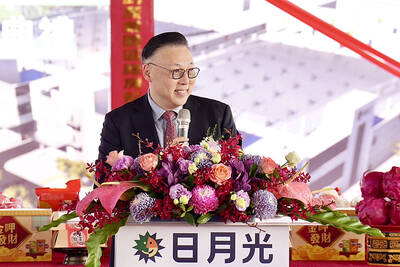
ENERGY ISSUES: The TSIA urged the government to increase natural gas and helium reserves to reduce the impact of the Middle East war on semiconductor supply stability Chip testing and packaging service provider ASE Technology Holding Co (日月光投控) yesterday said it planned to invest more than NT$100 billion (US$3.15 billion) in building a new advanced chip testing facility in Kaohsiung to keep up with customer demand driven by the artificial intelligence (AI) boom. That would be included in the company’s capital expenditure budget next year, ASE said. There is also room to raise this year’s capital spending budget from a record-high US$7 billion estimated three months ago, it added. ASE would have six factories under construction this year, another record-breaking number, ASE chief operating officer Tien Wu

The EU and US are nearing an agreement to coordinate on producing and securing critical minerals, part of a push to break reliance on Chinese supplies. The potential deal would create incentives, such as minimum prices, that could advantage non-Chinese suppliers, according to a draft of an “action plan” seen by Bloomberg. The EU and US would also cooperate on standards, investments and joint projects, as well as coordinate on any supply disruptions by countries like China. The two sides are additionally seeking other “like-minded partners” to join a multicountry accord to help create these new critical mineral supply chains, which feed into

For weeks now, the global tech industry has been waiting for a major artificial intelligence (AI) launch from DeepSeek (深度求索), seen as a benchmark for China’s progress in the fast-moving field. More than a year has passed since the start-up put Chinese AI on the map in early last year with a low-cost chatbot that performed at a similar level to US rivals. However, despite reports and rumors about its imminent release, DeepSeek’s next-generation “V4” model is nowhere in sight. Speculation is also swirling over the geopolitical implications of which computer chips were chosen to train and power the new
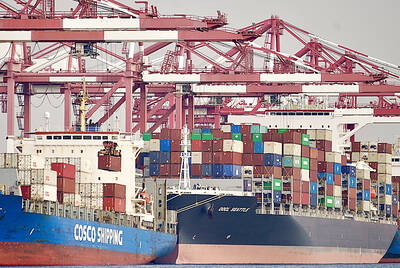
TECH WINNERS: Taiwan and South Korea reported robust trade, which suggests that they have critical advantages in the rapidly expanding AI supply chain, an official said Exports last month surged to a new high, as booming demand tied to artificial intelligence (AI) infrastructure fueled shipments of advanced technology components, underscoring the nation’s pivotal role in the global semiconductor supply chain. Outbound shipments climbed to US$80.18 billion, the highest ever for a single month, rising 61.8 percent from a year earlier and marking the 29th consecutive month of growth, the Ministry of Finance said yesterday. “The surge was driven primarily by global investment in AI infrastructure,” Department of Statistics Director-General Beatrice Tsai (蔡美娜) said. The mass production of next-generation AI computing systems has accelerated procurement across the semiconductor supply


 RSS
RSS