


Deputy Trade Representative Jenni Yang (楊珍妮) has pledged to push for more Taiwanese agricultural products to be exported to the US.
Yang made the statement during the latest round of trade talks between the two countries that started yesterday. The in-person negotiating is part of the US-Taiwan Initiative on 21st-Century Trade and took place at the Office of Trade Negotiations (OTN) in Taipei.
The Taiwanese delegation is led by Yang, while the US side is headed by Assistant US Trade Representative for China, Mongolia and Taiwan Affairs Terry McCartin.
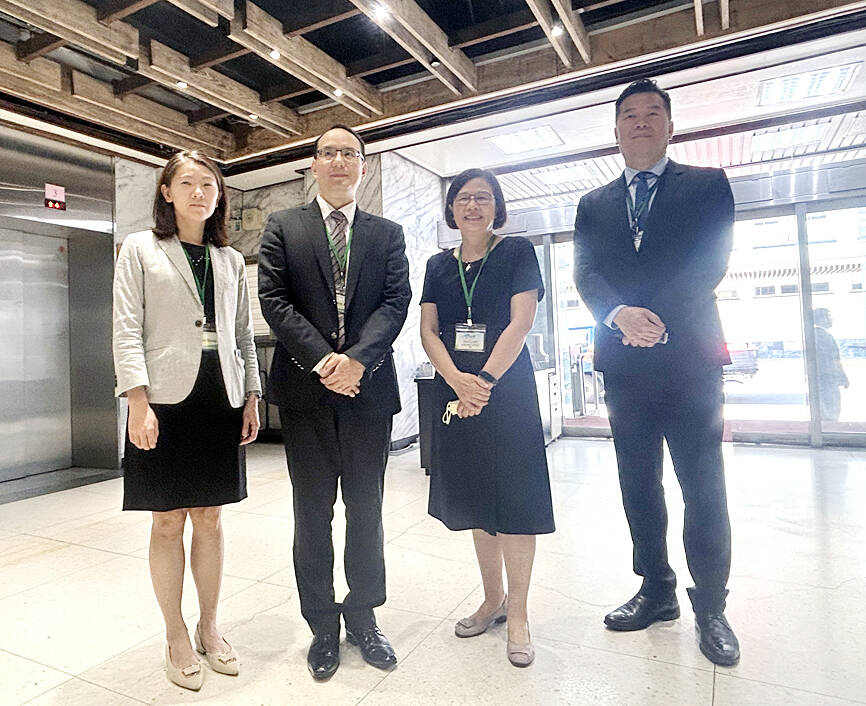
Photo: CNA
The latest round of negotiations would focus on issues concerning labor, environmental protection and agriculture, Yang told reporters before the beginning of the closed-door talks that are to last until Saturday.
She said these topics were more complex compared with those covered in the previous round of talks, because both countries have different legal frameworks and regulations.
“That is why we need to talk face-to-face, to get an understanding of our differences,” Yang said.
Yang did not disclose more details on the issues that would be touched on during the scheduled talks, such as whether food safety and security would be included.
This line of questioning came as reporters spotted Food and Drug Administration Director-General Wu Shou-mei (吳秀梅) at the OTN yesterday morning.
When asked if agricultural products had been selected as part of a push to get wider access to the US market, Yang said that is her goal, without expanding on what exact products were in focus.
Taiwan was the seventh-largest export market for US agricultural and related products last year, with a total value of US$3.7 billion, while the US remained the No. 1 export market for Taiwan’s agricultural and related products for the second consecutive year.
The total amount exported by Taiwanese agricultural firms accounted for 17 percent (US$935 million) of the nation’s exports last year, US government data showed.
The delegations are expected to discuss several areas outlined in the initiative’s negotiating mandate, both governments said. The meetings would be closed to the media, and additional details about subsequent negotiating rounds would be provided at a later date.
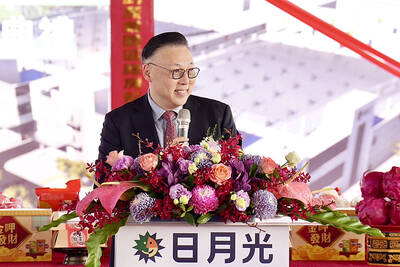
ENERGY ISSUES: The TSIA urged the government to increase natural gas and helium reserves to reduce the impact of the Middle East war on semiconductor supply stability Chip testing and packaging service provider ASE Technology Holding Co (日月光投控) yesterday said it planned to invest more than NT$100 billion (US$3.15 billion) in building a new advanced chip testing facility in Kaohsiung to keep up with customer demand driven by the artificial intelligence (AI) boom. That would be included in the company’s capital expenditure budget next year, ASE said. There is also room to raise this year’s capital spending budget from a record-high US$7 billion estimated three months ago, it added. ASE would have six factories under construction this year, another record-breaking number, ASE chief operating officer Tien Wu

The EU and US are nearing an agreement to coordinate on producing and securing critical minerals, part of a push to break reliance on Chinese supplies. The potential deal would create incentives, such as minimum prices, that could advantage non-Chinese suppliers, according to a draft of an “action plan” seen by Bloomberg. The EU and US would also cooperate on standards, investments and joint projects, as well as coordinate on any supply disruptions by countries like China. The two sides are additionally seeking other “like-minded partners” to join a multicountry accord to help create these new critical mineral supply chains, which feed into

For weeks now, the global tech industry has been waiting for a major artificial intelligence (AI) launch from DeepSeek (深度求索), seen as a benchmark for China’s progress in the fast-moving field. More than a year has passed since the start-up put Chinese AI on the map in early last year with a low-cost chatbot that performed at a similar level to US rivals. However, despite reports and rumors about its imminent release, DeepSeek’s next-generation “V4” model is nowhere in sight. Speculation is also swirling over the geopolitical implications of which computer chips were chosen to train and power the new
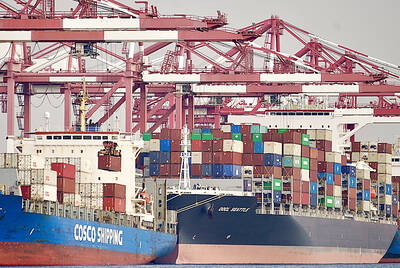
TECH WINNERS: Taiwan and South Korea reported robust trade, which suggests that they have critical advantages in the rapidly expanding AI supply chain, an official said Exports last month surged to a new high, as booming demand tied to artificial intelligence (AI) infrastructure fueled shipments of advanced technology components, underscoring the nation’s pivotal role in the global semiconductor supply chain. Outbound shipments climbed to US$80.18 billion, the highest ever for a single month, rising 61.8 percent from a year earlier and marking the 29th consecutive month of growth, the Ministry of Finance said yesterday. “The surge was driven primarily by global investment in AI infrastructure,” Department of Statistics Director-General Beatrice Tsai (蔡美娜) said. The mass production of next-generation AI computing systems has accelerated procurement across the semiconductor supply


 RSS
RSS