

The rapid evolution of virtual reality (VR) was on display in Venice this week, with visitors brought into the world of Wallace and Gromit and watching books come to life before their eyes.
Running alongside the world’s oldest film festival, Venice Immersive is tucked away on a former quarantine island that transforms each year into a showcase for the latest frontiers of entertainment.
This year showed how quickly the tech is evolving.
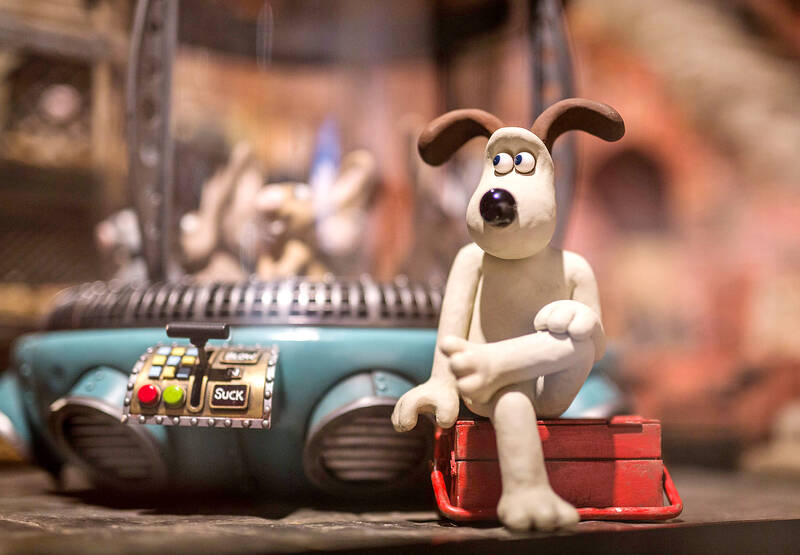
Photo: EPA
Some experiences had users interacting with the virtual environment using hand controllers. Thus Wallace & Gromit in The Grand Getaway plunged them into the world of the famous animated duo.
Players become Gromit, helping him fix his hapless owner’s contraptions and rescue them from an accidental trip to Mars. “The interactivity in those worlds is increasingly precise and diverse,” Venice Immersive cocurator Michel Reilhac said. “Makers are finding ways to hijack the technology and use it in really unexpected ways.”
Another experience used VR helmets to put several people at once in the studio of Spanish architect Antoni Gaudi, enabling them to snoop around his workshop and watch as his famous Barcelona cathedral rise up spectacularly around them.
Artificial intelligence (AI) was an inevitable talking point, with one experience using a mix of two AI apps, ChatGPT and Midjourney, to ask users about their deepest thoughts before creating a bespoke story and images based on their answers.
LEAP OF FAITH
One of the most technologically impressive was Jim Henson Co’s The Storyteller.
Visitors don augmented-reality glasses to watch a 3D film come to life on a special book they hold in their hands, moving through different chapters as they turn the pages.
It is the latest innovation from VR pioneers Felix & Paul Studios, who have created immersive tours of the International Space Station, the White House during former US president Barack Obama’s tenure and LeBron James’ training sessions.
The interactive book was another “leap of faith,” cofounder Paul Raphael said.
“We wanted to realize the dream of what an augmented book could be,” he said — but that required “pushing the technology so much further.”
Cameras in the glasses read the surface of the pages and track their position in real time, which the algorithm, designed from scratch, uses to calculate where to overlay the constantly moving 3D images.
“The performance and speed at which it needs to happen is kind of insane,” Raphael said.
With the emergence of new headsets from Apple Inc and other companies, he said he believes augmented books could soon become widely available.
“It’s early days and there’s so much ground to cover,” he said. “Even after 10 years, it feels like we could do this our whole lives and still just scratch the surface.”
NO LONGER SOLITARY
The festival highlighted social experiences, particularly VR Chat, an online platform enabling users to meet and play in virtual worlds.
“VR Immersive is no longer a solitary experience,” Reilhac said. “It’s gained a social dimension — and that’s where it will find its ‘killer app’ that wins over a much bigger audience.”
As the tools evolve, creating these virtual worlds has become much easier, with free templates available for newcomers to use.
“There is so much available technology now that it can be easily adopted by people who are not professionals,” Venice Immersive courator Liz Rosenthal said.
They welcome the recent shift of attention from the metaverse to AI.
“The hype has moved on to AI, which is great, because it’s weeded out the people who were into immersive just for the hype,” Reilhac said.
As the tech evolves, there is a “greater depth of quality in the creative side,” Rosenthal added. “People are here because they’re passionate. It’s an exciting time to be in this space.”
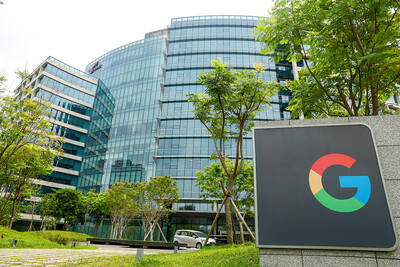
READJUSTMENT? Despite the rumors, a senior Google official said that the company plans to expand its AI research center in Taipei’s Shilin District Google Taiwan is reducing its workforce as the company continues to adjust operations to improve efficiency and focus resources on core goals, the Chinese-language Liberty Times (sister paper of the Taipei Times) reported yesterday. The Alphabet Inc unit said the organizational adjustments have begun and would continue, even though it did not put a figure on the number of potential job cuts or specify the affected departments in its Taiwan operations. The company’s response came after rumors circulated on social media about major job cuts at Google Taiwan. Some posts said the downsizing would target the company’s consumer electronics-related departments
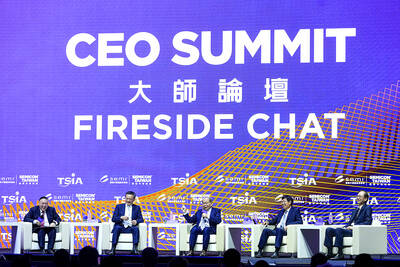
Taiwan Semiconductor Manufacturing Co (TSMC, 台積電) is accelerating capacity expansion fivefold this year, but it is still unable to keep up with the booming demand for artificial intelligence (AI), TSMC deputy cochief operating officer Cliff Hou (侯永清) said yesterday. This year alone, the company is building 25 chip manufacturing fabs and advanced packaging facilities worldwide, including 13 plants in Taiwan, which is unprecedented, Hou said at a CEO Summit fireside chat at Semicon Taiwan in Taipei. In the past, the company was able to build five or six factories a year, said Hou, who is also chairman of the Taiwan Semiconductor Industry
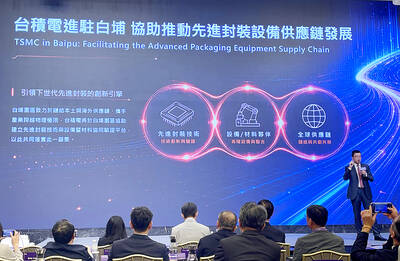
EXPANSION: The 3-hectare site would include small clean rooms and laboratories as well as a world-class training base for advanced packaging talent, the company said Taiwan Semiconductor Manufacturing Co (TSMC, 台積電) is to establish a presence in the Baipu Industrial Park (白埔產業園區) in Kaohsiung to accelerate the testing and validation of semiconductor materials and equipment, a company executive said on Tuesday. The company is working with the Ministry of Economic Affairs and the Kaohsiung City Government on the plan, which is expected to improve validation efficiency by 25 to 50 percent, TSMC vice president of advanced packaging technology and service Jun He (何軍) said at a 3D IC global summit held ahead of the Semicon Taiwan trade show, which opened in Taipei yesterday. TSMC would also conduct
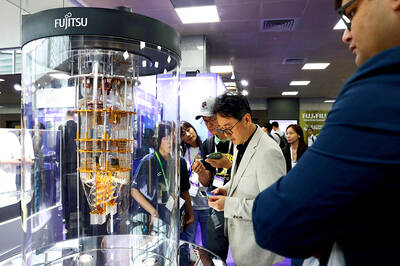
Visitors look at a 64-qubit superconducting quantum computer on display at the Fujitsu booth at the Semicon Taiwan trade show in Taipei yesterday.


 RSS
RSS