


Toyota Motor plans to use regenerative fuel cell technology to power a crewed lunar rover, executives said on Friday, raising the prospect of eventually using the moon’s water ice as an energy source.
Japan is participating in NASA’s Artemis program and plans to have an astronaut at a lunar space station called Gateway as part of that in the latter half of the 2020s.
Toyota has teamed up with Japan’s space agency since 2019 to develop the crewed lunar rover — which it dubbed the Lunar Cruiser — that they hope can be put on the moon in 2029.
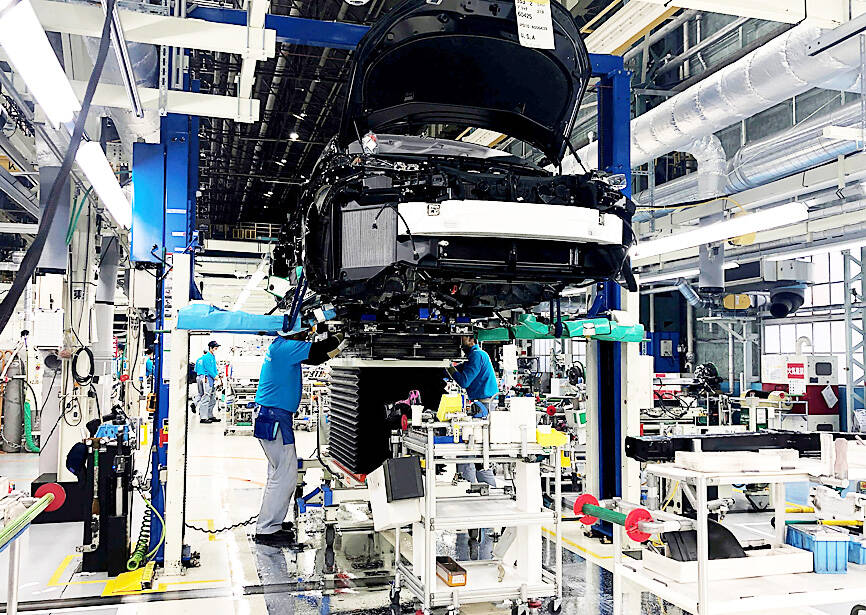
Photo: Reuters
“In order to conduct long-term and stable research on the surface of the moon, we are aiming to source various items on site over a long period,” Toyota head of lunar exploration projects Ken Yamashita said.
NASA expects Japan to provide a lunar rover with a 2029 target launch date as a contribution to the Artemis program, the Japan Aerospace Exploration Agency said in presentation materials on Friday.
A fuel cell vehicle uses an electric motor like an electric vehicle, but draws power from a fuel stack where hydrogen is separated by a catalyst to produce electricity.
Toyota said its technology would use solar energy and water to produce hydrogen and oxygen through electrolysis during daylight hours, and the fuel cells to supply electricity at night.
The automaker hopes to secure an order for the lunar rover by autumn of next year. The vehicle is expected to be able to carry two astronauts on mission for 42 days a year and stay in operation for 10 years, it said.
“Our idea is to continue with the lunar rover longer than those 10 years if there’s a company or arrangement that can supply the water needed for that,” Yamashita said, adding that clean water would initially have to be sent into space with it.
Toyota is not expecting to be able to generate water usable for fuel cells from the moon’s ice water or be capable of mining it by itself, but would likely rely on other companies or future developments for that, Yamashita said.
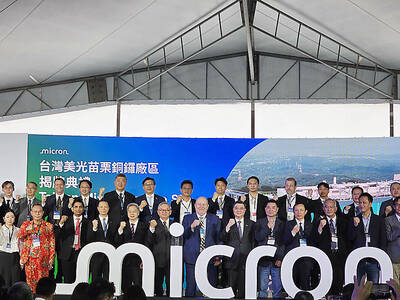
UNPRECEDENTED PACE: Micron Technology has announced plans to expand manufacturing capabilities with the acquisition of a new chip plant in Miaoli Micron Technology Inc unveiled a newly acquired chip plant in Miaoli County yesterday, as the company expands capacity to meet growing demand for advanced DRAM chips, including high-bandwidth memory chips amid the artificial intelligence boom. The plant in Miaoli County’s Tongluo Township (銅鑼), which Micron acquired from Powerchip Semiconductor Manufacturing Corp (力積電) for US$1.8 billion, is expected to make a sizeable capacity contribution to the company from fiscal 2028, the company said in a statement. It would be an extended production site of Micron’s large-scale manufacturing hub in Taichung, the company said. As the global semiconductor industry is racing to reach US$1 trillion

Singapore-based ride-hailing and delivery giant Grab Holdings Ltd has applied for regulatory approval to acquire the Taiwan operations of Germany-based Delivery Hero SE's Foodpanda in a deal valued at about US$600 million. Grab submitted the filing to the Fair Trade Commission on Friday last week, with the transaction subject to regulatory review and approval, the company said in a statement yesterday. Its independent governance structure would help foster a healthy and competitive market in Taiwan if the deal is approved, Grab said. Grab, which is listed on the NASDAQ, said in the filing that US-based Uber Technologies Inc holds about 13 percent of
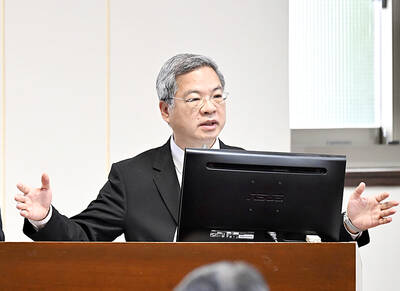
ABOVE LEGAL REQUIREMENT: The Ministry of Economic Affairs is prepared if LNG supply is disrupted, with more than the legal requirement of 11 days of inventory Taiwan has largely secured liquefied natural gas (LNG) supplies through May and arranged about half of June’s supply, Minister of Economic Affairs Kung Ming-hsin (龔明鑫) said yesterday. Since the Middle East conflict began on Feb. 28, Taiwan’s LNG inventories have remained more than 12 days, exceeding the legal requirement of 11 days, indicating no major supply concerns for domestic gas and electricity, Kung said at a meeting of the legislature’s Economics Committee in Taipei. The ministry aims to increase the figure to 14 days by the end of next year, he said. While one or two LNG or crude oil shipments for May

Taiwan’s food delivery market could undergo a major shift if Singapore-based Grab Holdings Ltd completes its planned acquisition of Delivery Hero SE’s Foodpanda business in Taiwan, industry experts said. Grab on Monday last week announced it would acquire Foodpanda’s Taiwan operations for US$600 million. The deal is expected to be finalized in the second half of this year, with Grab aiming to complete user migration to its platform by the first half of next year. A duopoly between Uber Eats and Foodpanda dominates Taiwan’s delivery market, a structure that has remained intact since the Fair Trade Commission (FTC) blocked Uber Technologies Inc’s


 RSS
RSS