


Flat-panel maker Innolux Corp (群創) said it is scouting new manufacturing sites outside of China in the latest efforts to maintain supply chain resilience amid prolonged geopolitical tensions and customer demand.
Innolux has built LCD panel module assembling lines in Taiwan, in a bid to increase its manufacturing capacity beyond China partly due to requests from customers, who are also diversifying production globally.
“We aim to build backup capacity, but it is unlikely to replace our Chinese manufacturing sites, or any companies in any sectors, not just the technology sector. China has deployed extensive infrastructure,” Innolux chairman Jim Hung (洪進揚) told reporters on Friday.

Photo: CNA
“This is something we definitely have to do, given changes in geopolitical environments and changes in customers’ [demand],” he said.
Miaoli-based Innolux plans to select one site by the end of next year from several options in Africa, South America, Southeast Asia and India, Hung said.
In addition to factoring in manufacturing costs, an ideal site should be close to the market and customers, be easily accessible to raw materials, have sufficient local labor supply and strong tax incentives, the company said.
One customer has requested that it set up a production line in Africa to support local supply, Innolux said.
The manufacturer is not the only panel maker considering expansion outside China. AUO Corp (友達) has said it would finalize a decision about where to build a new overseas factory early next year.
The electronics company has set a timetable to start production in the factory in 2025.
Innolux said it would be careful in building any new overseas factory, as the business outlook is gloomy.
Innolux said it has received some rush orders for flat panels used in notebook computers and monitors, which would help speed up inventory digestion for the whole LCD supply chain.
The new orders trickled in after a series of television panel orders came earlier this quarter when television panel prices fell to a sweet point.
The company expects factory utilization to stay at about 65 percent next quarter, close to the level this quarter.
However, the company is to raise usage of its panel module production lines to about 80 percent next quarter from its current 65 percent, to prevent COVID-19 infections in China from cutting module production.

Elon Musk’s lieutenants have reached out to chip industry suppliers, including Applied Materials Inc, Tokyo Electron Ltd and Lam Research Corp, for his envisioned Terafab, early steps in an audacious and likely arduous attempt to break into the production of cutting-edge chips. Staff working for the joint venture between Tesla Inc and Space Exploration Technologies Corp (SpaceX) have sought price quotes and delivery times for an array of chipmaking gear, people familiar with the matter said. In past weeks, they’ve contacted makers of photomasks, substrates, etchers, depositors, cleaning devices, testers and other tools, according to the people, who asked not to
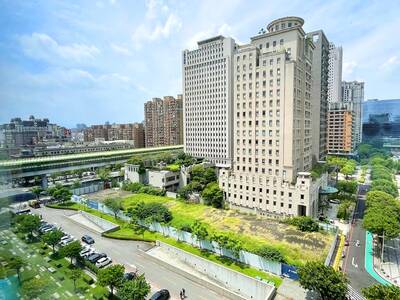
Taichung reported the steepest fall in completed home prices among the six special municipalities in the first quarter of this year, data compiled by Taiwan Realty Co (台灣房屋) showed yesterday. From January through last month, the average transaction price for completed homes in Taichung fell 8 percent from a year earlier to NT$299,000 (US$9,483) per ping (3.3m²), said Taiwan Realty, which compiled the data based on the government’s price registration platform. The decline could be attributed to many home buyers choosing relatively affordable used homes to live in themselves, instead of newly built homes in the city’s prime property market, Taiwan Realty
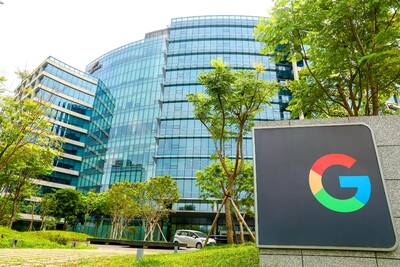
The government yesterday approved applications by Alphabet Inc’s Google to invest NT$27.08 billion (US$859.98 million) in Taiwan, the Ministry of Economic Affairs said in a statement. The Department of Investment Review approved two investments proposed by Google, with much of the funds to be used for data processing and electronic information supply services, as well as inventory procurement businesses in the semiconductor field, the ministry said. It marks the second consecutive year that Google has applied to increase its investment in Taiwan. Google plans to infuse NT$25.34 billion into Charter Investments Ltd (特許投資顧問) through its Singapore-based subsidiary Fructan Holdings Singapore Pte Ltd, and

JET JUICE: The war on Iran’s secondary effects have seen fuel prices skyrocket, knocking flight schedules down to earth in return as airlines struggle with costs Airline passengers should brace for more irritation in the next few months as carriers worldwide cancel flights and ground planes to cope with stratospheric increases in jet-fuel prices. Dutch flag carrier KLM is the latest company to cut its schedule, saying on Thursday that it would scrap 80 return flights at Amsterdam’s Schiphol Airport in the coming month. That puts it in the same league as United Airlines Holdings Inc, Deutsche Lufthansa AG and Cathay Pacific Airways Ltd, which have all pruned itineraries to mitigate costs. Global capacity for next month has been reduced by about 3 percentage points, with all


 RSS
RSS