


Credit Suisse Group AG hired about 20 banks to help it raise the money it needs to finance the extensive restructuring it unveiled last week.
The Swiss bank yesterday announced the syndicate in a statement that confirmed a Bloomberg story over the weekend.
It had already picked Morgan Stanley, the Royal Bank of Canada, Deutsche Bank AG and Societe Generale SA as lead managers and joint bookrunners.

Photo: Reuters
Credit Suisse is seeking to raise 4 billion Swiss francs (US$4 billion) and the Saudi National Bank has already committed to about one-third of the offer, becoming a big shareholder in the bank.
The Zurich-based lender, which has about the same market capitalization as much smaller cross-town rival Julius Baer Group, is slashing the workforce by 17 percent and breaking up its investment banking unit.
The announcement triggered the biggest single-day decline on record, with the shares tumbling 19 percent, as investors weighed the dilutive effect of the capital increase, the high costs of the plan and the modest return predictions.
New Credit Suisse chief financial officer Dixit Joshi held a due diligence call for the capital increase — dubbed “project Ghana” — with a group of financial institutions group and equity capital markets bankers on Friday, Bloomberg reported on Sunday.
As well as inviting the lead banks, another long list of international lenders to help with the underwriting of newly issued shares.
The syndicate announced yesterday includes Goldman Sachs Group Inc, Citigroup Inc, Wells Fargo & Co, BNP Paribas SA, Credit Agricole SA, Barclays PLC, Banco Santander SA, ABN Amro Bank NV, Franco-German bank Oddo BHF, ING Groep NV, Commerzbank AG, Mediobanca, Intesa Sanpaolo SpA and Bank of America Corp.
The number of banks helping with the capital increase is high, given its relatively small size.
Participating in rights issues of banks is widely seen as a lucrative mandate for investment banks as they seek to move up in league tables.
For financial institutions, giving mandates to each other for strategic initiatives such as deals or rights issues is also a tool used to manage relationships.
Financial institutions are intertwined and work together on a daily basis from interbank lending and cash management to bond issuance and custodial services, but signing up to a capital raise risks a crash in a company’s share price.
If the underwriter does not manage to sell off the shares, they end up on its own books.
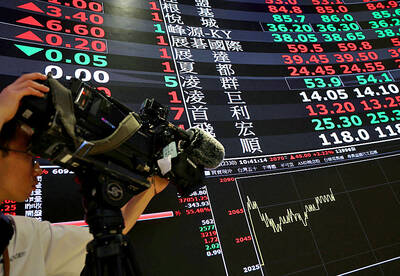
After several years flying high as Asia’s best Nvidia Corp proxy, Taiwan Semiconductor Manufacturing Co (TSMC, 台積電) is increasingly vying with other artificial intelligence (AI) stocks for investor attention. Stock traders are chasing a wider array of beneficiaries as mainstream usage of AI creates demand for hardware beyond the most-advanced chips TSMC makes for Nvidia. Subthemes from the deepening memory crunch to advances in robotics are also luring bids. At the same time, investment caps on single stocks are pushing funds to diversify, while retail investors long familiar with TSMC through its US depositary receipts are being offered a broader set of
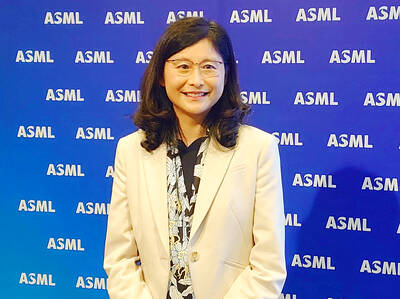
Netherlands-based semiconductor equipment supplier ASML Holding NV yesterday said that it is planning to hire an additional 1,000 people in Taiwan this year in response to growing demand from clients. ASML had previously planned to recruit 600 people this year, but that the plan has been adjusted upward, ASML vice president and ASML Taiwan general manager Grace Wang (汪佳慧) told reporters. ASML has a workforce of more than 4,500 in Taiwan, accounting for about 10 percent of its global total, Wang said. This year’s recruitment campaign would focus on adding people in the customer support, manufacturing and supply chain domains to assist ASML

UNDER MICROSCOPE: Taiwan detained three people who allegedly conspired to buy servers in Taiwan and export them using fraudulent documentation, prosecutors said Nvidia Corp chief executive officer Jensen Huang (黃仁勳) on Saturday urged Super Micro Computer Inc to tighten up on compliance after Taiwan detained three people this week for allegedly making fraudulent declarations about artificial intelligence (AI) servers made by its US partner. The development marked the nation’s first crackdown on semiconductor smuggling, which grew after the US slapped restrictions on exports of high-end chips such as Nvidia AI accelerators to China. Nvidia is “rigorous” in explaining regulations to all of its partners, Huang told reporters after arriving in Taipei. “Ultimately Super Micro has to run their own company,” he said in response to

Nvidia Corp yesterday announced that CEO Jensen Huang (黃仁勳) would attend an employee meeting in Taipei tomorrow to celebrate the launch of the company’s Taiwan headquarters project. Huang would attend a gathering at the site of Nvidia’s planned headquarters in Beitou Shilin Technology Park (北投士林科技園區), the company said in a statement. After arriving in Taiwan on Saturday last week, Huang told reporters that he plans to meet with Quanta Computer Inc (廣達) chairman Barry Lam (林百里) and Taiwan Semiconductor Manufacturing Co (TSMC, 台積電) chairman C.C. Wei (魏哲家), and would attend the groundbreaking ceremony for Nvidia’s Taiwan headquarters tomorrow. Nvidia has not yet applied


 RSS
RSS