


Smartphone camera lens maker Largan Precision Co (大立光) last quarter reported NT$8.14 billion (US$255.26 million) in net profit, the highest in three years and a spike of 54.7 percent from a year earlier, although gross margin weakened due to a less optimal product mix, company executives said yesterday.
The results translated into earnings per share of NT$61.01 as combined revenue soared 39 percent from three months earlier to NT$13.48 billion, helped by the release of Apple Inc’s new iPhone series, company data showed.
“The impressive sales result came after shipments of VCM [voice coil motor] camera modules picked up and favorable foreign exchange rates lent support,” Largan chairman and chief executive officer Adam Lin (林恩平) told an online investors’ conference.
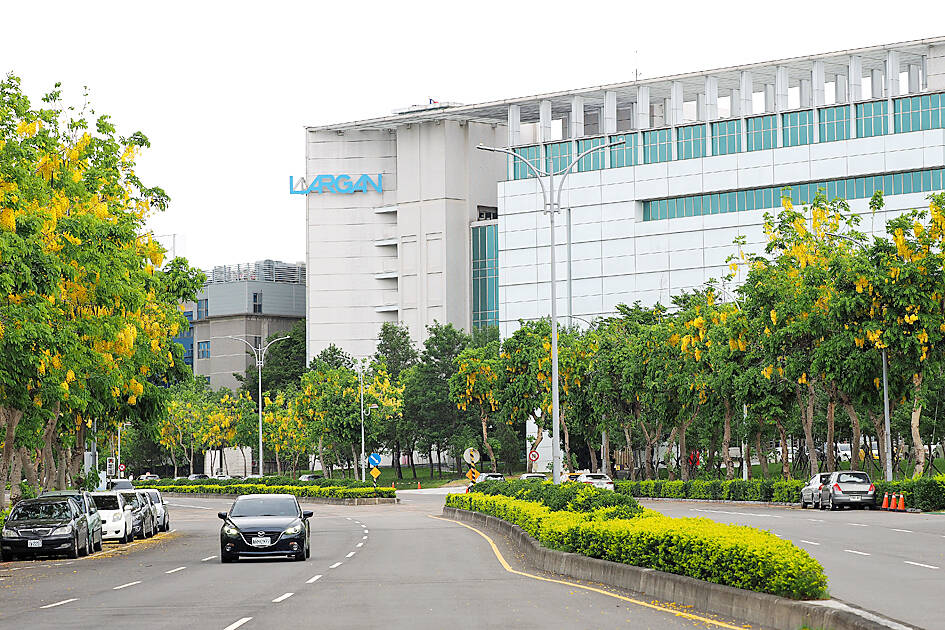
Photo: David Chang, EPA-EFE
Business this quarter would hold roughly steady from last quarter, Lin said, adding that the company has a similar outlook for next year.
Some customers have asked for upgraded solutions in their flagship products next year, while others favor downgraded specifications due to cost concerns and conservative sales projections, Lin said.
The increase in VCM module shipments caused gross margin to shrink 2.12 percentage points to 53.7 percent last quarter, as the product is on the cheaper side, investor relations official Josephine Huang (黃印嘉) said.
Meanwhile, foreign currency and non-core operations generated NT$4.14 billion in net income, Huang said.
Customers looking for cheap devices would not place orders with Largan, which only accepts orders that promise reasonable margins, Lin said.
The Taichung-based company has no intention of expanding VCM module capacity next year and would press ahead with existing capacity expansion plans, Lin said.
It would spend more on the research and development of periscope lenses, he said.
Variable apertures remain challenging in terms of technology, as customers look to refine their quality, Lin said.
Medium to high-resolution modules with 10 megapixels (MP) drove 50 to 60 percent of lens shipments last quarter, followed by 5MP modules, while high-end 20MP lens modules made up 10 to 20 percent of shipments, the company said.
Lin declined to comment on gross margin movements going forward, saying only that much depends on the sales of the latest smartphone models.
Largan also supplies lenses for virtual-reality gadgets, vehicles and drones, but so far they have generated lower margin than smartphones, he said.
Net profit in the first three quarters soared 37 percent to NT$18.6 billion, or earnings per share of NT$139.37, outperforming the whole of last year, company data showed.
Largan shares yesterday closed down 0.29 percent at NT$1,745 in Taipei trading, outperforming the TAIEX’s 2.07 percent fall, Taiwan Stock Exchange data showed.
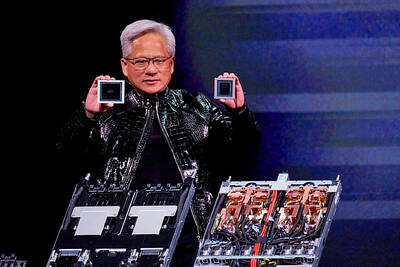
Nvidia Corp chief executive officer Jensen Huang (黃仁勳) on Monday introduced the company’s latest supercomputer platform, featuring six new chips made by Taiwan Semiconductor Manufacturing Co (TSMC, 台積電), saying that it is now “in full production.” “If Vera Rubin is going to be in time for this year, it must be in production by now, and so, today I can tell you that Vera Rubin is in full production,” Huang said during his keynote speech at CES in Las Vegas. The rollout of six concurrent chips for Vera Rubin — the company’s next-generation artificial intelligence (AI) computing platform — marks a strategic

Enhanced tax credits that have helped reduce the cost of health insurance for the vast majority of US Affordable Care Act enrollees expired on Jan.1, cementing higher health costs for millions of Americans at the start of the new year. Democrats forced a 43-day US government shutdown over the issue. Moderate Republicans called for a solution to save their political aspirations this year. US President Donald Trump floated a way out, only to back off after conservative backlash. In the end, no one’s efforts were enough to save the subsidies before their expiration date. A US House of Representatives vote
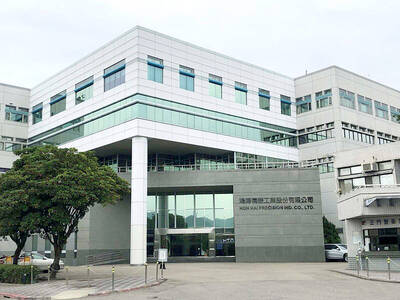
REVENUE PERFORMANCE: Cloud and network products, and electronic components saw strong increases, while smart consumer electronics and computing products fell Hon Hai Precision Industry Co (鴻海精密) yesterday posted 26.51 percent quarterly growth in revenue for last quarter to NT$2.6 trillion (US$82.44 billion), the strongest on record for the period and above expectations, but the company forecast a slight revenue dip this quarter due to seasonal factors. On an annual basis, revenue last quarter grew 22.07 percent, the company said. Analysts on average estimated about NT$2.4 trillion increase. Hon Hai, which assembles servers for Nvidia Corp and iPhones for Apple Inc, is expanding its capacity in the US, adding artificial intelligence (AI) server production in Wisconsin and Texas, where it operates established campuses. This
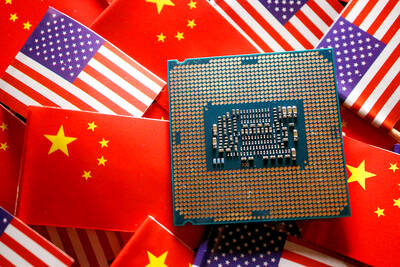
US President Donald Trump on Friday blocked US photonics firm HieFo Corp’s US$3 million acquisition of assets in New Jersey-based aerospace and defense specialist Emcore Corp, citing national security and China-related concerns. In an order released by the White House, Trump said HieFo was “controlled by a citizen of the People’s Republic of China” and that its 2024 acquisition of Emcore’s businesses led the US president to believe that it might “take action that threatens to impair the national security of the United States.” The order did not name the person or detail Trump’s concerns. “The Transaction is hereby prohibited,”


 RSS
RSS