


The Reserve Bank of Australia yesterday boosted its benchmark interest rate for a sixth consecutive month to a nine-year high of 2.6 percent.
The central bank’s increase of 0.25 percentage points to the cash rate was smaller than those at recent monthly meetings.
The banks had hiked the rate by half a percentage point at the past four meetings.

Photo: AP
Most economists had expected another 0.5 percentage point rise.
When the bank lifted the rate by a quarter percentage point at its board meeting in May, it was the first rate hike in more than 11 years. It is now at its highest point since August 2013, when the bank cut the rate from 2.75 percent to 2.5 percent.
Reserve Bank of Australia Governor Philip Lowe said that the smaller rise reflected the fact that the “cash rate has been increased substantially in a short period of time.”
“The size and timing of future interest rate increases will continue to be determined by the incoming data and the board’s assessment of the outlook for inflation and the labor market,” Lowe said in a statement.
The board lifts interest rates in an attempt to reduce inflation to a target band of 2 to 3 percent. Australian inflation is running at 6.1 percent and the Australian Department of the Treasury expects it to peak at 7.75 percent this quarter.
Unemployment is at a near 50-year low of 3.5 percent.
“The board remains resolute in its determination to return inflation to target and will do what is necessary to achieve that,” Lowe said.
The rate increase is the last before Australian Treasurer Jim Chalmers on Oct. 25 outlines his economic blueprint for government spending.
His Labor Party was elected to power in May after nine years in opposition.
Chalmers said that rising interest rates and inflation, falling real wages and a deteriorating global economic outlook were the most important factors shaping that economic plan.
“Even in the last month or two the global situation has deteriorated dramatically and in many of the major economies that we monitor the chances of a recession have edged over from possible to probable,” he said.
“We wouldn’t be spared completely a downturn of the US or global economy for obvious reasons,” Chalmers said.
“I think one of the biggest things that has changed in the last month or two is the way that our expectations for the global economy have deteriorated so substantially,” he added.
Additional reporting by Bloomberg

UNPRECEDENTED PACE: Micron Technology has announced plans to expand manufacturing capabilities with the acquisition of a new chip plant in Miaoli Micron Technology Inc unveiled a newly acquired chip plant in Miaoli County yesterday, as the company expands capacity to meet growing demand for advanced DRAM chips, including high-bandwidth memory chips amid the artificial intelligence boom. The plant in Miaoli County’s Tongluo Township (銅鑼), which Micron acquired from Powerchip Semiconductor Manufacturing Corp (力積電) for US$1.8 billion, is expected to make a sizeable capacity contribution to the company from fiscal 2028, the company said in a statement. It would be an extended production site of Micron’s large-scale manufacturing hub in Taichung, the company said. As the global semiconductor industry is racing to reach US$1 trillion

Singapore-based ride-hailing and delivery giant Grab Holdings Ltd has applied for regulatory approval to acquire the Taiwan operations of Germany-based Delivery Hero SE's Foodpanda in a deal valued at about US$600 million. Grab submitted the filing to the Fair Trade Commission on Friday last week, with the transaction subject to regulatory review and approval, the company said in a statement yesterday. Its independent governance structure would help foster a healthy and competitive market in Taiwan if the deal is approved, Grab said. Grab, which is listed on the NASDAQ, said in the filing that US-based Uber Technologies Inc holds about 13 percent of
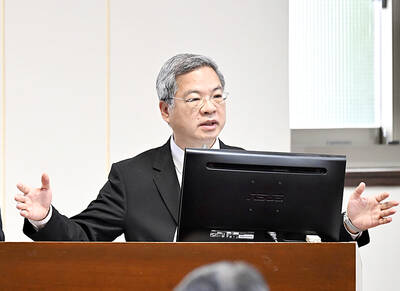
ABOVE LEGAL REQUIREMENT: The Ministry of Economic Affairs is prepared if LNG supply is disrupted, with more than the legal requirement of 11 days of inventory Taiwan has largely secured liquefied natural gas (LNG) supplies through May and arranged about half of June’s supply, Minister of Economic Affairs Kung Ming-hsin (龔明鑫) said yesterday. Since the Middle East conflict began on Feb. 28, Taiwan’s LNG inventories have remained more than 12 days, exceeding the legal requirement of 11 days, indicating no major supply concerns for domestic gas and electricity, Kung said at a meeting of the legislature’s Economics Committee in Taipei. The ministry aims to increase the figure to 14 days by the end of next year, he said. While one or two LNG or crude oil shipments for May

Taiwan’s food delivery market could undergo a major shift if Singapore-based Grab Holdings Ltd completes its planned acquisition of Delivery Hero SE’s Foodpanda business in Taiwan, industry experts said. Grab on Monday last week announced it would acquire Foodpanda’s Taiwan operations for US$600 million. The deal is expected to be finalized in the second half of this year, with Grab aiming to complete user migration to its platform by the first half of next year. A duopoly between Uber Eats and Foodpanda dominates Taiwan’s delivery market, a structure that has remained intact since the Fair Trade Commission (FTC) blocked Uber Technologies Inc’s


 RSS
RSS