


South Korea recorded its longest string of trade deficits since the Asian financial crisis in 1997, as elevated energy and commodity prices resulted in imports continuing to outpace exports.
The deficit was US$3.77 billion last month, the sixth straight monthly shortfall, according to data released on Saturday by the South Korean Ministry of Trade, Industry and Energy.
Imports climbed 18.6 percent from a year earlier, while exports advanced 2.8 percent, it said.
Export-dependent nations are seeing persistent trade shortfalls this year as Russia’s war on Ukraine leads to higher energy and commodity prices and exacerbates inflationary pressures.
South Korea’s deficit hit a record in August, and its weakening currency further increases troubles for manufacturers.
The nation produces key items such as microchips, vehicles, displays and smartphones, and its shipments demonstrate demand at a time when concerns are mounting about a global recession.
Inflation remains elevated worldwide, prompting central banks to tighten policy rates irrespective of economic costs. South Korean chipmakers in August slashed production for the first time in more than four years to brace for a deterioration in demand.
Resilient export growth has been a major factor bolstering the confidence of Bank of Korea board members to keep raising rates. Governor Rhee Chang-yong is keeping the door open for another hike at an Oct. 12 meeting.
The latest trade data showed that exports to China fell 6.5 percent, and those to the EU were down 0.7 percent last month. Shipments to the US gained 16 percent, while those to Japan increased 2.5 percent, the government data showed.
Total semiconductor shipments decreased 5.7 percent last month from a year earlier, while total automobile shipments advanced 34.7 percent and exports of rechargeable batteries rose 30.4 percent.
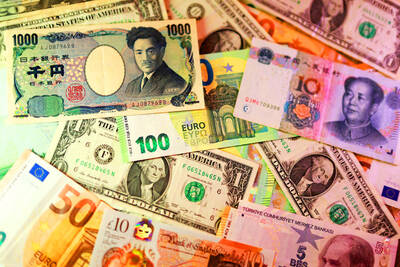
Taiwan’s foreign exchange reserves fell below the US$600 billion mark at the end of last month, with the central bank reporting a total of US$596.89 billion — a decline of US$8.6 billion from February — ending a three-month streak of increases. The central bank attributed the drop to a combination of factors such as outflows by foreign institutional investors, currency fluctuations and its own market interventions. “The large-scale outflows disrupted the balance of supply and demand in the foreign exchange market, prompting the central bank to intervene repeatedly by selling US dollars to stabilize the local currency,” Department of Foreign

ENERGY ISSUES: The TSIA urged the government to increase natural gas and helium reserves to reduce the impact of the Middle East war on semiconductor supply stability Chip testing and packaging service provider ASE Technology Holding Co (日月光投控) yesterday said it planned to invest more than NT$100 billion (US$3.15 billion) in building a new advanced chip testing facility in Kaohsiung to keep up with customer demand driven by the artificial intelligence (AI) boom. That would be included in the company’s capital expenditure budget next year, ASE said. There is also room to raise this year’s capital spending budget from a record-high US$7 billion estimated three months ago, it added. ASE would have six factories under construction this year, another record-breaking number, ASE chief operating officer Tien Wu

The EU and US are nearing an agreement to coordinate on producing and securing critical minerals, part of a push to break reliance on Chinese supplies. The potential deal would create incentives, such as minimum prices, that could advantage non-Chinese suppliers, according to a draft of an “action plan” seen by Bloomberg. The EU and US would also cooperate on standards, investments and joint projects, as well as coordinate on any supply disruptions by countries like China. The two sides are additionally seeking other “like-minded partners” to join a multicountry accord to help create these new critical mineral supply chains, which feed into

For weeks now, the global tech industry has been waiting for a major artificial intelligence (AI) launch from DeepSeek (深度求索), seen as a benchmark for China’s progress in the fast-moving field. More than a year has passed since the start-up put Chinese AI on the map in early last year with a low-cost chatbot that performed at a similar level to US rivals. However, despite reports and rumors about its imminent release, DeepSeek’s next-generation “V4” model is nowhere in sight. Speculation is also swirling over the geopolitical implications of which computer chips were chosen to train and power the new


 RSS
RSS