


Taiwan’s manufacturing output last quarter rose for a seventh straight quarter thanks to continued development of emerging technologies and digital transformation, data released by the Ministry of Economic Affairs showed on Friday.
Fully loaded factories run by local semiconductor companies and higher costs of international raw materials also helped push output of the local manufacturing sector upward in the second quarter, the ministry said in a statement.
The manufacturing sector’s output increased 13.57 percent year-on-year to NT$4.51 trillion (US$150.2 billion), the highest number on record for the April-to-June period, the ministry said. That followed a 16.01 percent annual increase in the first quarter, it said.
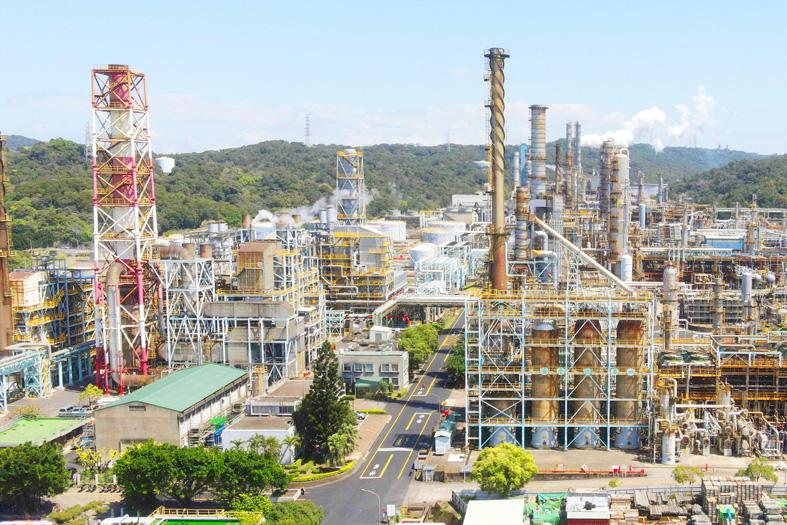
Photo: Sam Yeh, AFP
The increase last quarter was led by the electronic components industry — the manufacturing sector’s most important segment — which posted a jump of 16.35 percent to NT$1.34 trillion, the highest ever for the three-month period, the ministry said.
Chip production increased 40.89 percent to NT$691.2 billion, the highest for a single quarter, as semiconductor companies continued to add capacity while demand for chips used in high-performance computing, the Internet of Things and automotive electronics remained robust, the ministry said.
However, LCD panel production posted an annual decrease of 33.7 percent to NT$157.3 billion given the weakening demand for consumer electronics, it added.
The computer, electronics goods and optical components industries’ output expanded 16.04 percent on an annual basis to NT$256.2 billion on the back of increased production of servers and networking equipment amid robust demand for cloud computing services and thanks to easing supply chain bottlenecks, the ministry said.
Traditional industries such as chemical materials, base metals, petroleum and coal products posted output increases of 7.29 percent, 11.97 percent and 73.28 percent respectively to NT$568.8 billion, NT$502.5 billion and NT$346.8 billion last quarter from a year earlier due to higher international raw material costs, the ministry said.
The machinery equipment industry’s output growth slowed to 5.91 percent last quarter, from the previous quarter’s 14.46 percent, as order increases for semiconductor and automation equipment were offset by reduced production of woodworking machinery and household sewing machines, it said.
Vehicle and auto parts output declined 5.84 percent last quarter, following a 0.83 percent drop in the first quarter, as domestic automakers faced persistent shortages of components due to harsh COVID-19 lockdown measures in China, it said.
The ministry said it is positive about the outlook for the manufacturing sector, as nations reopen their borders and economic activity gradually regains momentum.
However, Russia’s invasion of Ukraine, global inflation and monetary tightening by central banks could undercut global economic growth, while inventory adjustments at domestic firms might also affect local manufacturing output, it said.
Micron Memory Taiwan Co (台灣美光), a subsidiary of US memorychip maker Micron Technology Inc, has been granted a NT$4.7 billion (US$149.5 million) subsidy under the Ministry of Economic Affairs A+ Corporate Innovation and R&D Enhancement program, the ministry said yesterday. The US memorychip maker’s program aims to back the development of high-performance and high-bandwidth memory chips with a total budget of NT$11.75 billion, the ministry said. Aside from the government funding, Micron is to inject the remaining investment of NT$7.06 billion as the company applied to participate the government’s Global Innovation Partnership Program to deepen technology cooperation, a ministry official told the
Taiwan Semiconductor Manufacturing Co (TSMC, 台積電), the world’s leading advanced chipmaker, officially began volume production of its 2-nanometer chips in the fourth quarter of this year, according to a recent update on the company’s Web site. The low-key announcement confirms that TSMC, the go-to chipmaker for artificial intelligence (AI) hardware providers Nvidia Corp and iPhone maker Apple Inc, met its original roadmap for the next-generation technology. Production is currently centered at Fab 22 in Kaohsiung, utilizing the company’s first-generation nanosheet transistor technology. The new architecture achieves “full-node strides in performance and power consumption,” TSMC said. The company described the 2nm process as
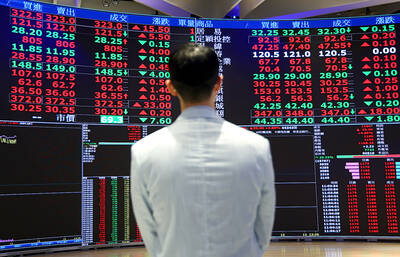
Shares in Taiwan closed at a new high yesterday, the first trading day of the new year, as contract chipmaker Taiwan Semiconductor Manufacturing Co (TSMC, 台積電) continued to break records amid an artificial intelligence (AI) boom, dealers said. The TAIEX closed up 386.21 points, or 1.33 percent, at 29,349.81, with turnover totaling NT$648.844 billion (US$20.65 billion). “Judging from a stronger Taiwan dollar against the US dollar, I think foreign institutional investors returned from the holidays and brought funds into the local market,” Concord Securities Co (康和證券) analyst Kerry Huang (黃志祺) said. “Foreign investors just rebuilt their positions with TSMC as their top target,
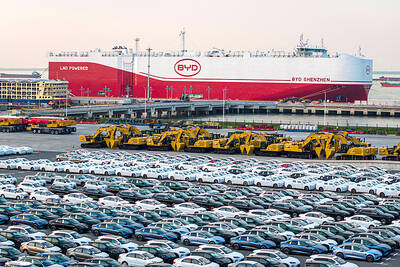
POTENTIAL demand: Tesla’s chance of reclaiming its leadership in EVs seems uncertain, but breakthrough in full self-driving could help boost sales, an analyst said Chinese auto giant BYD Co (比亞迪) is poised to surpass Tesla Inc as the world’s biggest electric vehicle (EV) company in annual sales. The two groups are expected to soon publish their final figures for this year, and based on sales data so far this year, there is almost no chance the US company led by CEO Elon Musk would retain its leadership position. As of the end of last month, BYD, which also produces hybrid vehicles, had sold 2.07 million EVs. Tesla, for its part, had sold 1.22 million by the end of September. Tesla’s September figures included a one-time boost in


 RSS
RSS