


DRAM chipmaker Nanya Technology Co (南亞科技) yesterday reported that its revenue last month increased month-on-month for the first time since November last year, as chip prices began picking up.
The increase of 4.78 percent largely matched the company’s forecast.
The New Taipei City-based company attributed the growth to an improvement in average selling prices and favorable foreign exchange rates.
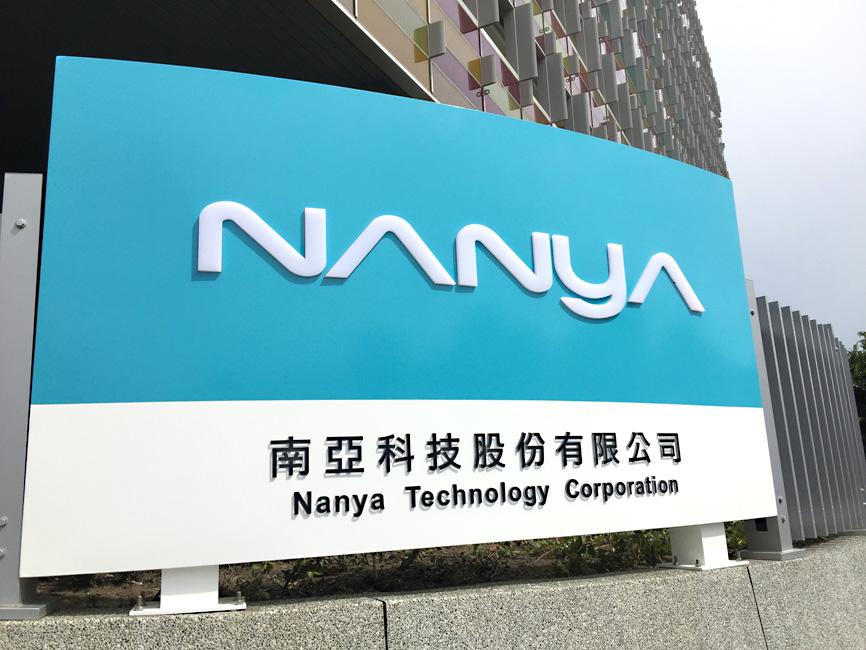
Photo: Grace Hung, Taipei Times
Chip prices would climb this quarter, reversing a downtrend over the past three quarters, Nanya said.
Revenue last month expanded to NT$6.47 billion (US$224.89 million) from NT$6.43 billion in February, ending three consecutive months of decline, the company said.
That represented annual growth of 5.2 percent from NT$6.41 billion, it added.
First-quarter revenue dropped 6.78 percent to NT$19.95 billion, from NT$21.4 billion a quarter earlier. On an annual basis, revenue jumped 12.5 percent from NT$17.73 billion.
The company estimated that average selling prices for last quarter would decline by a low-single-digit percentage from a quarter earlier, an improvement from a decline of 5 percent in the final quarter of last year and 13 percent in the third quarter of last year.
DRAM prices would slip 5 percent quarter-on-quarter in the worst-case scenario, as the war in Ukraine and inflation pressures worldwide have weakened demand for PCs and consumer electronics, including smartphones, industry researcher TrendForce Corp (集邦科技) said.
As the server sector was the only one that continued to see robust demand, an oversupply of DRAM chips is expected this quarter, TrendForce said.
Prices of DRAM chips used in servers would be flat, or drop about 5 percent this quarter from last quarter, it said.
As for DRAM chips used in PCs, the quarterly price decline would range from 3 to 8 percent, as laptop makers become conservative about this year’s business outlook and trim shipment targets because of geopolitical tensions, TrendForce said.
As smartphone makers are also cautious about consumer demand, TrendForce forecast a price decline of zero to 5 percent for mobile DRAM chips.
Separately, Ample Electronic Technology Co (勤凱科技), which supplies conductive paste to passive components maker Yageo Corp (國巨), reported that its revenue last month was NT$102.42 million, down 29.88 percent year-on-year, but up 26.79 percent month-on-month.
First-quarter revenue dropped 32.78 percent annually to NT$283.27 million, the company said.
Following a rebound in demand last month, Ample said it is optimistic about its business this quarter because of customers’ inventory adjustments.

UNPRECEDENTED PACE: Micron Technology has announced plans to expand manufacturing capabilities with the acquisition of a new chip plant in Miaoli Micron Technology Inc unveiled a newly acquired chip plant in Miaoli County yesterday, as the company expands capacity to meet growing demand for advanced DRAM chips, including high-bandwidth memory chips amid the artificial intelligence boom. The plant in Miaoli County’s Tongluo Township (銅鑼), which Micron acquired from Powerchip Semiconductor Manufacturing Corp (力積電) for US$1.8 billion, is expected to make a sizeable capacity contribution to the company from fiscal 2028, the company said in a statement. It would be an extended production site of Micron’s large-scale manufacturing hub in Taichung, the company said. As the global semiconductor industry is racing to reach US$1 trillion

Singapore-based ride-hailing and delivery giant Grab Holdings Ltd has applied for regulatory approval to acquire the Taiwan operations of Germany-based Delivery Hero SE's Foodpanda in a deal valued at about US$600 million. Grab submitted the filing to the Fair Trade Commission on Friday last week, with the transaction subject to regulatory review and approval, the company said in a statement yesterday. Its independent governance structure would help foster a healthy and competitive market in Taiwan if the deal is approved, Grab said. Grab, which is listed on the NASDAQ, said in the filing that US-based Uber Technologies Inc holds about 13 percent of

ABOVE LEGAL REQUIREMENT: The Ministry of Economic Affairs is prepared if LNG supply is disrupted, with more than the legal requirement of 11 days of inventory Taiwan has largely secured liquefied natural gas (LNG) supplies through May and arranged about half of June’s supply, Minister of Economic Affairs Kung Ming-hsin (龔明鑫) said yesterday. Since the Middle East conflict began on Feb. 28, Taiwan’s LNG inventories have remained more than 12 days, exceeding the legal requirement of 11 days, indicating no major supply concerns for domestic gas and electricity, Kung said at a meeting of the legislature’s Economics Committee in Taipei. The ministry aims to increase the figure to 14 days by the end of next year, he said. While one or two LNG or crude oil shipments for May

Taiwan’s food delivery market could undergo a major shift if Singapore-based Grab Holdings Ltd completes its planned acquisition of Delivery Hero SE’s Foodpanda business in Taiwan, industry experts said. Grab on Monday last week announced it would acquire Foodpanda’s Taiwan operations for US$600 million. The deal is expected to be finalized in the second half of this year, with Grab aiming to complete user migration to its platform by the first half of next year. A duopoly between Uber Eats and Foodpanda dominates Taiwan’s delivery market, a structure that has remained intact since the Fair Trade Commission (FTC) blocked Uber Technologies Inc’s


 RSS
RSS