


The central bank has warned people against cryptoasset fraud involving bitcoin automated teller machines (BTMs), saying the scheme has become a major type of investment scam in Taiwan.
The central bank issued the warning after its quarterly policy meeting on March 17.
Some victims were defrauded while transferring money via a BTM to other accounts to buy cryptoassets, the central bank said, cautioning people about risks in the sector.
Photo: Tyrone Siu, Reuters
Since bitcoin was invented in 2009 as a virtual currency that uses peer-to-peer technology to facilitate instant payments, various cryptoasset types have mushroomed around the world to more than 18,000, the central bank said.
Channels to acquire cryptoassets have also become more diverse amid a surge in cryptocurrency prices in the past few years and the rapid development of more secure assets, such as stablecoins, which are linked to fiat money, it said.
Decentralized finance, which allows peer-to-peer lending, and non-fungible tokens, a type of digital asset, have also surged in popularity, the bank said.
Buying cryptoassets is no longer limited to computer experts, as ordinary people can purchase cryptocurrencies in a convenient way, the bank said, referring to BTMs, which were introduced in 2013.
BTMs, which feature an interface similar to automated teller machines, allow people to buy cryptoassets in exchange for cash. As cryptocurrencies, such as bitcoin, have become more mainstream over the past few years, the number of BTMs has grown quickly.
There are 27 BTMs in Taiwan, the Coin ATM Radar Web site shows.
However, while investors in Taiwan can easily purchase cryptocurrencies, they are also exposed to higher risks, as the government has yet to task an agency with the supervision of cryptoassets, the central bank said.
Criminals have been found to exploit BTMs for illicit activities, including money laundering, due to the insufficient supervision of such devices, the central bank said, citing warnings from other countries.
Matters like combating money laundering and terrorism financing are under the purview of the Financial Supervisory Commission, it added.
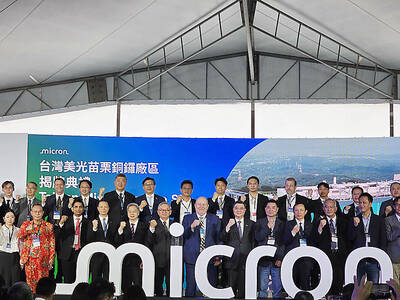
UNPRECEDENTED PACE: Micron Technology has announced plans to expand manufacturing capabilities with the acquisition of a new chip plant in Miaoli Micron Technology Inc unveiled a newly acquired chip plant in Miaoli County yesterday, as the company expands capacity to meet growing demand for advanced DRAM chips, including high-bandwidth memory chips amid the artificial intelligence boom. The plant in Miaoli County’s Tongluo Township (銅鑼), which Micron acquired from Powerchip Semiconductor Manufacturing Corp (力積電) for US$1.8 billion, is expected to make a sizeable capacity contribution to the company from fiscal 2028, the company said in a statement. It would be an extended production site of Micron’s large-scale manufacturing hub in Taichung, the company said. As the global semiconductor industry is racing to reach US$1 trillion

Singapore-based ride-hailing and delivery giant Grab Holdings Ltd has applied for regulatory approval to acquire the Taiwan operations of Germany-based Delivery Hero SE's Foodpanda in a deal valued at about US$600 million. Grab submitted the filing to the Fair Trade Commission on Friday last week, with the transaction subject to regulatory review and approval, the company said in a statement yesterday. Its independent governance structure would help foster a healthy and competitive market in Taiwan if the deal is approved, Grab said. Grab, which is listed on the NASDAQ, said in the filing that US-based Uber Technologies Inc holds about 13 percent of
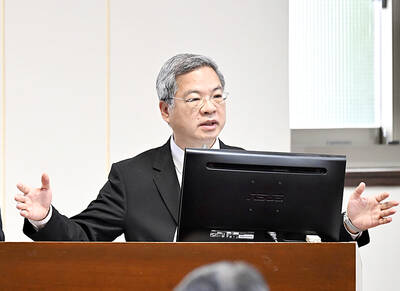
ABOVE LEGAL REQUIREMENT: The Ministry of Economic Affairs is prepared if LNG supply is disrupted, with more than the legal requirement of 11 days of inventory Taiwan has largely secured liquefied natural gas (LNG) supplies through May and arranged about half of June’s supply, Minister of Economic Affairs Kung Ming-hsin (龔明鑫) said yesterday. Since the Middle East conflict began on Feb. 28, Taiwan’s LNG inventories have remained more than 12 days, exceeding the legal requirement of 11 days, indicating no major supply concerns for domestic gas and electricity, Kung said at a meeting of the legislature’s Economics Committee in Taipei. The ministry aims to increase the figure to 14 days by the end of next year, he said. While one or two LNG or crude oil shipments for May

Taiwan’s food delivery market could undergo a major shift if Singapore-based Grab Holdings Ltd completes its planned acquisition of Delivery Hero SE’s Foodpanda business in Taiwan, industry experts said. Grab on Monday last week announced it would acquire Foodpanda’s Taiwan operations for US$600 million. The deal is expected to be finalized in the second half of this year, with Grab aiming to complete user migration to its platform by the first half of next year. A duopoly between Uber Eats and Foodpanda dominates Taiwan’s delivery market, a structure that has remained intact since the Fair Trade Commission (FTC) blocked Uber Technologies Inc’s


 RSS
RSS