


Japan would impose sanctions on Russia targeting semiconductor exports and financial institutions, Japanese Prime Minister Fumio Kishida said yesterday after G7 leaders agreed to punish Moscow economically for invading Ukraine.
The announcement came after Russian President Vladimir Putin unleashed a full-scale ground invasion and air assault on Thursday.
Kishida said that the world’s third-largest economy planned “asset freezes and the suspension of visa issuance for Russian individuals and organizations,” as well as asset freezes “targeting Russian financial institutions.”

Photo: AP
“Thirdly, we will sanction exports to Russian military-related organizations, and exports to Russia of general-purpose goods such as semiconductors and items on a restricted list based on international agreements,” he told reporters.
Kishida did not detail the scale of the sanctions or which individuals and institutions would be targeted, although local media said that Bank Rossiya, Promsvyazbank and Russia’s economic development bank VEB would be affected.
The US has also announced export controls on sensitive components that US President Joe Biden said would “cut off more than half of Russia’s high-tech imports.”
Japan is a key US ally and member of the G7, which held virtual talks overnight and agreed “to move forward on devastating packages of sanctions and other economic measures to hold Russia to account,” Biden said.
On Wednesday, Tokyo announced a ban on the issuing and trade of Russian government bonds in Japan after Moscow ordered troops into two Ukrainian regions.
Russia’s ambassador to Tokyo yesterday said that the “counterproductive measures” would meet with a “serious response” from Moscow, without offering details.
“There will be a response from us; I suppose there will be a serious response from us,” Mikhail Galuzin told reporters, describing the sanctions as being fueled by “really baseless pretexts.”
Japan and Russia have complex relations. They did not sign a peace treaty after World War II because of a lingering dispute over four islands claimed by Moscow in the closing days of the conflict.
The islands, off Hokkaido, are known as the southern Kurils in Russia and the Northern Territories in Japan.
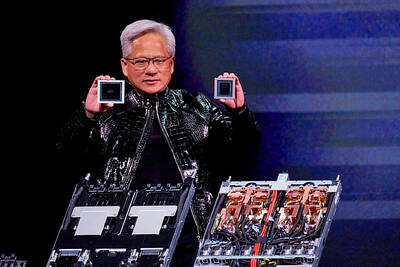
Nvidia Corp chief executive officer Jensen Huang (黃仁勳) on Monday introduced the company’s latest supercomputer platform, featuring six new chips made by Taiwan Semiconductor Manufacturing Co (TSMC, 台積電), saying that it is now “in full production.” “If Vera Rubin is going to be in time for this year, it must be in production by now, and so, today I can tell you that Vera Rubin is in full production,” Huang said during his keynote speech at CES in Las Vegas. The rollout of six concurrent chips for Vera Rubin — the company’s next-generation artificial intelligence (AI) computing platform — marks a strategic

Enhanced tax credits that have helped reduce the cost of health insurance for the vast majority of US Affordable Care Act enrollees expired on Jan.1, cementing higher health costs for millions of Americans at the start of the new year. Democrats forced a 43-day US government shutdown over the issue. Moderate Republicans called for a solution to save their political aspirations this year. US President Donald Trump floated a way out, only to back off after conservative backlash. In the end, no one’s efforts were enough to save the subsidies before their expiration date. A US House of Representatives vote
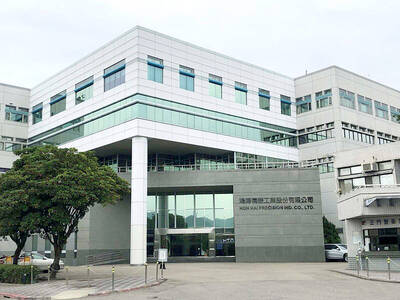
REVENUE PERFORMANCE: Cloud and network products, and electronic components saw strong increases, while smart consumer electronics and computing products fell Hon Hai Precision Industry Co (鴻海精密) yesterday posted 26.51 percent quarterly growth in revenue for last quarter to NT$2.6 trillion (US$82.44 billion), the strongest on record for the period and above expectations, but the company forecast a slight revenue dip this quarter due to seasonal factors. On an annual basis, revenue last quarter grew 22.07 percent, the company said. Analysts on average estimated about NT$2.4 trillion increase. Hon Hai, which assembles servers for Nvidia Corp and iPhones for Apple Inc, is expanding its capacity in the US, adding artificial intelligence (AI) server production in Wisconsin and Texas, where it operates established campuses. This
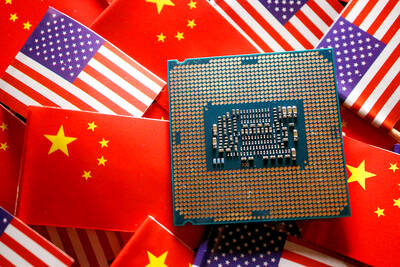
US President Donald Trump on Friday blocked US photonics firm HieFo Corp’s US$3 million acquisition of assets in New Jersey-based aerospace and defense specialist Emcore Corp, citing national security and China-related concerns. In an order released by the White House, Trump said HieFo was “controlled by a citizen of the People’s Republic of China” and that its 2024 acquisition of Emcore’s businesses led the US president to believe that it might “take action that threatens to impair the national security of the United States.” The order did not name the person or detail Trump’s concerns. “The Transaction is hereby prohibited,”


 RSS
RSS